Archive for the ‘Jaffna’

Truth and Dialogue as Theatre: Some Reflections on the Frontline Club Panel on Sri Lanka

Screen Shot 2012-05-19 at 10.45.21 PM

I watched the Frontline Club panel on Sri Lanka, belatedly and reluctantly. I am skeptical about such public enquiries and debates into complex matters, which threaten to reduce the dialogue and truth into performance. In my view, the problem with these ‘events’, for that is what they are, is that the truth is reduced to a many-sided thing; the more one counts the sides the more fragmented the truth itself becomes. But of course you never get ‘all sides’ of the story. So, for example, someone keeping a count of the sides could say the Muslim question or the gender dimension figured not at all. In fact, Stephen Sackur set the tone for an evening of performance with his opening line: “First thing to say is that it is fantastic to see such a great audience.” The panelists inevitably came with their own scripts—prepared remarks, notes, papers (Mr. Wijesinha had loads of them), computers etc. Then there were the self-appointed…

Continue reading »

3 years after the end of war: Official statements vs. reality

0_13374004831054_news

Sri Lankan Army soldiers march during a Victory Day parade rehearsal in Colombo on May 16, 2012. Sri Lanka celebrates War Heroes Week with a military parade scheduled for May 19. PHOTO/ AFP, text courtesy Haveeru Online “There is no State of Emergency today.” – President Rajapaksa’s Address to the Nation, 19 May 2012 vs. “Therefore, the attempt of the Sri Lankan government to replace emergency laws with another set of laws under a different name, yet meant to do the same task is not surprising. State of emergency is not only a particular set of laws. Removing emergency regulations while continuing with militarisation and a massive project of policing in socio-cultural arenas do not indicate a journey towards normalcy.” – Amali Wedagedara, Groundviews, 5 September 2011   “It is no secret that through 30 years there were armed groups and militias operating, especially in the North and East. All such groups have now been disarmed.” – President Rajapaksa’s Address…

Continue reading »

Three years after the war in Sri Lanka: To celebrate or mourn?

Header Image

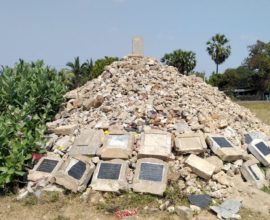
Photo courtesy Vikalpa For the 3rd successive year, the Sri Lankan government has made elaborate arrangements to celebrate the end of the war in Colombo. This year, May was declared as “war hero’s commemoration month”. For the last few days, roads were closed in Colombo causing great inconvenience, as preparations were being made for celebrating the end of the war. However, in the North, among Tamils, where the last phase of the war was fought, the mood was far from celebratory, but outright mourning and grieving. In the morning of 18th May, I joined a commemorative Mass in a church that was yet to be rebuilt after the war. More than the church building, two monuments stood out. One for Fr. Sarathjeevan (popularly known as Fr. Sara, who died on 18th May 2009) and another for all people who had been killed in the war. Villagers including school children and Hindus flocked to this church. Amongst those present were families of those killed…

Continue reading »

Extra Time

The latest news from the family-run, once independent island, is the appointment of a presidential committee to decide upon which recommendations to adopt regarding the erstwhile ethnic question, which has been subsumed into the unitary enterprise of the war-fighting, now North and East-occupying, government dedicated to paying appropriate attention to the international human rights lobby and European and American states. Nothing like a committee to push the football away, like the many formed and dissolved in the past without achieving laws, but which gained time for the family to work and play.

Continue reading »

Cluster bombs in Sri Lanka: From denial to discovery

Sudar Oli - 06.03.2012

Ravi Nessman from Associated Press has broken what’s perhaps the most important story on the war, since it ended three years ago. In a story published by AP a few hours ago, he notes, The Associated Press obtained a copy Thursday of an email written by a U.N. land mine expert that said unexploded cluster bomblets were discovered in the Puthukudiyiruppu area of northern Sri Lanka, where a boy was killed last month and his sister injured as they tried to pry apart an explosive device they had found to sell for scrap metal. The email was written by Allan Poston, the technical adviser for the U.N. Development Program’s mine action group in Sri Lanka. “After reviewing additional photographs from the investigation teams, I have determined that there are cluster sub-munitions in the area where the children were collecting scrap metal and in the house where the accident occurred. This is the first time that there has been confirmed unexploded…

Continue reading »

Sri Lanka’s Census 2012: What should have been asked? What could have been done better?

Screen Shot 2012-04-17 at 3.34.23 PM

Conducting a census is an important activity for any country as the data gathered from it would serve as the foundation for policies, development related activities and future planning of not only government institutions but also non state actors such as academics, development and aid agencies. The idea behind collecting feedback on the 2012 Census in Sri Lanka is to identify the positive and negative aspects of the census, and to encourage discussion on how it can be improved without merely identifying the faults. This year’s census was held after 30 years and covered the entire island. The importance of this census and the data it gathered is obvious to us all. Feedback on Census 2012 was launched in late March. Some initial feedback from people who shared their comments via the site and also via email follow. Enumeration stage – Enumerators for the Census 2012 underwent a training whereby they were briefed on the questions in the data collection…

Continue reading »
  • 14 Apr, 2012
  • 0 Comment
  • Development,
    Diaspora,
    Jaffna,
    Post-War

Co-operatives: A better option to channel relief to war victims in Sri Lanka

38608898

Photo courtesy  Sampath Wijenayake It is no secret that many members of the Tamil diaspora are actively involved in helping the victims of the war in Sri Lanka in some way or the other.  There are those who send assistance direct to known or identified victims. There are others who respond to calls from various organisations for funds to help them.  Such organisations are now available in abundance both in the United Kingdom and elsewhere. However, only a few of such organisations would be able to render accounts to benefactors on how much they have collected and what amounts have been spent to provide relief and even on what kind of relief or assistance  have provided using their funds.   Occasionally we hear about  organisations that collected monies and  duped gullible sympathisers.   In any case in  most instances the victims are mere receivers of assistance and have no say whatsoever in  deciding the nature, the extent and the kind of assistance they…

Continue reading »

Horrible rise of disappearances in post-war Sri Lanka continues unabated

WV21812

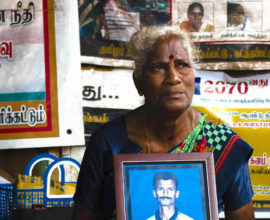
Image from Transcurrents [Editors note: Also read New wave of abductions and dead bodies in Sri Lanka] Twenty nine disappearances (including an attempted abduction) have been reported in Sri Lankan media between February and March 2012. There have been fifteen in March and fourteen in February. This brings the total number of disappearances reported in the last six months to fifty six. Nineteen cases were reported while the sessions of the UN Human Rights Council were in progress in Geneva from the 27th of February to the 23rd of March 2012. Out of the twenty nine disappearances in February-March 2012, sixteen of the twenty nine (16/29) appear to have occurred in the Colombo district while eight have been reported from the Northern Province (8/29). Five of those reported from the North are said to be ex-LTTE cadres who had been detained, released from detainment and then abducted. There are also three from the indigenous Wannilaye Aetto (Veddah) community. Amongst the…

Continue reading »

The rape of a 13 year old and paramilitary presence in Jaffna

10032012515

March 3, 2012 marked a very dark ebb in our society as it saw the horrific rape and murder of little Jesudasan Lakshini (13), allegedly at the hands of former EPDP cadre, Kanthasami Jegatheswaran (alias Kiruba) (31), from the Delft Island, Jaffna. Currently being held in remand at the Jaffna Remand Prison, the accused was produced before the Kayts Magistrate this week (30). However, the hearing was further postponed to April 9, 2012, as the Delft Police had failed to conclude their compilation of eye witness statements, said attorney-at-law K.S. Ratnavel, who is appearing on behalf of the victim’s family. The pending statement is the last of four eye witness statements attesting to having witnessed Lakshini being intercepted and taken by the accused on her way to the market, he added. This raises the glaring question as to why the Police was unable to obtain a mere four eye witness statements in the course of almost a month following this…

Continue reading »

Fishing in Turbulent Waters

DSC02190

Introduction Newly initiated development projects in the Northern and Eastern Provinces in post-war Sri Lanka are expected to open new avenues towards ethnic reconciliation, as proclaimed not only by government media but also by the mainstream development scholarship. However, this popular perception about opening up new avenues for reconciliation through development seems to foreclose certain barriers and obstructions existing within the so called development highway itself, especially with regard to ethnic minorities. To understand the possible political and other forms of repercussion of the currently existing development-community encounter, one should turn one’s ears not only to the subject-agents of the development discourse but also to those who are subjected to the development industry, considering the fact that the subalterns also are involved in creating meanings (or counter-articulate the dominant discourse, as Laclauian discourse analysts would suggest) in their own way. This piece explores the ways in which the local communities in the Northern fishing villages receive the messages enunciated by…

Continue reading »

The Geneva II debacle

6934830975_dafae4e928_b

Photo courtesy Vikalpa, from protest against US resolution in Colombo, 27 February 2012 The US-sponsored resolution at the UNHRC had to be defeated. It was not. 24 in favour, 15 against, 8 abstained. Hearts are broken, glasses are shattered, the ‘gods’ have ignored our prayers, there is madness surrounding us; 2012, we are now sure, is when the world comes to an end. But that was yesterday. Today, the morning after, is once again cold; we need to pick up the pieces, mend our hearts, move on. And there are questions too: what is this resolution? How did we perform? Is it all India’s fault? Where did we go wrong? Are we to be blamed? What now? Resolution L.2: From US, with love The resolution titled ‘Promoting reconciliation and accountability in Sri Lanka’ has, during the process of the UNHRC session, undergone considerable change. From being an intrusive and arrogant one sponsored by the US, it now appears rather soft,…

Continue reading »

Defending the Country

They cry foul in that cauldron of a news room, saying these human rights defenders are traitors, publishing their names and photographs, inciting fears of death squads preparing to drive white vans to their residences. The warning by the UN Human Rights Commissioner to protect witnesses is welcome, quixotic. How will her office stop disappearances when government has rejected the resolution, said it will push back reconciliation, which I presume to mean more islanders vanished, bloodshed, people living in fear and loathing, keeping quiet or moving out, accompanied to the airport by diplomats from a friendly mission, leaving their homes to caretakers, a new life abroad for champions of human rights at home? And for those who stay, negotiating protections, waiting for a post- midnight call by an elite team of assassins, like the ones who shot prisoners at Nandikadal, stopping motorbikes in the intersection to beat Lasantha to death, dressed in black with black glasses, or as drivers of…

Continue reading »

After the UNHRC Resolution Vote: Don’t Hold Your Breath for Truth, Justice or Reconciliation

weeping_mother_Batticaloa

Photo courtesy JDS/Guy Calaf, Agence France-Presse​ By the time this article is published, the votes on the hotly-contested UN Human Rights Council resolution on Sri Lanka will have been cast and counted.  I am writing this as the debate over the resolutions is taking place in Geneva, and I find myself wondering if the outcome will be meaningful for the lives of hundreds of thousands of victims of our 30 year war.  Don’t get me wrong – I recognise the significance of the UNHRC resolution in terms of its moral and political symbolism, and that it may have profound implications for the Sri Lankan state’s position within the field of geopolitics and international relations.  I know that it will very likely impact the course of Sri Lanka’s national politics – even if I can’t anticipate the precise consequences.  Whilst I’d like to hope that the outcome of the UNHRC vote could lead to the harm and hurts of decades of…

Continue reading »

Counter-productive propaganda and human rights in Sri Lanka

JOINT STATEMENT - Sunila Abeysekara, Nimalka Fernando and Dr. Paikiasothy Saravanamuttu

As the three Sri Lankan human rights defenders who have come most under attack by the state media in Sri Lanka in the past week, because of our active involvement with the on-going session of the UN Human rights Council in Geneva, we feel compelled to issue this statement of clarification. We do not deny that we are critical of the conduct of the government of Sri Lanka, and the institutions and agencies under its control, whenever disregard for the human rights obligations imposed on the government by virtue of its being signatory to almost all international human rights conventions comes to our attention. As the President of Sri Lanka, and his Special Envoy on Human Rights well know, the three of us have offered our services to this government to ensure human rights accountability in the past. For example, all of us served on the National Advisory Council appointed by Minister Mahinda Samarasinghe, when he held the portfolio for…

Continue reading »

Off the Field

In the end we have only ourselves to pick up from the grass, the bed, the gymnasium floor. The dead will have their say in dreams, and fond ones too, how the boy used to laugh when chasing the ball on Duplication Road, or the girl back in the village, shyly accept the glance of her neighbor’s son, by the well, over a garden wall, the victims, the left behind after the tsunami or the shelling without end, abroad, processed, rebuilding their lives in the company of Australians or Canadians, new people, while the distant war on its nightly visit to parents, single or a pair, does not curse the kid born away, who loves the latest fad on satellite radio and the girl in his class who sports an infectious laugh.

Continue reading »
Page 1 of 2912345...1020...Last »

About Groundviews

Located at the Centre for Policy Alternatives in Colombo, Sri Lanka, Groundviews is a citizen journalism website that uses a range of genres and media to highlight critical perspectives on governance, reconciliation, human rights, the arts and literature, democracy and other issues. The site has won two international awards, including the prestigious Manthan Award South Asia in 2009. The grand jury's evaluation of the site noted, "What no media dares to report, Groundviews publicly exposes. It's a new age media for a new Sri Lanka... Free media at it's very best!"

cezarneaga.eu
canakkale canakkale canakkale balik tutma search canakkale vergi mevzuati bagimsiz denetim vergi mevzuati ozurlu engelliler