The Significance of Revolving Funds in the Rehabilitation of those Re-settled

LKEnrep

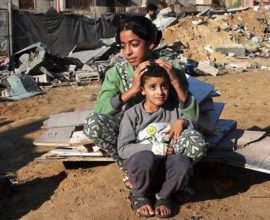
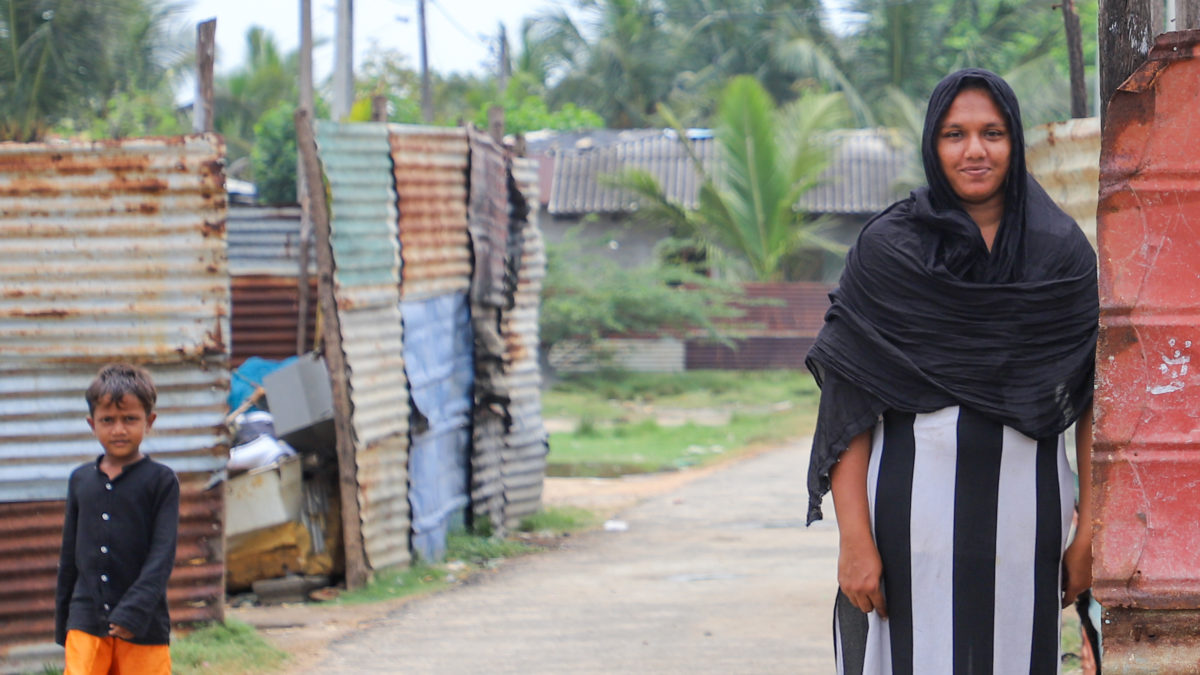
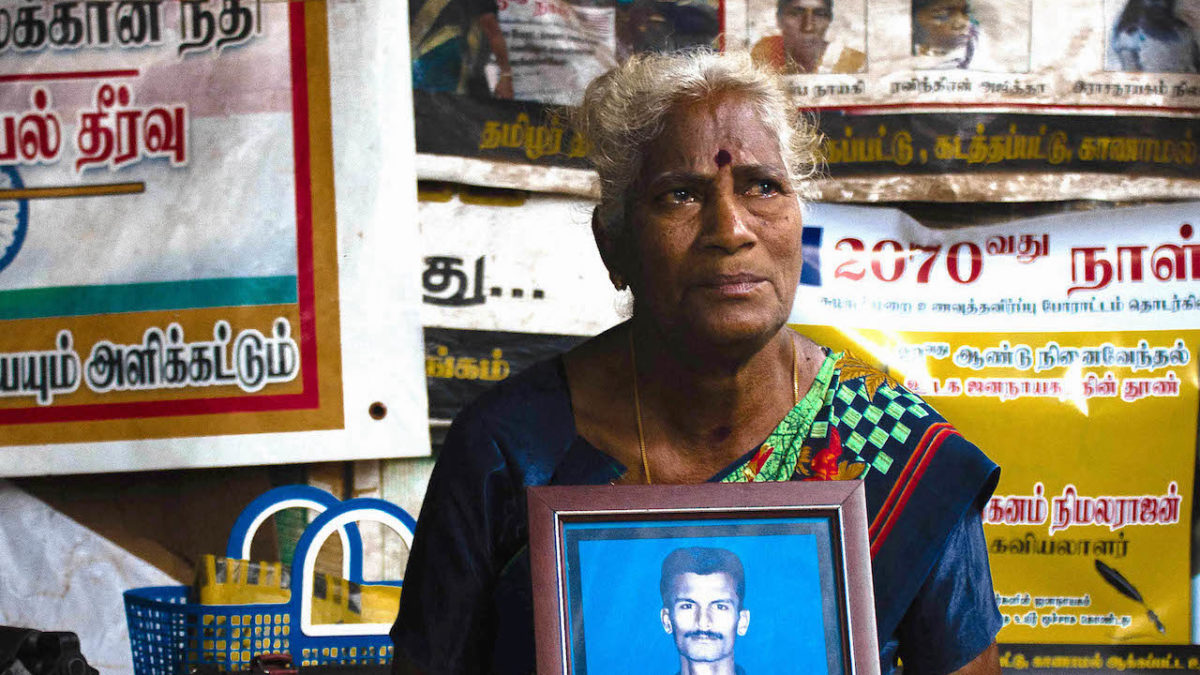
Image courtesy World Bank Most  those who have been  resettled or re-located  in the Wanni District of Sri Lanka  after the war  have found that they have to start life from scratch.  The re-settlement allowance of Rs.25,000 paid to each of these families was found to be hardly enough to do anything meaningful to make a start.  Most of the infrastructure   which   had  helped them to sustain themselves in their villages  before the war,  has been destroyed.  Roads, buildings, water tanks, canals and channels leading water to their cultivations  in their respective villages are in a state of disrepair. Consequently  re-starting life has been a challenging task  for these families.  Many of them  have lost their male members either during the war. Some  have been taken into custody or have disappeared thereafter.   The surviving women have to fend for themselves, their children and often their aged parents as well.   They  neither have resources, skills  nor the cash needed for them…

Continue reading »

Feminism bottom-up: Women’s Support Networks in the North and East

Before, during and after the three decade long conflict, women have played a major role in supporting their families, community support systems, and the economy. This video highlights the stories of women groups that set up successful support networks in the north before the war, through which they addressed various community and livelihood issues, as well as violence against women. During the war these networks disbanded, and many women lost network members and vital assets. In a post-war context, these women are going back to their villages and are starting from scratch again. As these women share their experiences pre, during and post war it also creates a discussion around what feminism really is?  The video reflects on successful grassroots activism and challenges the popular notion of feminism being western and top to bottom or elite.  It also highlights the obstacles these activists face due to various social norms and oppressive structures. Repost This Article

Continue reading »

“Building the base”: An interview with Sunila Abeysekara about post-war Sri Lanka

DSC04978

Sunila, how do you look at Sri Lanka today?  There are different interpretations ranging from a constitutional dictatorship to clan- run ‘deep state’? And you have decades of human rights activism behind you; you have been to the Geneva Human Rights council for nearly a decade to campaign for rights in Sri Lanka, but today Geneva has become the “f word” in dominant political discourse in Sri Lanka? Why?  Indeed it is true to say that President Rajapaksa, his brothers and son and nephews, whatever you know, they constitute a block, a family block that actually controls the political and economic future of our country at this moment. So definitely it is not a democracy. Definitely what has happened in the past months have shown us that there is no rule of law and the constituent features of any democracy; the independence of judiciary, the freedom of the press, all these, do not exist in Sri Lanka. So, at least…

Continue reading »

A simple experiment to highlight ingrained racism in Sri Lanka

Screen Shot 2013-02-14 at 3.35.58 PM

When Etisalat dreams of a Sri Lanka where everyone is connected, it’s clearly thinking only of the Sinhalese. Why else would the company’s website feature, so prominently, a Lion to depict ‘everyone’ in Sri Lanka? In popular media, corporate marketing and government output, there are numerous other examples of a racism so deeply internalised and ingrained in Sri Lanka that even when flagged, it is dismissed as unimportant or at best, of marginal and passing interest. As we tweeted, @30streetstudio @etisalatsl It’s this that’s most worrying about #srilanka – ingrained racism, so normalised it is, to most, invisible. #lka — Groundviews (@groundviews) February 13, 2013   Another particularly revealing example from Government recently came in the form of the Police spokesperson’s comments over an ill-thought out and executed census of vehicular traffic coming into Colombo. As reported in Ceylon Today, the forms handed out to motorists in light vehicles were only in Sinhala, raising the ire of the Government’s own…

Continue reading »

ANTI-MUSLIM EXTREMISM & DILEMMAS OF DIVERSITY IN SRI LANKA

Dilemmas of diversity, postwar identity and nation building (14)

Opening presentation at 2nd in Discussion series on Constitutional Reform organized by The Liberal Party) Having come out of the war, a war which I for one am glad the Sri Lankan State won, Sri Lanka as a State and a society had one of several directions in which it could go. Whilst being happy that the war ended with a certain outcome, we could have asked ourselves why we had the war in the first place. Why thirty years of conflict? What needs to be done to prevent such conflict? To the extent that that question had been asked, it seems to me that the answer –and I do not mean only within the Government but outside in civil society as well– has been that the way to prevent another cycle of conflict is to tighten up, to pre-empt, and to securitize. I am Realist enough to admit that, that in certain areas it is necessary to be more…

Continue reading »

The Sri Lankan President’s Twitter archive and Propaganda 2.0: New challenges for online dissent

Screen Shot 2013-02-12 at 3.47.40 PM

The President enters Twitter Last month, the President of Sri Lanka began tweeting officially as @PresRajapaksa. The account is already authenticated by Twitter. Though @PresRajapaksa’s profile notes that “tweets from the President are signed MR.” there is, to date, not a single tweet penned by the President himself. The launch of the account was instructive in how the regime is perceived online by voices not usually openly vocal about mainstream politics. Under the hashtag #PresidentTweets, dozens of voices on Twitter openly poked fun at the President’s entry to Twitter. The tweets, only a fraction of which are captured below, poked fun at the President’s closest political associates, his role in the impeachment of the Chief Justice, his violent, autocratic tendencies and the Rajapaksa family’s nepotism. An inauspicious start then to what objectively is a welcome development – the entry of the President to a medium that is now used by so many leading political figures around the world. For those…

Continue reading »

Sri Lanka’s National Plan of Action vis-à-vis Reconciliation

5379918361_e5466a5c26_z

Image courtesy Centre for Human Rights “Reconciliation requires changes of heart and spirit, as well as social and economic change. It requires symbolic as well as practical action” – Malcolm Fraser Once again Sri Lanka is in the thralls of yet another ethnic conundrum.  It would seem that Sri Lankans like to live dangerously, in the midst of controversy, conflict and violence.  Why else will we on the eve of the Human Rights Commission sessions coming up in March 2013 impeach our chief justice raising issues of the independence of the judiciary followed much too soon by sundry chauvinist organizations such as the Bodhi Bala Sena, Hela Sinhala Hiru mushrooming and being dialogued with at the highest political levels.  Even more disturbing is the police inaction in the face of communal agitation lending credence to theories of compliance at high political levels.  It is a tragedy that many of these organizations with offensive and objectionable agendas that create ethnic and…

Continue reading »

Interview with Alistair Burt on Sri Lanka

4606004237_1ca8b4987d_b

The BBC’s Charles Haviland interviewed Parliamentary Under-Secretary of State for Foreign & Commonwealth Affairs Minister Alistair Burt on 1st February 2013, during an official visit to Sri Lanka which saw the Minister meet with a range of stakeholders including the government, TNA and civil society as well as travel to the North of the country. Groundviews recently participated in and archived a Twitter interview with Minister Burt on Sri Lanka, conducted after he returned to the UK. The interview with Charles Haviland is vital record of the Minister’s thoughts on Sri Lanka, including comments, in his official capacity, on the government’s human rights record, progress of reconciliation post-war, the prospects of a political settlement and concerns over the independence of the judiciary and arising from this, the question of whether Sri Lanka is suitable as a venue for the CHOGM meeting. Since the interview has not been published anywhere else to date, including on the BBC, Groundviews is pleased, with…

Continue reading »

In conversation with Nayomi Munaweera

Munaweera

The Los Angeles Review calls Nayomi Munaweera‘s first novel, Island of a Thousand Mirrors, “gripping, astonishing and utterly gorgeous”. At the head of their lane, a buss on its knees, front tires exploded, haemorrhages thrusting, pushing passengers. At the far side, a particularly jovial mob gather. Reaching high above their heads the men pull a woman out of the small side window. They catch her sari pall, pull, jumping and climbing on each other’s shoulders. Mala has stopped in the street, turned to salt… She sees the woman’s open mouth, her arms flailing in this most exposed and air-bound uncertainty between the bus and the men. A long streak of red bisects her forehead, and then like a cork out of a bottle the woman is dislodged. She falls into the circle of men, streaming to earth, sari fluttering like a parachute. A roar of delight drowns the woman’s screams. The, again, the sound of gushing petrol. And finally Mala…

Continue reading »

Mixed Messages and Bland Oversimplification in President Rajapaksa’s Independence Day Speech

37-Chicago_Maaveerar_Naal_USA1_21081_435

In a significant act of outreach the Independence Day ceremonies were held in Trincomalee, a provincial city with a pronounced ethnic mix; while President Rajapaksa presented one part of his message in Tamil, repeating what he had said earlier (in English?) and then reiterating the same points in Sinhala. In keeping with the occasion and location, he referred to the Dutch and British interests in Trincomalee during the imperialist past as a prelude to his argument that Sri Lankans “have had to face continued challenges to protect the freedom and independence of our motherland.” In line with this emphasis, he also reminded the UN and the West of the obligations within the UN Charter which enjoin member nations to refrain from “interven[ing] in matters which are essentially within the domestic jurisdiction of any state.” It is the latter emphasis which has attracted local newspaper headlines. However, to my mind what was more significant and heart-warming was his criticism of religious…

Continue reading »

Memes and the Art of Majority Placation in Sri Lanka

Meme

The thing about Social Media is that it gives people a shot at engineering their identities without much effort. A simple ‘like’ or ‘share’ of a particular picture can easily give the impression of an aware and concerned citizen, and so the proliferation of such images in such a politically-charged climate is not surprising. This picture, posted on the Sri Lankan Memes Facebook Page, is a fascinating example of minority damage control. Given the anti-Muslim sentiment simmering around the country right now, this picture ostensibly has one aim; the appeasement and placation of the moderate Sinhalese majority. Consider first the choice of platform – Sri Lankan Memes, the place where the Colombo elite (for the most part) choose to humorously highlight the passions, characteristics and quirks that make us ‘Sri Lankan’, while bashing the Indian Cricket Team (apparently another important part of our identity). Posting this picture here is an attempt to remind people that Muslims are Sri Lankan too….

Continue reading »

Is the history of Sri Lanka a tale of two civilisations?

Screen Shot 2013-02-08 at 8.31.58 AM

[Parakramabahu (1153-1186) holds the yoke of sovereignty which has only been upheld since by military power and force, rather than by the consent of the people] [Today, the easy co-existence of opposites symbolized by the ballot and bullet walking together] The intellectual gaps that reinforce our intellectual poverty appear readily as we scrutinize the grand shift from a united and self-sufficient irrigation civilisation to an increasingly fragmented, defensive and dependent civilisation that began in the 13th century. Although this shift is symbolized by the phrase drift to the South West stability has eluded us and we continue to search for organizing principles, unifying reference points and order. In fact chronic long term instability has been the order of the Lankan nation for centuries. Liyanagamage, while providing a valuable analysis of the Decline of Polonnaruva and Rise of Dambadeniya continues to stick to the grand theme of our historians, the story how unity and integrity was maintained by the kings, nobles,…

Continue reading »

Alistair Burt: Archive of Twitter interview on Sri Lanka

4606004237_1ca8b4987d_b

Photo credit FCO [Editors note: Also listen to Interview with Alistair Burt on Sri Lanka] On 5th February 2013, UK Foreign Office Minister Alistair Burt hosted a live interview session via Twitter. Alistair Burt is Parliamentary Under-Secretary of State for Foreign & Commonwealth Affairs. At the time of the interview, the Minister had recently returned from an official visit to Sri Lanka. Twitter interviews are not new. The first international diplomat to do so on Sri Lanka was US Assistant Secretary of State and former Ambassador to Sri Lanka Robert Blake, in April 2012. Sadly, save for Groundviews, no one else from Sri Lanka or interested in Sri Lanka posed questions to him. The second Twitter interview of importance was with UN Under-Secretary-General for Humanitarian Affairs and Emergency Relief Coordinator Baroness Valerie Amos in December 2012. Though not specifically anchored to Sri Lanka, the interview was an unmitigated disaster for OCHA, with vital questions around the UN’s possible complicity in…

Continue reading »

The Middle Managers of Ethnic Cleansing

290-bureaucracy

Image via Dawn There is a popular saying amongst the Tamils, “even if one grazes chicken (which is really a non existent work), it should be grazed in the government”.  Employment in the government sector is coveted for the respect it commands in society and the social security it provides to the individual in terms of permanency and pension benefits. There are other economic and social benefits as well. From the peon to the level of the director, all government employees who are bachelors are able to bargain bigger dowry packages for themselves. Parents who are government officers enjoy a concealed advantage in getting admission in to reputed schools for their children. Perhaps that is why we see the strange contradiction of even the most militant Pongu Thamil and lamp lighting great heroes day student activists, after passing out of their Universities, engage in fast unto death struggles to obtain appointments under the very same government they opposed while in…

Continue reading »

Pillars of deception a future leader from the opposition may want to address

ranil-wickramasinghe-2-colombo-telegraph1

Image from AsiaNews.It I enjoyed reading several articles written by Dayan Jayatilleka and Laksiri Fernando, on the future form of a democratic struggle launched by the people of Sri Lanka, to rise above the current political catastrophe. This is a complementary note as a Sri Lankan voter that maybe of some use to a future leader from the opposition who would give leadership to such a struggle. President Rajapaksa himself made the remark “the intellectuals in a country hear the first footsteps of a dictator”. He tried to give the impression that the loud sounds of a dictator’s footsteps we hear are not coming from his boots.  In fact, with the 18th amendment, Divi Neguma Act, and the sacred areas act, Rajapaksa’s have already claimed victory in their path towards a dictatorship above a republican democracy. Any democratic struggle to save the country from a corrupt dictatorship in the league of Suharto’s in Indonesia, should therefore account for the pillars…

Continue reading »
Page 7 of 170« First...56789...203040...Last »

About Groundviews

Located at the Centre for Policy Alternatives in Colombo, Sri Lanka, Groundviews is a citizen journalism website that uses a range of genres and media to highlight critical perspectives on governance, reconciliation, human rights, the arts and literature, democracy and other issues. The site has won two international awards, including the prestigious Manthan Award South Asia in 2009. The grand jury's evaluation of the site noted, "What no media dares to report, Groundviews publicly exposes. It's a new age media for a new Sri Lanka... Free media at it's very best!"

cezarneaga.eu