Archive for the ‘Diaspora’

Longing and Belonging series: The science of planning in Jaffna

Sequence 5

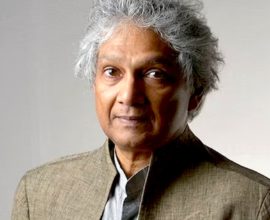
The throng of devotees and tourists visiting the Nallur festival had receded and life slowly returned to normal in Jaffna. I stayed behind to see if I could persuade others visiting from abroad to be a part of my Longing and Belonging series. I was especially interested in those that were engaging in a sustained manner, in contrast to the charming young family that I had met at the height of the festival. This however proved to be a challenge. I met many who were engaging with projects in the north, but who were uncomfortable with being open about their views, preferring instead to keep a low profile. One man who was willing to be involved was Dr Narendran, an associate professor who had worked for many years in Saudi Arabia, and who was now back in Sri Lanka, spending most of his time here. We talked over coffee at the famous Malayan cafe in the heart of Jaffna town…

Continue reading »

Longing and Belonging series: From London to Jaffna for the first time

Sequence 5

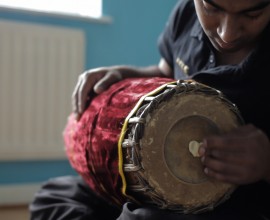
The Nallur festival was in full flow. Kavadi drummers played for the crowds of devotees that swelled around Jaffna’s famous temple. Dotted around me were visitors from abroad. It was wonderful to see they were back, tracing lost roots and reconnecting with family and friends. I wanted to meet them and to understand what it was like being back. One of these was a young Tamil family from London. For the two daughters, it was their first time in Sri Lanka, visiting what they called their mother’s “home country”. The family had been helping a local charity, the Hindu Board of Education, from afar and were in Jaffna to visit the orphanage and to take in the Nallur festival. The two girls had struggled all week with the heat, the mosquitoes and the crowds, but they didn’t complain. They took time to talk to the children in bits of Tamil that they had learned and handed out chocolates to them…

Continue reading »

Ending the Exile and Back to Roots: Fears, Challenges and Hopes

02_nomoretears

[Editors note: The author was married to Dr. Rajini Thiranagama (née Rajasingham), a Tamil human rights activist and feminist murdered in 1989 by the LTTE. She was one of the founding members of the University Teachers for Human Rights, Jaffna, which during the war, published some of the most hard hitting critiques and exposes of Government as well as LTTE atrocities and human rights violations. Since 2009, Dayapala Thiranagama's insightful articles to Groundviews have been amongst the site's most read and shared.] ### “Politics can be relatively fair in the breathing spaces of history; at its critical turning points there is no other rule possible than the old one, that the end justifies the means” (Arthur Koestler, Darkness at Noon, London, 1940, Page 81). On 27  December 1989 I arrived in Heathrow along with my two young daughters, aged 9 and 11 years. At  the Immigration Desk the  Officer asked me how long we intended  to stay.I replied ‘a couple of weeks’. My…

Continue reading »

Addressing Greg Sheridan’s Review of the Tamil Lobby and Australia

tamils_574484a

Greg Sheridan’s articles on the Tamil lobby in Australia and the workings of the Australian state are something of a breakthrough because the media coverage of the Sri Lankan conflict has been chequered and influenced by the naïve perspectives driven by the liberal ideologies which dominate some sectors of the fourth estate. Sheridan, in contrast, is on the conservative far right, so readers must attend to this circumstance when evaluating his reportage.[i] However, this orientation and his senior position as Foreign Policy Editor for The Australian render his intervention significant. There are two areas addressed by his article, “Criticism of Sri Lanka ignores Tiger threat.” One relates to his clarification of the reasons why the Howard government did not follow other Western countries in proscribing the LTTE in 2005. In sum, his amplification is quite revelatory. But one governmental consideration is astonishing: “the bureaucracy was hesitant about designating the Tigers as a terrorist organisation because it might lead to retaliation…

Continue reading »

Why The Diaspora Must Return To Sri Lanka

sri lankas mirror abroad

Image from Himal Southasian, Sri Lanka’s alternatives abroad, December 2010 | By Sworup Nhasiju [Editors note: Also read The Disillusionment of the Diaspora and Two years after war’s end in Sri Lanka: What can the Tamil and Sinhala diaspora do? that offer context and counter-points to this article.] In a recent post entitled “How The Diaspora Can Overthrow The Government”, blogger Indi Samarajiva put forth the notion that all the Diaspora needs to do to claim Eelam (or whatever solution it wants) is to come back. As idealistically narrow as this claim may be, it does bear a certain logic. As Indi puts it, radical change requires radical sacrifice. For many, the idea of returning to Sri Lanka is a fantasy but not a practical reality. There are limits to what one is able to do. Those who have children and extended families to support cannot afford to drop everything. And deeper still, the idea of returning to the devastation of what once was…

Continue reading »

The Disillusionment of the Diaspora

Screen-shot-2011-05-26-at-11.30.55-AM

[Editors note: Also read Two years after war’s end in Sri Lanka: What can the Tamil and Sinhala diaspora do?] Indi’s post entitled “How Diaspora Can Overthrow The Government” set me off on a train of thought. Thought about the Sri Lankan diaspora, its role in Sri Lanka, both now and in the future. The first mental hurdle I encountered was that of the definition of the word “diaspora”. What exactly is the diaspora? I was once involved in a discussion here in London in which a Sri Lankan (as I saw her) lady objected to being classed as “diasporic”. Her reasoning was that the diaspora was actually people who had forcibly left their country, which was not her specific case, and she requested that the rest of us refer to her by some other label. Sadly I can’t remember what it was. But, up until that point, I’d considered the term diaspora to be a general reference to emigrants. Broad I know,…

Continue reading »

Finding the Middle Ground

Just over a week ago, a couple of my colleagues and I appeared on a prominent Canadian talk show discussing our attempts, as both individuals and organizing members of the Young Canadians’ Peace Dialogue on Sri Lanka hosted by the Mosaic Institute, to find a middle ground with respect to the relationship of the Canadian Diaspora to the internal politics in Sri Lanka. Joining us on the show was Craig Scott, a renowned professor on international humanitarian law and R. Cheran, a high-profile Tamil Canadian academic and journalist. Amongst both our friends and the wider Canadian community, the panel discussion has been acknowledged as an example of an exercise in ‘truth telling’ rather than ‘finger pointing.’  During the half-hour discussion, key points in relation to understanding the mentality of the Diaspora were raised such the role of ethnic affiliation in adopted sides and the emotional intensity felt in the Diaspora during the last stages in the war. Perhaps more importantly, participants also…

Continue reading »

Two years after war’s end in Sri Lanka: What can the Tamil and Sinhala diaspora do?

Screen shot 2011-05-26 at 11.30.55 AM

Our review of The Cage by Gordon Weiss elicited an interesting question. Under the monicker Burning_Issue, the comment asked for advice on how best to engage with the Rajapaksa regime, and what the (Tamil) diaspora should do two years after the war ended. The comment is worth reading in full, and the most pertinent section is as follows, I am an expat Sri Lankan Tamil living in the West; I know the majority of the Tamils never wanted a separate state, but prefer that the Tamils should be allowed to live with dignity and security. They need to be able exercise their right to Tamil language on par with the Sinhala. Obviously; given what you have written; the MR regime would not address the Tamil concerns. Against this backdrop, what would you suggest that the Tamil Diaspora should do? There is so much they can do in terms of monetary and technical assistances, but perceive the MR regime as insincere…

Continue reading »

Going beyond mainstream media: The best Twitter feeds on and from Sri Lanka

Screen shot 2011-05-25 at 9.51.35 AM

Just over a year ago, in April 2010, Groundviews launched two curated Twitter lists on Sri Lanka to help those in and outside the country access news, information and critical conversations that went far beyond mainstream media’s economic and partisan shackles. One list featured some of the most compelling bloggers in Sri Lanka. The other, a list of news sources and Twitter accounts of journalists. Because they are oriented towards an international audience, the lists largely capture content published in English, though feeds like @vikalpavoices publish mostly in Sinhala. Coupled with our own feed, the two lists are comprehensive and by the very nature of the medium, constantly updated windows into issues, processes and events mainstream media could not, or would not cover. And even when they did, the Twitter updates on these feeds added new perspectives and often, information vital to understand context. On occasion, they have also served to hold mainstream media – both domestic and international –…

Continue reading »

Reflecting on the End of the Sri Lankan Civil War: The Need for a New Conversation in the Global Sri Lankan Community

Although military hostilities in Sri Lanka ended two years ago, the dynamics of the conversation in the global Sri Lankan community continues to be influenced by the nations’ past conflicts. Decades of communal grievances and misunderstandings have seemingly scarred our grandparents’ and parents’ generations to voice visions of a brighter future. Much of the current dialogue in the leadership of our communities attempts to justify past military actions and policy decisions. One community of elders extols the virtues of a successful military campaign against terror, conducted with little limits. A second community of elders focuses on building a separate nation without seeking alternate means of serving the population they supposedly represent. The Need for a New Conversation Common to both approaches – largely exclusionary of each other – is a substantive discourse of what the future should look like. Absent from the argument of who committed war crimes and who are terrorists is a discussion of the daily challenges faced…

Continue reading »

Ayelasah

190510_756371435141_172000575_43191100_1029468_n

It was early April and I stood at the back of a busy venue huddling my camera near my heart. I was the photographer for the night and every person that walked in, and took their seat, would be my muse. The numbers amazed me. There were over a hundred people for such a humble, and grass-root based, artistic fundraising event in Toronto. It was planned by a group of Sri Lankan youth with the hope of reaching out to support the flood relief effort in Batticaloa, which displaced hundreds of thousands of people. The event was creatively titled Ayelasah, after a rhythmic element in the rowing chants of South Asian fishing peoples, which sets the pace for work whose communal nature necessitates cooperation and harmony of movement. As everyone took their seats, and the event began, art, music, and spoken word consumed the venue. Stories of growing up in Batticaloa were shared by the elders. The young sang of…

Continue reading »

Around the World in 32 Years: A Mini-Memoir

Long-Reads-Small

[Editors note: Emil van der Poorten is a regular columnist in the Sri Lanka media. His short article in the Edmonton Journal (Violence still plagues my Sri Lankan homeland) prompted an invitation to contribute a more fuller account of his life to Groundviews. Emil's story and his many adventures with politics recounted here with an acerbic wit offer unique insights into political figures and events that have shaped our lives.] Looking through the scraps of memorabilia from the time prior to my departure to Canada and then through my Canadian clippings to those accumulated in Sri Lanka since my return was a fascinating and nostalgic experience that I would not have indulged in without the stimulus of having to write this piece for “Long Reads” in Groundviews. The exercise was not unlike browsing through old diaries, except the material in those scrapbooks was more akin to snapshots from a lifetime spent in significantly different circumstances in two very different parts…

Continue reading »

Moving Tamil Dissent Politics Beyond Anti-LTTEism

IMG_2255

To be able to engage in dissent politics one needs enormous courage. Not only in terms of the threats and dangers that come your way as a result of your decision to dissent (I remember Kethesh Loganathan once mentioning that when you dissent you risk bullets from multiple sides unlike when you take sides, when you have some cover) , but also whether you are convinced whether you are doing the right thing.  Particularly, when you are faced with a situation where as a result of the dialectics of power, one power (which I shall call the ‘initial source of power’) has led to the creation of another as a natural corollary. As a member of a political community subjected to immense oppression by the ‘initial source of power’ I have found it immensely difficult to decide how to respond to the power that was created as an anti thesis – as a response, in opposition and in resistance to…

Continue reading »

The Tamil Diaspora and the Future of the Tamil Struggle

Today, the 18th of February, finds us three months away from the second anniversary of the “Mullivaikal Massacre”. At this juncture it is important to ask the question: What constructive action can be taken by the Tamil Diaspora to build a better future for the Tamil nation? In Tamil culture, at a funeral, all the people of the village are expected to attend. It’s tradition. But if the whole village was a funeral house, who will go and to whose house?  Also, who will heal the existing souls? This is not just a philosophical question, but an unavoidable reflection on the May 2009 humanitarian catastrophe, where 40,000 Tamils were massacred and nearly 60,000 were wounded. Nearly one in four Tamil people became direct victims of the Sri Lankan government’s offensive military operation. And today the survivors still suffer lingering effects of structural and cultural violence. The disastrous events of May 2009, which were sold to the International Community as a…

Continue reading »

Shyam Selvadurai: Literature, identity, politics and the Galle Literary Festival

Screen shot 2011-01-17 at 8.12.15 AM

Shyam Selvadurai was born in 1965. His book Funny Boy introduced gay fiction to mainstream English literature in Sri Lanka, and indeed as Shyam notes, in South Asia. Born to a Sinhalese mother and Tamil father, Shyam was 19 when he left Sri Lanka in 1983 for Canada. Funny Boy was as much about class and ethnicity as sexual identities, and though Shyam has repeatedly noted that it was not autobiographical, the fiction is set against a violent Sri Lanka. Shyam is presently the curator of the Galle Literary Festival. In an essay (Coming Out) penned for Time in 2003, Shyam brought out the vexed relationship he has with Sri Lanka. On the one hand is the love for the country, “…live and let live generosity and good humour that I love most about Sri Lanka” and on the other, the unsettling nature of it “in this country that I still considered my home, I could never be at home.” Yet…

Continue reading »
Page 1 of 3123

About Groundviews

Located at the Centre for Policy Alternatives in Colombo, Sri Lanka, Groundviews is a citizen journalism website that uses a range of genres and media to highlight critical perspectives on governance, reconciliation, human rights, the arts and literature, democracy and other issues. The site has won two international awards, including the prestigious Manthan Award South Asia in 2009. The grand jury's evaluation of the site noted, "What no media dares to report, Groundviews publicly exposes. It's a new age media for a new Sri Lanka... Free media at it's very best!"

cezarneaga.eu