Archive for August, 2012

A disappearance every five days in post-war Sri Lanka

IMAGE-212

Photo courtesy WSWS On 21st at 2.31pm, August 2012, 32 year old Vasanthamala sent a sms from her mobile to her relatives saying she had been taken by the Criminal Investigation Department (CID) in Vavuniya. Around 8pm the same night, she made short phone calls to her mother and father, and said she was alright. When her parents had tried to find out where she was calling from, the call had been cut off and has been switched off thereafter, to date as her parents are still unable to get through to her. When her father tried to complain to the Vavuniya Police, they had refused to accept the complaint stating that she must have eloped with a man. The complaint was only accepted once her father visited the Police station the following day along with his wife. Prior to the arrest, on the 19th of August, some persons claiming to be from the CID, had called Vasanthamala’s mother and…

Continue reading »

The Disappeared in Sri Lanka

2007_SriLanka_Hands

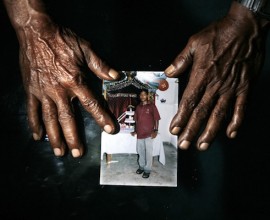
Photo from HRW A speech made today at a Vigil to Remember the Disappeared in Sri Lanka on The International Day of the Victims of Enforced Disappearances, held from 5-6pm at the State Library of Victoria premises in Melbourne, Australia. I am honoured to have been asked to speak at this Vigil, to Remember the Disappeared in Sri Lanka on this important occasion, of The International Day of the Victims of Enforced Disappearances. Sri Lanka is party to diverse declarations and conventions of the United Nations on human rights. Therefore, the main responsibility of protecting peoples’ rights lies with the government of the day. Today’s vigil calls upon the government of Sri Lanka to release the names of those individuals, who surrendered to the government forces during the last phase of the armed conflict in 2009. This Vigil also demands the government of Sri Lanka to put an end to the practice of enforced disappearances. These disappearances can be categorised…

Continue reading »

Open letter to Mark Davis, presenter of SBS Dateline on ‘Sri Lanka’s New Wave’

Screen Shot 2012-08-29 at 6.54.39 AM

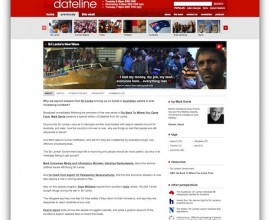
[Editors note: Watch SBS Dateline's Sri Lanka's New Wave, broadcast first in Australia on 28 August 2012, here.] Dear Mark, I am intensely troubled by the tenor of your report on Sri Lankan Tamil refugees on today’s Dateline. The picture you painted of the country doesn’t accord with any of the accounts I’ve heard, nor with well documented reports by international and local sources (eg. the Commission for Justice and Peace of the Diocese of Jaffna, Sri Lanka report). The government’s refusal to implement the findings of its own Lessons Learnt and Reconciliation Commission and the reception of the subsequent U.N Resolution alone should tell you something about the triumphalism and arrogance with which the state approaches the process of rebuilding. The program of Sinhalisation and militant Buddhism now underway in Sri Lanka (including recent attacks on a Mosque) were not even mentioned, nor was the corruption within the ruling family and the sense of impunity with which it operates, as…

Continue reading »

A Child of Apollo Salutes His First Hero: Remembering Neil Armstrong

Apollo 11 bootprint

Apollo 11 bootprint When Neil Armstrong took that first ’small step’ on to the Moon, at 10.56 pm Eastern Standard Time (EST) on 20 July 1969, a quarter of humanity — following it live on radio or TV — collectively held their breath. In the next moment, our various divides disappeared…at least for a brief while. As Arthur C. Clarke – who covered the Moon landing for CBS network – later summed up, it was “one of the great divides in human history; we are sundered from it forever by the moment when Neil Armstrong and Edwin ‘Buzz’ Aldrin stepped out on to the Sea of Tranquillity. Now history and fiction have become inexorably intertwined.” History was not only made that day; it was also witnessed, instantaneously, by an estimated 600 million people on TV. Another few dozen millions worldwide tracked mission progress on short wave radio. In contrast, only a handful of local people – including a solitary amateur…

Continue reading »

Rural entrepreneurship in post-war Sri Lanka: Jobs for youth and ICTs

Screen Shot 2012-08-27 at 11.37.32 PM

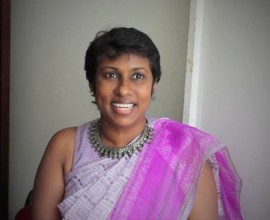
Her day job aside, Sandya Salgado is a Director of the Foundation for Advancing Rural Opportunity and approached Groundviews recently to talk with us about the organisation’s model for rural entrepreneurship in particular, and the prospects for BPO writ large in post-war Sri Lanka. In this brief conversation, we first talk about FARO’s BPO model which supports rural entrepreneurship through ownership of shares in the BPOs set up in Mahavilachchiya, Seenigama and Uduvil, in Jaffna. Sandya’s point is much broader than FARO – she speaks of the need to nurture business intelligence amongst Sri Lanka’s rural youth, and encourage a culture where they become shareholders in the companies they create. We talk about the challenges facing the BPO industry in Sri Lanka including the shortage of skills, as well as English language impediments. Sandya talks about the advantages of developing entrepreneurship amongst the rural youth, and flags an interesting trend, that more women seem to opt to stay in rural…

Continue reading »

Public Perceptions of the LLRC in Trincomalee

rajapaksa_llrc_report

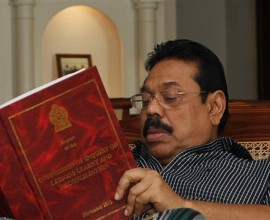
Photo credit JDS President Mahinda Rajapaksha appointed the Lessons learnt and Reconciliation commission in May 2010 and after 18 months of sittings, the commission submitted its report to the President in November 2011. The report is not only about the effects of war but also about the need to depoliticize state institutions and foster good governance. However, at the time of writing, the report is not yet accessible in Sinhala or Tamil, even though it was reported in the media that Sri Lanka’s Central Bank had commissioned the translations. As Kishali Jayawardena argued, many commissions of inquiry in Sri Lanka have been political exercises rather than genuine attempts to reconcile a traumatized nation.[i] While there are many national level civil society discussions on the Lessons Learnt and Reconciliation Commission (LLRC), there seems to be very little discussion on what citizens say about the LLRC and its recommendations. However, there is widespread hope that public demands will create the space to implement…

Continue reading »

A-Z of Sri Lankan English: U is for up

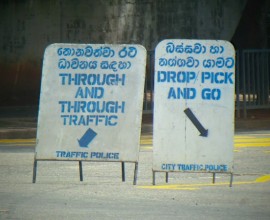
drop pick and go

The verb cope up is one which divides opinion: is it acceptable Sri Lankan English, or simply an error? It is certainly commonly used in SLE (“He’s finding it hard to cope up”), but it is also true to say that it is a signal that the speaker is not necessarily adhering to recognised international standards. In standard usage, cope is used without the particle up: “He’s finding it hard to cope”, “How is she coping with the pressure?” Improvement in the healthcare system helped it cope up with the very large number of war casualties from 2006-09. (Groundviews 16/08/08 – comment dated 16/01/10) The same applies to the verb bear up: “She couldn’t bear up the pain”. In this case, however, the verb bear up is used intransitively in standard English (“How are you bearing up?”), but not transitively (i.e. with a direct object), where the up is dropped: “She couldn’t bear the pain”, “I can’t bear it any…

Continue reading »
  • 24 Aug, 2012
  • 15 Comments
  • Colombo,
    Education,
    Politics and Governance

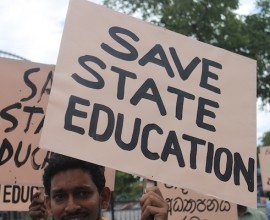
‘Save State Education’ in Sri Lanka: Photos and video from FUTA rally in Colombo

Screen Shot 2012-08-24 at 7.39.00 PM

Image courtesy Vikalpa As noted in the mainstream media, “thousands of university teachers, undergraduates and trade unionists marched to the Hyde Park yesterday, accusing the government of turning a blind eye on their grievances. Lecturers representing all universities in the country participated in yesterday’s protest organised by the Federation of University Teachers’ Associations (FUTA).” Vikalpa was present at the rally, and captured these photos and video. Repost This Article

Continue reading »

Mediated: Portraying hard data on Sri Lanka through art

Mika-detail

Mediated, an exhibition around a new aesthetic that seeks to communicate constitutional theory, hard data from economics and social polling and writing on religious identity through compelling art, runs till the 15th of September at the Saskia Fernando Art Gallery. As noted on the exhibition’s website, four individuals – a researcher, an economist, a constitutional theorist and an award winning novelist – were invited to give submissions that were anchored to issues vital to a greater and deeper social and political understanding of Sri Lanka today. Four artists were invited to engage with this primary resource material and interpret it so that it through what they produced, attention was focused on the inconvenient, critical engagement expanded and public apathy challenged. Read Asanga Welikala’s background note in full here, around power-sharing in pre-British Sri Lanka as a viable model for devolution of power post-war. See Sunela Jayewardene’s architectural sketch on it here and the final set of drawings here. Read Ameena Hussein’s text here, focussing on…

Continue reading »

Protecting Sri Lanka’s Ocean

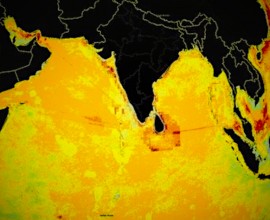
SL_Ocean

Sri Lanka is exposed as the worst polluter of the Indian Ocean. The new maps on human impact on the world’s oceans are now on the web (http://www.nceas.ucsb.edu/globalmarine ). Although there had been regular commentary on the need of every government and various authorities to be cognizant of oceanic health, it was a shock to see the evidence that is now before us.  The map of the Indian Ocean shows an ugly halo of pollution and ocean impact that rings the ocean around Sri Lanka. The irresponsible use of our land, cutting the forests, eroding the soil and drenching it with artificial fertilizers and agro/ industrial toxins, finally result in polluting the ocean. First there was the loss of the rock pool corals, then the shore corals, next the fringing shallow reef and finally the deep reef. We saw these degrade and disappear within our lifetime, but the extent of the damage to the ocean around us was not even…

Continue reading »

Do women play a role in Sri Lanka’s ‘reconciliation’?: Gender dynamics in the transition from war to peace

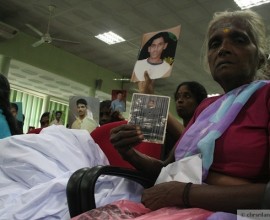
5380440818_c2e51dda81_b

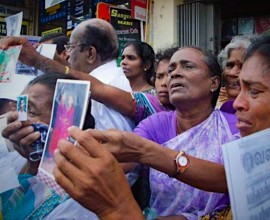
A mother displaying the photographs of her sons who are missing during the Lessons Learnt and Reconciliation Commission (LLRC) session in Trincomalee, December, 3-5, 2010. Photo courtesy Centre for Human Rights Introduction In order to understand the ‘role’ of women in such a vital process of social transition, we have to understand the place of women in our society – their position, their status, their condition.  This conference is being held at a time when the country is shaken by a spike in reports of sexual violence against women and girls in the South of the country. Over the past few years there has been a phenomenal rise in civilian acts of violence specifically against women:- Incidents of ‘grease yakkas’ that sexually terrorised women were reported from right across the country, including the supposedly heavily controlled North and East; Half-burnt bodies of raped and battered and murdered women are being found mostly in one district alone, Ratnapura; Adolescent girls are being…

Continue reading »

Science and Politics of Mass Kidney Failure in Sri Lanka

Map courtesy Nephrology Times Sep 2008

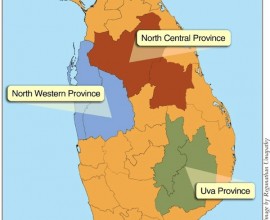
Much of Sri Lanka’s Dry Zone is currently grappling with a drought caused by the delayed Monsoon. This is a double whammy for residents in several districts who have been engulfed by another ‘slow emergency’ for two decades: mass scale kidney failure affecting large numbers. Diabetes or high blood pressure can lead to kidney failure. But beginning in the 1990s, thousands of people in the North Central Province (NCP) developed the condition without having either factor. Most were male farmers. This puzzled doctors and other researchers who struggled to understand how and why. It was soon assigned an official name: Chronic Kidney Disease of unknown etiology (abbreviated as CKDu). CKDu has evolved into a humanitarian tragedy on a mass scale. It is claiming more victims every passing year, spreading to more areas, and gradually overwhelming the healthcare system. Its causes are still unclear and hotly debated. Anuradhapura and Polonnaruwa Districts are ‘Ground Zero’ of this mysterious ailment for which there…

Continue reading »

Re-imagining Lakshman Kadirgamar in Contemporary Sri Lanka: A Different Reading

kadirgaman_press_conf_02

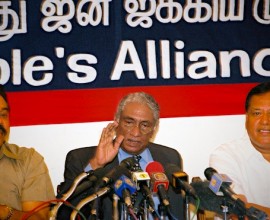
From 2003, Lakshman Kadirgamar addressing a press conference with the Mahinda Rajapaksa (before he was President) and Sarath Amunugama are also seen. Photo via Tamilnet.com Ever since his brutal assassination in 2005, those of us who have admired Lakshman Kadirgamar have often imagined what Sri Lanka would have been like, had he remained at the helm of Sri Lanka’s foreign policy making. In this imagination, Kadirgamar re-appears as a hero, almost super-man like, to save us from the diplomatic ignominies that have struck Sri Lanka on the international stage. This is what our deep attachment to the man does. We had an idea as to how he operated, we know that the current operation looks hopeless, and in comes Kadirgamar who shakes up the system, makes it work, makes it look wonderful. This sort of imagination has been well articulated by many of Kadirgamar’s admirers and friends in the recent past. Mr. Tissa Jayatilaka’s ‘In Remembrance of Lakshman Kadirgamar’ (Colombo…

Continue reading »

The struggle to go home in post war Sri Lanka: The story of Puthukudiruppu

Taking-home-the-wood-from-UNHCR

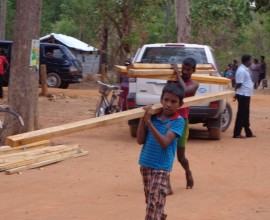
Rajini (pseudonym) was amongst the ten women we met in a church in Vavuniya district about a week ago. At the time she and two of her children were living in Kadirgama camp in Menik Farm. The women and their families were displaced since 2008 and were prevented from going home to Puthukudiruppu. Some of us had known this community for several years and their yearning was always to go home to their villages despite the uncertainties about the remains of their houses and property. Rajini’s husband was killed on April 17th 2009 during the last phase of the war between the Government of Sri Lanka and the Liberation Tigers of Tamil Eelam (LTTE). Her eldest son, now 23, was forcibly recruited by the LTTE in 2007. Two years later, at the end of the war, he and other former LTTE combatants were detained by the police and moved to the Boossa detention Centre in the Galle District. Rajini has…

Continue reading »

Feeding cats on a public road risks arrest in Sri Lanka

IMAG0056

My husband and I have established a cat café at the back of the Cinnamon Grand Hotel where we have been feeding the cats every day for the last seven years. A cat café is basically an area where cats are fed at a regular time each day. Usually a cat café is set up at a hotel, school or other public place where cats would otherwise be attracted by a steady supply of food and become a public nuisance and, in countries like Sri Lanka which still has endemic rabies, a health hazard. Feeding them away from areas where people congregate while at the same time sterilizing and vaccinating them removes the nuisance and public health risk and allows cats and humans to coexist peacefully. We feed eight cats at the cat café and have sterilized all but one of the females and vaccinated all but that one particularly timid female. Over this last school holiday period we have…

Continue reading »
Page 1 of 212

About Groundviews

Located at the Centre for Policy Alternatives in Colombo, Sri Lanka, Groundviews is a citizen journalism website that uses a range of genres and media to highlight critical perspectives on governance, reconciliation, human rights, the arts and literature, democracy and other issues. The site has won two international awards, including the prestigious Manthan Award South Asia in 2009. The grand jury's evaluation of the site noted, "What no media dares to report, Groundviews publicly exposes. It's a new age media for a new Sri Lanka... Free media at it's very best!"

cezarneaga.eu