Archive for the ‘Economy’

THE RAJAPAKSE REGIME: BRICKBATS, PLAUDITS

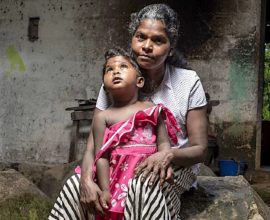
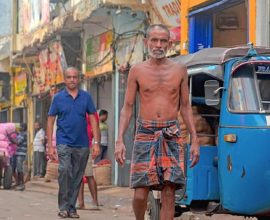
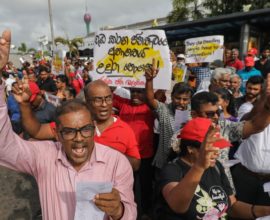
[Editors note: This article complements The Rajapakse Regime and the Fourth Estate, also by the same author.] This is a disjointed exercise that does not claim comprehensiveness. That is impossible in a short essay, the more so because I write without ethnographic exposure to the experiential subjectivities of either the Tamil people in Sri Lanka or the poor people from every community struggling with the cost of living. Terrible Record In a recent essay I have briefly annotated the government’s failure to prevent a series of killings and intimidations directed against media personnel and the widespread belief that elements in its sprawling establishment had a hand in many of these acts of injustice.[i] In step with this record the Rajapakse Regime has consolidated the long tradition of overcentralised decision-making and authoritarianism at the top that has been a feature of Sri Lanka’s so-called democratic institutions for many decades.[ii] It is not surprising, therefore, that little or nothing has been done…

Continue reading »

Chellaney on Indo-Sri Lanka relations: How not to win friends and influence your neighbours

Table 1

Intellectuals in India have unfortunately not played positive roles in building good relations with its small neighbors.  For the most part they ignore all neighbors other than Pakistan.  In the few cases they do not, they tend to do active harm.  The recent article in Forbes.com on 9 October 2009 (http://www.forbes.com/2009/10/08/tamil-tigers-rajiv-gandhi-opinions-contributors-sri-lanka.html) by Professor Brahma Chellaney exemplifies the latter. Justifying cross-border terrorism India is a country with many minorities.  Would it like an external power describing one of its minorities as its “natural constituency” as Professor Chellaney does?  I do not know quite what to make of this excerpt from his article:  “India already had alienated the Sinhalese majority in the 1980s, when it first armed the Tamil Tigers and then sought to disarm them through an ill-starred peacekeeping foray that left almost three times as many Indian troops dead as the 1999 Kargil War with Pakistan.” Was the alienation of the Sinhala majority a good thing?  Was the alienation caused…

Continue reading »

GSP+, SOVEREIGNTY, DOUBLE STANDARDS AND TERRORIST TRAITORS

It is worth clarifying here the situation regarding the EU GSP+ facility, given the confusion prevailing in the mainstream media. The EU has NOT threatened trade sanctions against Sri Lanka. The GSP+ facility is an extra privilege granted to developing countries which abide by certain human rights norms. If it is withdrawn, the EU will continue to trade with Sri Lanka, but its imports from Sri Lanka will have to compete with imports from other countries likeIndia and China which do not enjoy the GSP+ facility. This means their quantity will decline, and there would be job losses for workers and revenue losses for the government. Is this fair? The lengthy EU report on Sri Lanka produces mounds of evidence that Sri Lanka is not complying with the human rights norms which are compulsory for receiving GSP+ privileges. Take just three out of the many more instances cited there. One is the detention of around 280,000 displaced civilians in IDP camps for months on end. The government claimed it was housing…

Continue reading »

Is Sri Lanka on the East Asian Path?

Many questions with regard to democratic values and system of government in Sri Lanka have surfaced in recent years and it has been argued by some that Sri Lanka is heading at accelerating pace towards an authoritarian regime similar to that can be found in countries like Zimbabwe. An assassination of media persons, curtailment of civic rights, death threats for dissidents, non-implementation of relatively democratic amendments to the constitution are depicted as symptomatic of this trend. In this note, I argue that this analysis lacks theoretical consistency as well as empirical substance and reveals major flaws in Sri Lankan democratic discourse. In a nutshell, my main argument here is that in recent years Sri Lanka has shown a clear tendency of moving towards the East Asian and South Asian variety of democracy. If Sri Lanka can address the issue of internally displaced people reasonably well and in a short span of time, this regressive tendency towards East and South Asian…

Continue reading »

Post-conflict Transition and Aid Effectiveness: Reconstruction and Reconciliation in Sri Lanka – Part 2

[Editors note: Read Part 1 of this article here.] Economic and Governance Challenges in Post-conflict Areas The Rajapakse government is increasingly dovetailing its policies to make Lanka a destination of Indian and Chinese investment. As a first step in attracting investments in the former north-east conflict zones, the government recently announced a 15-year tax holiday for companies setting up operations in these regions. Among those queuing up are NTPC, Cairn, L&T, Purvankara and various information-technology (IT) companies. India’s National Thermal Power Corporation is expected to sign an agreement soon to set up a 1,000 MW coal based power plant in Trincomalee with an investment of US$500 million, while Cairn India has received approvals for oil exploration projects at a cost of US$400 million. Infrastructure companies Larsen & Toubro and Puravankara are also headed to the island nation to set up shopping complexes and housing projects. BSNL recently bid for the Sri Lankan operations of Luxembourg-based mobile service provider, Millicom International….

Continue reading »

GSP Plus: Minding our business

The Final Report of the investigation initiated by the European Union under the terms of the GSP Plus concession entitled “The Implementation of certain Human Rights Conventions in Sri Lanka” has been handed over to the Government of Sri Lanka (GOSL).  The GOSL has time till the 6th of November to respond to the report. Two months from that date- 6th January 2010- the Council will take the final decision on the extension of GSP Plus to Sri Lanka, which will be effective six months from that date. According to the statement released by Lutz Gullner, the spokesperson of the European Commission: The Commission has completed a thorough investigation into the human rights situation in Sri Lanka and in particular whether Sri Lanka is living up to the commitments it made to respect international human rights standards when it became a beneficiary of the European Union’s GSP+ trade incentive scheme which provides for additional trade benefits. The report comes to…

Continue reading »

Post-conflict Transition and Aid Effectiveness: Reconstruction and Reconciliation in Sri Lanka – Part 1

In the heydays of the Non-Aligned Movement Sri Lanka’s politicians and diplomats wielded an influence disproportionate to the county’s size on the international stage. However, the last 30 years of armed conflict and the form of its ending has tarnished the island’s international reputation. Yet at home, the Rajapakse government by comprehensively defeating the LTTE  has secured the lasting gratitude of the majority of the people and is widely expected to sweep the general and presidential elections to be held in 2010. The Sri Lanka government also has a golden opportunity to move quickly to heal the wounds of 27 years of conflict through timely reconstruction and reconciliation. The international community would need to support the transition by ensuring aid effectiveness and good donorship. The President of Sri Lanka, Mahinda Rajapakse, had planned to attend the 64th Sessions of the United Nations General Assembly in New York in September 2009 and showcase the success of the island’s military strategy in…

Continue reading »

The Rise of an American Empire? An analysis of political, military, economic and ideological variables

‘In the Battle of Iraq, the United States and our allies have prevailed…Mission Accomplished’ (President Bush, May 1st 2003)’. The above quote refers to former President Bush’s rather premature assertion that the conflict in Iraq had been concluded as of May 1st 2003 after only two months of combat. The reality has turned out to be rather different and has damaged America’s reputation among the global community and has generated much debate across the political spectrum as to whether the US is indeed now an empire after its unprovoked attack on the sovereign state of Iraq. Historically, the US had for the most part until recently only faced the accusation of ‘empire’ from the political left, for example, Edward Said argued that while the British and French Empires of the early twentieth century have fallen apart, imperialism is far from dead and the US is the nation that today shoulders the burden of empire (Said,1994). Therefore, the image of an…

Continue reading »
  • 15 Sep, 2009
  • 5 Comments
  • Colombo,
    Economy,
    Environment

Pitfalls of Sri Lanka going nuclear – Opening the public debate

Sri Lanka on the nuclear map Recently Sri Lanka has shown increased interest in using nuclear energy for future power generation. The Atomic Energy Authority (AEA) of Sri Lanka is in the process of seeking cabinet approval to initiate a programme for ‘Nuclear Energy for Peaceful Use’. Initial explorations in Sri Lanka have shown that some areas of the Southern and Western coastline have thorium deposits, which can be used as a nuclear fuel. India, which utilizes thorium for large-scale energy production has entered discussions on how it could assist Sri Lanka to develop thorium based energy. This article argues that nuclear energy is not a viable option for energy generation in Sri Lanka as it is not safe, cost effective or emission free as proponents of nuclear energy suggest. The article advocates that the Sri Lankan Government should explore and invest in renewable energy sources to manage Sri Lanka’s energy needs in the future. The ugly truth about nuclear…

Continue reading »
  • 30 Aug, 2009
  • 2 Comments
  • Colombo,
    Economy,
    Peace and Conflict,
    Politics and Governance

Capitalism, security and foreign aid – The behaviour of aid agencies in the context of Sri Lanka’s conflict

The purpose of this article is to try and explain the behaviour of aid agencies in the context of Sri Lanka’s conflict. With the escalation of the armed conflict between the LTTE and the Sri Lankan state in recent times, there have been a number of developments within aid agencies that seem to be contradictory. While some agencies have reduced or even closed down their operations, others continued to support Sri Lanka. The recent decision by the IMF to grant a loan to Sri Lanka is the latest in the latter category. In order to understand this behaviour there we need to move our analysis beyond the confines of the Sri Lankan state and take into account the globalised world. This is true not only in the case of a clearly global phenomenon like foreign aid but for many other aspects of our society in the new millennium. Despite the protests of anti-globalizers, globalization is already a part of our…

Continue reading »

Some Reflections on North-East Development in Sri Lanka

(The author is formerly of the Ceylon Civil Service and Retired Senior Professional of the Asian Development Bank.) Recent developments, including the statements made by President Rajapakse and his brother Basil Rajapakse, on the need to return North to normalcy after the horrific civil conflict that brought suffering and dislocation to countless number of civilians, provide opportunities to revisit the past and look at the pre-conflict situation to determine current and future courses of action. In order to do so it is necessary to define priorities in the light of conflicting reports emanating on the ground situation in Wanni and elsewhere. The issue of Internally Displaced Persons (IDPS) Attention has been drawn to the plight of the internally displaced persons (IDPs) living in camps, the conditions of which have been variously described as “poor and sub standard” and “below expectations” both within and outside the country. Obviously a sudden influx of thousands of people from war-torn areas creates difficulties for…

Continue reading »

Exclusive video interview with Somawansa Amarasinghe, the Leader of JVP, in English

Two weeks after I had interviewed Prof. Tissa Vitharana on, among other things, the full implementation of the 13th Amendment, I spoke with the Leader of the JVP Somawansa Amarasinghe for his take on constitutional reform. During the course of our interview, Mr. Amarasinghe came out strongly in favour of the rights of all minorities, the need to meaningfully look into the well-being of Tamils interned in IDP camps and the importance of a secular State. Recalling the violent history of the JVP, he suggested that it was government that pushed the JVP to violence, yet saw little parallel between this violence and that of militant Tamil nationalism. Acknowledging that inequality, the marginalisation of Tamil youth and the denial of some of their rights led to the rise of violent conflict, Mr. Amarasinghe said the JVP accepted the historic repression of Tamil youth, but that this was justification for the violence to establish Eelam. On the other hand, he said…

Continue reading »

The Aid Game and the Politics of Humanitarianism

The US government, which wields considerable influence at the International Monetary Fund (IMF), has sought to delay Sri Lanka’s USD 1.9 billion loan appeal. Washington’s hesitance is tied to the context of the humanitarian crisis that preceded the defeat and destruction of the LTTE and the killing of its leader, Velupillai Prabhakaran. Sri Lanka needs the IMF loan to service its external debt, which has accumulated as a result of soaring defence expenditure as well as borrowing related to controversial oil-hedging deals. The government is also seeking funds for the reconstruction of the conflict-affected northeast. The disbursement of the funds has also been a somewhat controversial issue outside Washington, DC. Initially, the United Nations Security Council had determined that it would not block the loan, when the subject came up during informal discussion. The UN Office of the High Commissioner for Human Rights (OHCHR), Britain and France have, however, asked for an investigation into war crimes and violations of the…

Continue reading »

I’m no Jean Monnet but…: Thoughts on regional integration and state consolidation in South Asia

A case has been made by scholars better versed than myself, and continues to be so made, for a ‘South Asian Community’, centred on a single market. With a region that, with the remarkable exception of India, remains in impasse, such a regional integrative framework is ideal and essentially practical on various levels. Let us pull back from more specific observances to make some exploratory effort that lays the foundation for an advanced goal of regional integration. What dilemmas does one face when proposing to work on South Asia? That the region, belonging to that notorious grouping of the Third World, has remained handicapped by issues of poverty, development, ethnic riot, gender inequalities and infant constitutions is a popular representation. It is not contended here that these are not realities of the South Asian situation. The anchor for this examination lies in the simple statement that, in order for the South Asian region to draw upon its extensive resources and…

Continue reading »
  • 7 Apr, 2009
  • 9 Comments
  • Colombo,
    Economy,
    Politics and Governance

Behind the IMF bail-out and the state of the Sri Lankan economy with Harsha de Silva

An interview with eminent economist Harsha de Silva on the context leading up to and the fall out of the International Monetary Fund (IMF) bail-out package and the general state of the Sri Lankan economy. Harsha de Silva is a development economist by training and has over the last fifteen years worked across the emerging Asia region on development finance, public policy, reform and investment in energy and water, infrastructure regulation, socioeconomic and market research and on information and communication technology [ICT] for development. Repost This Article

Continue reading »
Page 5 of 6« First...23456

About Groundviews

Located at the Centre for Policy Alternatives in Colombo, Sri Lanka, Groundviews is a citizen journalism website that uses a range of genres and media to highlight critical perspectives on governance, reconciliation, human rights, the arts and literature, democracy and other issues. The site has won two international awards, including the prestigious Manthan Award South Asia in 2009. The grand jury's evaluation of the site noted, "What no media dares to report, Groundviews publicly exposes. It's a new age media for a new Sri Lanka... Free media at it's very best!"

cezarneaga.eu