
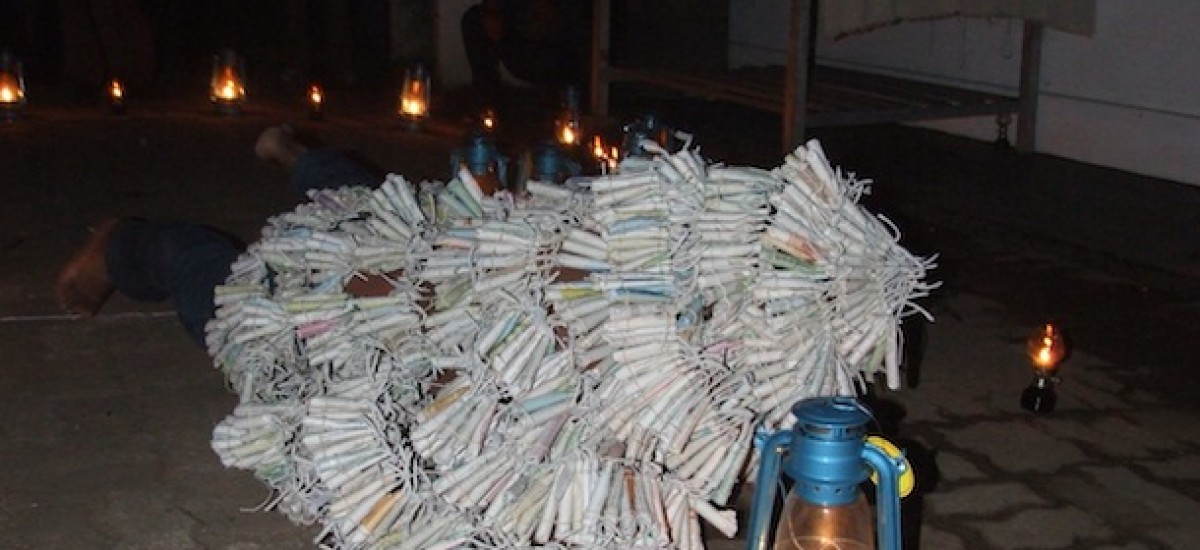

“Sethu Samudram” is a three-year collaborative art project and a dialog-making platform between Theertha International Artists Collective, Colombo, Sri Lanka and 1Shanthi Road in Bangalore, India.
“Sethu Samudram” is the name of the mythical bridge found in Ramayana, meaning the bridge across the ocean. This bridge connects Sri Lanka and India.
There is substantial amount of good reasons to believe the existence of a real “Sethu Samudram”– a bridge across the ocean – between the two geographies in the ancient times, not only conceptually but also physically. This naturally-formed ancient bridge in the Palk Strait has acquired numerous mythical dimensions through millennia.
South India is only 22 miles across the Palk Strait from North of Sri Lanka. Considering the proximity of South India to Sri Lanka, even without much hard arguments, the possibility of cultural exchanges and human migration between these two geographical zones for millennia can be an obvious presumption.
Now a construction of a real human-made bridge is scheduled to be constructed linking Sri Lanka and South India on the same place where the ancient bridge was supposed to have been. The mythical bridge is under physical threat and is drawing critical attention from various interest groups, mostly Indian. They are highlighting many opportunities and potentials as well as imagined ecological, social, political, and cultural threats, which might ensue from the building of this bridge.
“Sethu Samudram” ~ an art project that Theertha and 1 Shanthi Road have developed collectively, is envisioning to investigate this highly complex and variegated history and emotions surrounding the concept of “Sethu Samudram” and foreground the links, similarities, and shared anxieties, emotions and histories between the two geographical areas. The overall research will cover a wide area of study that includes society, politics, history, religion, and mythology as relevant to Sri Lanka and India. The “Sethu Samudram” project would like to engage in the wider discussion of History navigating through the contemporary ideological and methodological innovations of visual arts within the South Asian region. With this in mind, “Sethu Residency 1 @ Theertha 2010”, is the very first research-based art residency under “Sethu Samudram” the art project held in Sri Lanka.
Participating artists are Koralagedara Pushpakumara (Sri Lanka), Madhu D (India), Pradeep Chandrasiri (Sri Lanka), Sharni Jayawardena (Sri Lanka) and V.G. Venugopal (India). The Sethu Residency 1 @ Theertha 2010 was inaugurated on 27th of December 2010 at Theertha Red Dot gallery in Pittakotte. The exhibition will remain open till 11th of January 2011. The gallery hours are Monday to Wednesday 10.30 AM – 5.00 PM, Sundays 11.00 AM – 4.30 PM.
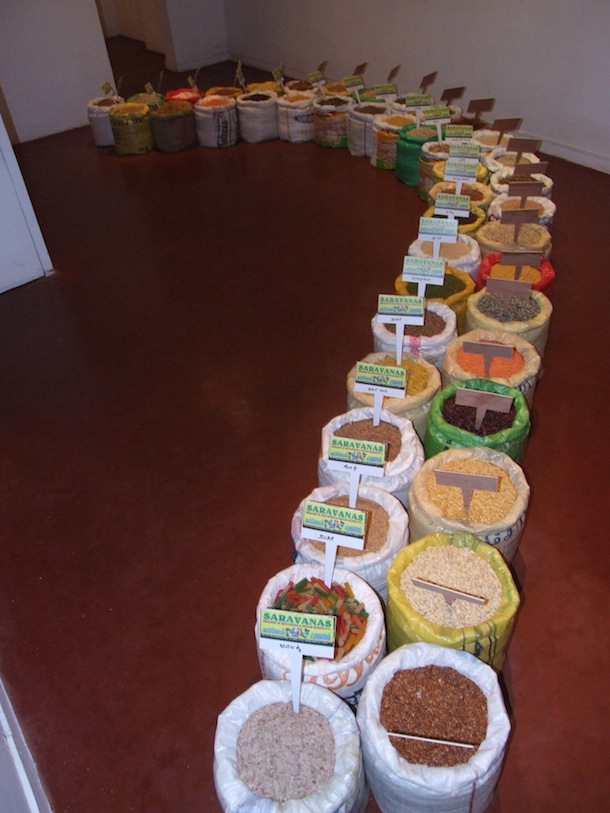
Sri Lankan visual artist Koralagedara Pushpakumara expanded his imagination by using the distance between North of Sri Lanka and South India ~ 22 Miles. He used 22 sacks of various groceries imported from South India to Sri Lanka.
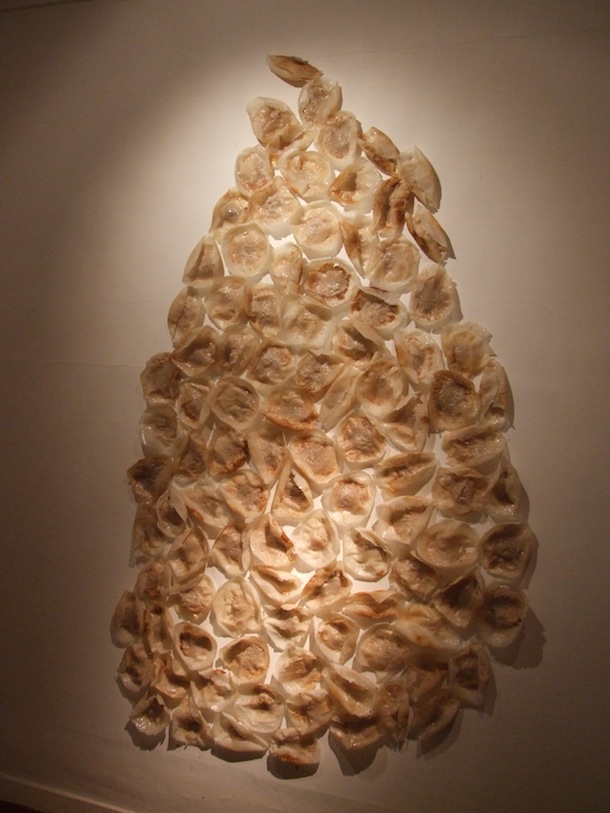
Creation by Indian artist Madhu D
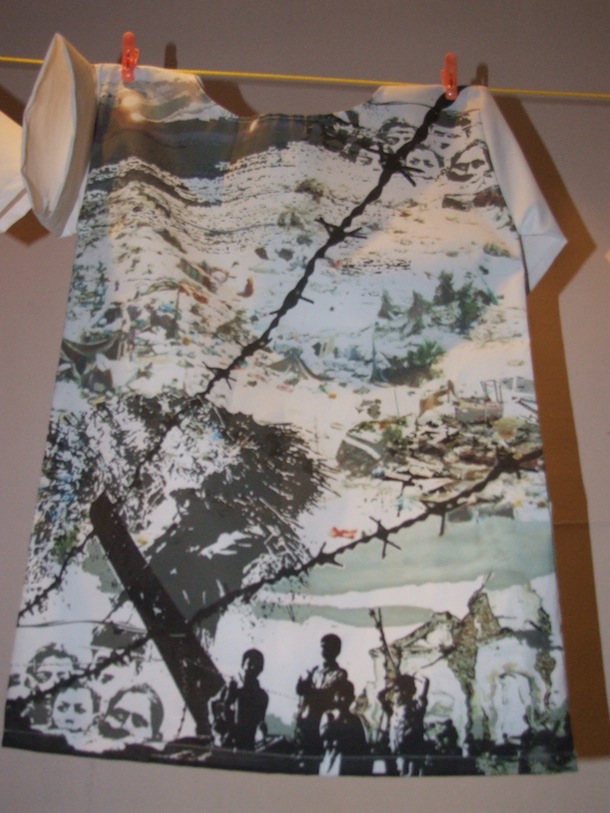
Series of shirts by Indian artist V.G. Venugopal
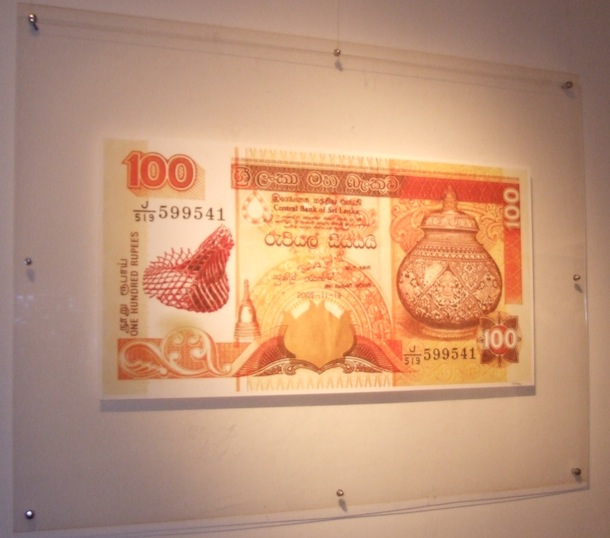
Sri Lankan artist Pradeep Chandrasiri’s creation on display
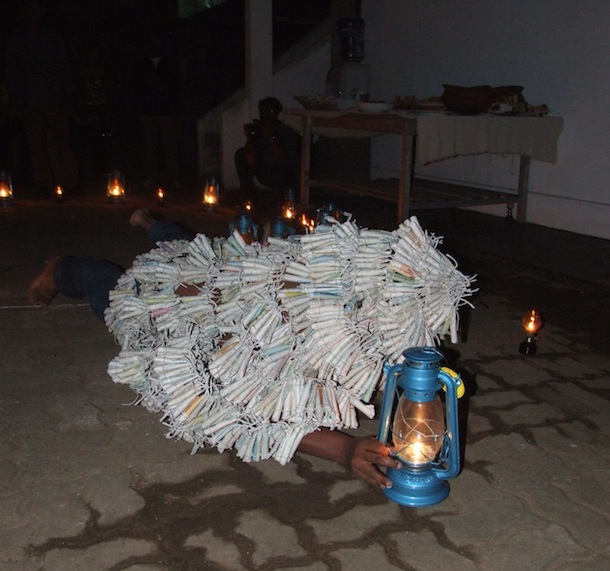
Performance by guest artist Bandu Manamperi