• 8 May, 2012
  • 11 Comments
  • Colombo,
    Environment

Is Sri Lanka’s Road to Rio +20 Paved with Lies?

Rio logo English

March 12 1997 was a dark day when personal power was used to subjugate not only national laws  but also to subvert the international environmental obligations of this nation. On this day, the President of Sri Lanka Mrs. Chandrika Kumaranatunge issued a directive under emergency regulations which stated that neither the national Environmental act no.47 of 1990, the Urban Development Authority law no.41 of 1973, the Nuisance Ordinance (chapter 230), nor the Criminal Procedure Code Act no.16 of 1976 “shall be in force or effect in so far as they relate to the generation of power and energy”.  The public was never consulted and the move seems to stem from the insistence of the Ceylon Electricity Board (CEB) the national power generating authority to override any environmental or social concern over their operating procedure. This unilateral action by Mrs. Chandrika Kumaranatunge acting as the President of Sri Lanka, to suspend all national legislation pertaining to the environment and public safety…

Continue reading »

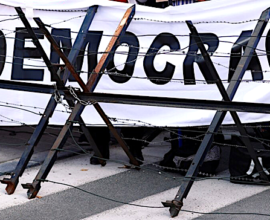
Democracy, Good Governance, Human Rights and the Effective Implementation of the LLRC Report

rajapaksa_llrc_report

Photo credit JDS Aung San Suu Kyi, the Winner of the Nobel Peace Prize, 1991 in a contribution titled “Human development and human dignity” stated that “Respect for human dignity implies commitment to creating conditions under which individuals can develop a sense of self-worth and security. True dignity comes with an assurance of one’s ability to rise to the challenges of the human situation. Such assurance is unlikely to be fostered in people who have to live with the threat of violence and injustice, with bad governance and instability or with poverty and disease. Eradicating these threats must be the aim of those who recognize the sanctity of human dignity and of those who strive to promote human development. Development as growth, advancement and the realization of potential depends on available resources—and no resource is more potent than people empowered by confidence in their value as human beings. The concept of human development is no longer new. But some analysts…

Continue reading »

Hate

Tell me, do you feel it every day? When you’re buying groceries, taking a train to somewhere; when you smoke, eat or dream? Does it take a toll? Make your feet drag, perhaps, or your head ache? * Tell me, Does it get away from you sometimes? Have people around you sensed something not quite right, caught that glint in your eye (there for just a second, and gone the next) and wondered what it was that made their skin crawl? Or have they wished you good morning every day, sat down to lunch with you, asked how your mother was, without ever having a clue? * Tell me, where does it hide? What shape does it take? I imagine a boiling lava, burning in the pit of your stomach, roaring with something other than hunger. Or a demon that sits on both your shoulders, having laid waste to the angel of good conscience, whispering secrets and schemes into your…

Continue reading »

A-Z of Sri Lankan English: R is for rubber slippers

product_26956

Image courtesy Odel They’re called thongs in Australia, jandals in New Zealand, Hawaii chappals in India and Pakistan. According to Wikipedia, they’re known as slip-slops in South Africa, go-aheads in the South Pacific, japonkis in Poland, and vietnamkis in Russia. The standard term in the UK and the US is flip-flops. Here in Sri Lanka they’re most commonly referred to as rubber slippers; also bathroom slippers, and Bata slippers (or Batas). And some of us like to talk about our Arugam Bays. To a speaker of British English, slippers are an item of footwear worn inside the house. They are usually closed but loose-fitting, and often fur-lined to keep your toes warm. It’s unlikely that you would step outside in them. But in other less chilly parts of the English-speaking world, the word slippers is more likely to refer to any type of open sandal, usually made of leather, plastic or rubber, including flip-flops. In South Asia, slippers are the…

Continue reading »

Extra Time

The latest news from the family-run, once independent island, is the appointment of a presidential committee to decide upon which recommendations to adopt regarding the erstwhile ethnic question, which has been subsumed into the unitary enterprise of the war-fighting, now North and East-occupying, government dedicated to paying appropriate attention to the international human rights lobby and European and American states. Nothing like a committee to push the football away, like the many formed and dissolved in the past without achieving laws, but which gained time for the family to work and play.

Continue reading »

Some Thoughts on the Eve of 2012 Vesak

vesak48600

Image courtesy Reuters Two  Veask Poyas  have come and gone and three years  have  sped by since May 2009 when the prolonged war with the LTTE ended. And we Sri Lankans are yet trapped in post-war rhetoric and caught up in punches and counter-punches arising from different visions of what post-war Sri Lanka ought to be.  Debates on who is a patriot/nationalist and who is a traitor have raged. Some Sri Lankans, sadly, have  tended to the viewpoint that saving face is more important than national  self-preservation  and self-respect.  Is   one  who has a honest disagreement with the government in office, no matter how different and opposed to that of the establishment point of view his/her opinion may be, actually a traitor? No fair-minded Sri Lankan will think so. Conversely any citizen who uncritically agrees with everything the establishment says or does  is not ipso facto a patriot or a sensible nationalist.  Happily  most  Sri Lankans, not blinded by bigotry…

Continue reading »

Mobs, Monks and the Problems of Political-Buddhism

FE198A6C1F28878264F1F164E4391

  Original photograph REUTERS/Damir Sagolj It is always a curious and odd little matter, to witness how even Buddhists become so obsessively attached to ‘sacred’ lands and in protecting them, commit acts seemingly prompted by hatred, delusion and ill-will. Ideally, lands should not become ‘sacred’ for simple reasons. The Buddha, in attacking the rigid and unethical caste-system during his time, placed great stress on the importance of deeds or action. That was why it was said (in the Vasala sutta) that one did not become a Brahman (or an outcast) by birth, but by deed. That wonderful message ought to have taught us a very valuable lesson, which, to rephrase the Buddha, could be stated as follows: that a land becomes a ‘sacred’ (or Buddhist) land not by anything else but only by the words and deeds of those inhabiting that land. Even a place of religious worship would lose its sacredness if, in the guise of religion, all manner of…

Continue reading »

Surrendering and Disappearing: Where are they now?

Image from WSWS

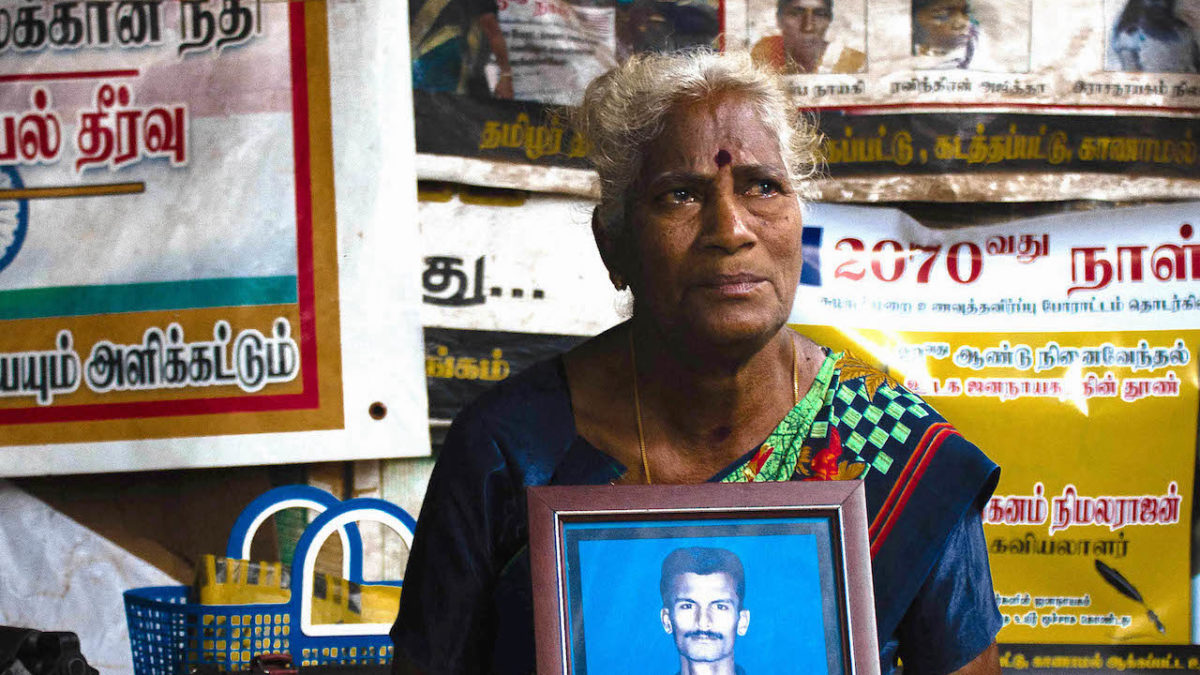
“Disappearance is far worse than death, because when a person dies, when I know that, so and so is dead, the story ends and somehow or other we close the chapter. But when a person has disappeared, it is an eternal suffering.”                                                                          (A.Santhipali, before the LLRC at Jaffna on 12th November 2010) In the controversial Commission of Inquiry on Lessons Learnt and Reconciliation, 53 LTTE cadres who surrendered during the final days of the war in May 2009 are alleged to have been disappeared and are reported to be under the category of ‘missing’. What happened to these 53 people? Their relatives and close kith and kin say that they were last seen and heard surrendering to the Sri Lankan Army. In the LLRC report, many family members of former LTTE cadres have complained that their husbands, wives, sisters, brothers, sons and daughters have disappeared after they surrendered to the Sri Lankan security forces. These family members still await…

Continue reading »

Too brown, Too dark, Too Ugly

Color-Blinding-Beauty-How-Our-Obsession-With-Skin-Color-Is-Erasing-Our-Ethnicities

Top left to bottom: Advertisements for Fair & Lovely, Clean and Dry Intimate Wash and Vaseline’s Fair & Handsome, from Meets Obsession Recently, a close member in my family gave birth to a beautiful boy. I have yet to visit her, but I have seen a picture of the tiny infant. He is adorable. Although, we must all admit that newborns are quite odd-looking with their squishy faces, slightly flattened head, and half-opened eyes that seem too large for their faces. But gazing at the picture, I could see my mother in the corner of my eye, waiting for a chance to comment on something that I had not picked up when looking at the photograph – the colour of his skin. This angered me. Not surprisingly, I must say as this is just one of those random moments where I remain completely baffled by the way my family thinks. She went on about how my family members, including the…

Continue reading »

Dambulla Mosque Attack: A Litmus Test of a Nation in Transition from Chauvinism to Civility

154588_10150694677647466_546987465_9672521_2008736377_n

This Koran is tattered because Buddhist monks had been tearing the pages out of it. Asked if the monks had tried burning a Koran, I was told no – Caption and photograph by Navin Weeraratne This is in response to the comments to my previous post – Dambulla Mosque Attack: Is there a hidden hand? At the time of writing this, there were nearly 50 comments displaying a variety of stands taken by commentators. The very positive ones are the ones seeking introspection invoking to put the Buddhist house in order to commensurate with their civilised principles and precepts. This identifies the remorseful feelings of the silent majority of the Buddhist who vehemently deplore the mosque attack as an uncivilized act whilst taking a principled stand on the miscarriage of justice by Senior Political leaders at the highest echelons, law enforcement authorities and other wheeler dealers. This is a positive sign indicating that that the majority are not chauvinistic but inclusive….

Continue reading »

Not In Our Name: Campaign update and video

Screen_Shot_2012_04_26_at_7.52.36_PM

After the email update reproduced below was sent on 2nd May, less than a week after the Not In Our Name initiative was launched, Deshabandhu Jezima Ismail, senior lawyer and HR activist JC Weliamuna, two-time Secretary to Presidential Commissions of Inquiry into Disappearances MCM Iqbal, well-known economist Muttukrishna Sarvananthan, Prof. Michael Roberts and Ranjini Obeyesekere, both leading academics, Tamil activist, poet and academic Cheran, Channa Daswatta, one of Sri Lanka’s best known architects and Harsha de Silva, Member of Parliament, along with dozens of others, have signed up to the initiative. “I put my name here just to give evidence to my children that at some point in the future, if they happen to suffer from communal violence as a result of what happens under president Rajapakse Government, their father did his bit to condemn his silence.” – Thrishantha Nanayakkara “The conduct of some of the Buddhist monks at Dambulla was disgraceful. It was an insult to the Buddha.” – Mangala…

Continue reading »

The Mind of Compassion: Buddhism and Violence

Screen Shot 2012-05-02 at 4.58.48 PM

A lion carries a dead wild boar in his mouth. He is walking through the grasslands, victorious after the hunt. On the dead boar is a crudely imprinted crescent moon and star.  This is an image found in a Sinhala Facebook page (https://www.facebook.com/pages/මාගේ-හෘද-සාක්ෂිය/351343628228268) that among other things compares Sri Lankan Muslims to wild boar, puppies (the Sinhala wording is cruder) and crows. The Facebook page has more than 5,000 likes and increases daily. It is only one of many that stalks cyberspace. This is Sri Lanka in 2012! We are recovering from 26 years of war but it seems like some of the citizens of this country want to be at perpetual war. The latest fracas is the ‘Dambulla incident’  where a mob led by Buddhist monks of the area are agitating for what they call an illegal structure masquerading as a mosque to be torn down as it contaminates the sacred Buddhist area of the Dambulla temple. It is…

Continue reading »
  • 2 May, 2012
  • 3 Comments
  • Colombo,
    Identity,
    Politics and Governance,
    Religion and faith

Some Critical Reflections on the Silences on Secularism: A Response to Chandrika Bandaranaike Kumaratunge

buddha_statues_gangaramaya

Photo courtesy Hemant Buch via JDS In a piece published on Groundviews on 29 April, Ms. Chandrika Bandaranaike Kumaratunge (CBK) makes many pertinent observations on religion and society in South Asia. Underlying all her arguments however, is a certain reading of secularism that warrants contestation, which is the aim of this piece. Every time we fail to articulate the specificities and diversities in the history of secularism and allied Constitutional practices, and use ‘western’ in an unqualified and uncritical manner to mark it, as CBK does, we not only err factually but also succumb to the binaries of either an exclusivist or inclusivist approach to religion. Contrary to what CBK implies there is no ‘western’ idea of secularism in the sense of a single coherent approach to the separation of religion and state. As Charles Taylor points out, the two paradigmatic cases of secularism in the West, that of France and the USA have very different historical trajectories and characteristics. In the…

Continue reading »

Photo essay: Freedom, Religion, and Dambulla

Screen Shot 2012-04-30 at 10.16.35 PM

Navin Weeraratne’s photo essay around the recent violence in Dambulla has already been shared widely on Facebook, and elsewhere on the web. Describing himself to us as “an amateur photographer, toy painter, and pub quizzer”, Navin has succeeded in capturing some of the best photos on the controversy surrounding the mosque ostensibly within the “sacred grounds” of the Dambulla Temple. As journalist Dharisha Bastians avers on Navi’s Facebook page, “This story needs to be told. It really is a wonderful piece of journalism at a time when mainstream reporting can only say so much.” When going through the album, make sure to read the captions.

Continue reading »

Where do we come from?

Coast

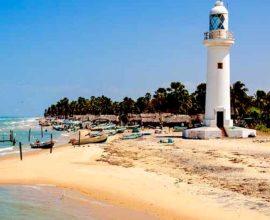
Photo by author The current controversy on the identity and significance of the series of mounds linking Rameshwaram in India with Mannar in Sri Lanka has attained international attention due to a proposal to dig a channel though it.  It might also help address a burning question today ‘Where do we come from ?’ The environmental risks of the project were ignored in the pursuance of ‘economic expediency’ until, the tradition of the land spoke of its importance. It was the route that Rama followed in his quest to rescue Sita from Ravana. The developers suggested that these are nothing but mounds of sand, but what if science, rigorously applied, suggests that there might indeed be a historical reality to what sceptics have dismissed as myth?  That these mounds might represent a part of the southern hills of that mythical land called Kumari Kandam? Studies of the coastline of India and Sri Lanka during the progression of the Holocene Transgression…

Continue reading »
Page 2 of 14612345...102030...Last »

About Groundviews

Located at the Centre for Policy Alternatives in Colombo, Sri Lanka, Groundviews is a citizen journalism website that uses a range of genres and media to highlight critical perspectives on governance, reconciliation, human rights, the arts and literature, democracy and other issues. The site has won two international awards, including the prestigious Manthan Award South Asia in 2009. The grand jury's evaluation of the site noted, "What no media dares to report, Groundviews publicly exposes. It's a new age media for a new Sri Lanka... Free media at it's very best!"

cezarneaga.eu
canakkale canakkale canakkale balik tutma search canakkale vergi mevzuati bagimsiz denetim vergi mevzuati ozurlu engelliler