Archive for the ‘Post-War’

An Unprecedented Presidential Election and the Future of Sri Lankan Democracy

Never before has such a major rift opened up between the political and military leadership in electoral politics as what has been witnessed over the recent months. By luring Sarath Fonseka to fight against the incumbent President on their behalf, the newly formed opposition took the Sri Lankan polity as well as the diaspora by surprise. As a result, what looked like an unassailable position for Mahinda Rajapakse now looks more vulnerable. This was a clever political move by the UNP and others in the United National Front (UNF) but it has major implications for the ongoing debate facing Sri Lanka about its democratic future. The resignation by an ex- military chief to lead the opposition without his own political base or significant background and training in democratic politics highlights the acute political crisis we are facing and the dangers that our fragile democracy will have to overcome if the UNF wins. In coming days and weeks the contest will…

Continue reading »

The Travelling Circus on video: Looking at war and IDPs through theatre

Obligingly recorded by Young Asia Television at the request of Groundviews, we are pleased to present a full-length video recording of a technical rehearsal / run-through of The Travelling Circus, produced by Mind Adventures, directed by Tracy Holsinger and recently staged in Colombo. An in-depth review of the production is published on Groundviews here. Total playing time is 52 minutes. The production divided opinion, with some liking it and others, with equal passion, disliking it. This full-length video of the production (even though it is a technical rehearsal) records for posterity one of the first theatre productions in post-war Sri Lanka interrogating vital yet often marginalized issues such as psycho-social trauma and human displacement due to war. Those who missed the production in Colombo, including those in the diaspora, are strongly encouraged to watch this video and leave their comments. We were also told that some at the edge of the audience couldn’t hear what was said on stage due to poor…

Continue reading »

The Battle of the ‘Commons’ and (De) militarizing the Sri Lankan Society – Part 2

Continued from The Battle of the ‘Commons’ and (De) militarizing the Sri Lankan Society – Part 1 Militarization is a product and integral part of the neoliberal economy.  The contribution of well meaning liberal constitutionalists and peace activists to demilitarization is limited because they ignore (even legitimate) how militarism is intertwined with the acquisition of power and wealth by a minority at the expense of the majority, therein the complicity of neoliberal institutions i.e. the UN, World Bank, IMF, and WTO.    Global efforts towards demilitarization is always undermined by powerful geopolitical interest of Western and non-western countries. Even after the end of the war, the sanctity of defense spending is taken for granted.  Neoliberal institutions tolerate increases in military expenditure as long as the money is used to prevent terrorism and promote political stability, even if those actions undermine democratic rule.  The government slashes investments in the public sector, privatizes military procurement and aspects of military operations, while the private…

Continue reading »

Human Rights in Post-War Sri Lanka: Challenges and opportunities

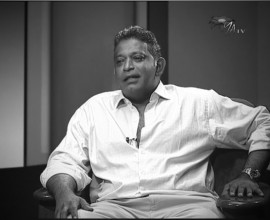
To commemorate Human Rights Day, falling today, Groundviews interviewed a number of leading activists in Sri Lanka to find out their perspectives on current challenges facing human rights in post-war Sri Lanka. This is the first video in a series we will publish over the coming week. After asking each of them to define human rights as they saw and understood it, Groundviews asked the activists to comment on the Sri Lankan State’s protection of human rights, the nexus between human rights and human dignity and opportunities for greater human rights protection over the coming years. Featured in this video are: Deshamanya Bradman Weerakoon Dr. Paikiasothy Saravanamuttu J.C. Weliamuna Dr. Devanesan Nesiah Mirak Raheem Repost This Article

Continue reading »

The Battle of the ‘Commons’ and (De) militarizing the Sri Lankan Society – Part 1

“Those who would give up Essential Liberty to purchase a little Temporary Safety, deserve neither Liberty nor Safety.” Benjamin Franklin “Common candidate” Gen. Fonseka and “common man” Mahinda Rajapaksha must both face, in the upcoming Presidential elections, the problems caused by Sri Lanka’s long and ongoing process of militarization and the increasing politicization of “national security.”  Mangala Samaraweera alleges that President Rajapaksha bears primarily responsible for militarizing Sri Lankan society.  In his endorsement of Fonseka as the common candidate of the Democratic Alliance, Samaraweera compares the General to Charles de Gaulle, who ended the political chaos and violence that preceded his presidency.  But Fonseka was a key player in the Rajapaksha regime and cannot be absolved of blame as if he were merely a soldier following orders.   Though Fonseka and the government now blame each other for wartime excesses, during the war they both denied and excused those excesses, and also prevented investigations into them.   Voters are now asked to…

Continue reading »

The Dynamics of the “War Heroes’ Battle”

Undoubtedly, Comrade Wickramabahu will attract a politically mature vote-base around him – particularly those who are disgusted with the Mahinda-regime’s fascistic rule the way it’s been treating the Tamil civilians. This minority consists of convinced opponents of the government, and they’ll be happy to vote for Wickramabahu whose politics appear to be closest to their own mindset. Obviously, Mahinda Rajapaksa also will be happy to see Wickramabahu’s presence as a blessing – as the most effective way to divert the already established anti-government vote-base away from Sarath Fonseka (SF). Wickramabahu’s propagandist approach, however, seems to have failed to see the objective logic (the dialectic) of the unprecedented social process taking place as a unique consequence of the Sarath-Mahinda split. A substantial section within the Sinhala majority who backed the war unconditionally before seems to be rallying round Sarath Fonseka in rejecting Mahinda-regime on democratic and humanist issues. It is this fast-changing social force which Sri Lanka’s Left movement should be…

Continue reading »

Visualising key speeches and submissions of Sarath Fonseka

SF Temple Speech - Small

Now officially a Presidential aspirant, erstwhile Army Commander Sarath Fonseka has, since late October 2009 made a number of verbal and written submissions regarding his candidacy and political life after retirement. In October 2009 he made a speech at a Buddhist Temple in Washington DC. On the 12th November, he handed in his resignation addressed to the President. On 27th November, when it was an open secret that he would contest the Presidential elections, he gave an in-depth interview to the Daily Mirror newspaper. For the first time, the following visualizations of Fonseka’s key submissions to date, using the web based Wordle, reveal the most frequently used words in each of them. Visualisations such as this obviously have their drawbacks for serious semantic analysis. For example, the former General’s interview with the Daily Mirror was a clear and controversial break with the Executive’s avowed belief that post-war, there are no longer any minorities or majorities in Sri Lanka. On the…

Continue reading »

Elections: For whom and for what?

A critical examination of elections in Sri Lanka It is an election festival once again.  The whole country is getting ready for the big fight where two war heroes meet in the Presidential election ring. According to the government’s spokesperson, apparently President Rajapakse has finished what he planned for six years in four, so he is expecting a fresh mandate for more work. Mind you, this is not it, as the term of the present parliament expires in April 2009 and the Government will have to call for the parliamentary election also within the course of next four months. All these elections will surely cost a humongous amount of public funds which could have been easily allotted to ease off the present economic burdens of the citizens. Therefore, this election festivity, for sure raises public concern as to for whom these elections are really meant for and for what. In this light, this paper attempts to critically examine the role…

Continue reading »

A review of The Travelling Circus

The late review is at an advantage, in that it is informed by the published critiques of others and subsequent responses online and in print. In this respect, watching Tracy Holsinger’s The Travelling Circus on the last day of its run was to juxtapose the live performance against reviews that dismissed the production as highfalutin nonsense and others that praised it as compelling theatre. Tracy’s attempt at devised theatre is without, to my knowledge, precedent in Sri Lankan English drama. With roots in commedia dell’arte, devised theatre is a difficult form, which even seasoned actors balk at since it involves co-creation and improvisation instead of the comparatively more straightforward interpretation, direction and delivery of a script. This dramatic inflorescence requires a high degree of skill and discipline from both director and actor alike. The Travelling Circus, in this respect, was a technical tour de force and, by far, the best production of Tracy’s theatre group Mind Adventures to date. I…

Continue reading »

Why should Tamil speaking communities give critical support to Sarath Fonseka?

Authors note: This expands on a comment I left on Groundviews here, in response to my last article In defense of the JVP campaign to support Sarath Fonseka. Tamils must not play a sectarian role in the presidential election. That’ll be counterproductive. This is not the time for Tamils to do politics based on anger and hatred. Tamils, I think, should realize democratic transformation of the Centre is crucial for them. Also, Tamil-speaking people – including plantation-workers & Muslims and Colombo Tamils- live all over Sri Lanka. Therefore, it’s important to make all calculations in general terms, not in sectarian terms. All parties of the Tamil-speaking people should maintain a solid united front in presenting their demands. They should present them to the General in no uncertain terms. It should amount to a critical support – not a blank cheque. The presidential election will mark a unique turn in Sri Lankan politics, irrespective of the protagonist’s personal background. This election…

Continue reading »

The fate of Internally Detained Persons and the future of freedom and democracy

There is much  controversy over the fate of the internally displaced persons (IDPs), whom I wish to refer as internally detained persons. In essence, this controversy revolves around the nature of the LTTE, the counter-insurgency strategy of the GOSL, and its criminal effect on over 200,000 detainees. The question of the fate of some 10,000 Tamil political prisoners who are yet to be charged, also hovers in the background. To get some rationality and clarity on these issues, we should raise and answer one fundamental question. Do the Tamil people who consider the North-East as their areas of historical habitation (homeland) constitute a nation? This question cannot be resolved by piling up archaic archaeological or historical evidence. It is not a question of who came first.  The fact is that the modern Tamil nation has been forged through six decades of political struggle, including nearly three decades of armed struggle, at the cost of immense sacrifice and suffering, against systematic…

Continue reading »

We will reap what we sow: Sri Lanka’s Presidential contenders

In a one dimensional interview with the Daily Mirror, General Sarath Fonseka outlined his grievances before the people and we got an idea why he is running for the highest office in the land. It was a litany of personal woes. Just about the whole interview was about what has been taken away from him by the Rajapakse brothers since the end of the war. More specifically, the interview dealt almost exclusively with the issue of reducing his security detail. To give him credit, he knew exactly how many personnel, support staff, vehicles and special forces were involved in providing security for the President, the Secretary of Defense, his nemesis the former Navy Commander, wife of Lakshman Kadiragamar, the current Commander of the Army, one Brigadier and so on. He also knew how long former heads of armed forces had stayed at their official residences after retirement and the diplomatic posts bestowed on them. In between, almost as an after…

Continue reading »

In defense of the JVP campaign to support Sarath Fonseka

The ongoing “Rajapaksa-Fonseka battle” is a blessing in disguise for the Tamil-speaking people and the Sinhalese despite its immediate appearances; because the upcoming debates are bound to change the confused Sinhala consciousness on an unprecedented scale. The JVP’s decision to back the General as a tactical move to get rid of the utterly corrupt Rajapaksa-regime is sensible indeed, to say the least. Fonseka is a political novice, therefore, he is malleable. He is thoroughly cornered by the reactionary establishment; and therefore, his pliability is increasing by the day. That’s a positive thing. The chances of him suddenly turning into a dictator after an electoral victory is very little indeed. If he does a social revolution will be on the cards; and it’ll be the duty of the JVP to lead the people towards real democracy & real “poverty eradication” along socialist principles. Comrade Bahu’s decision to contest, I believe, is wrong. It will confuse the Tamils and mislead the Sri…

Continue reading »

Manufacturing of a ‘Common Candidate’ and Our Collective Political (Un)Conscious

“The oppressed are allowed once every few years to decide which particular representatives of the oppressing class are to represent and repress them.” — Karl Marx “The oppressed, having internalized the image of the oppressor and adopted his guidelines are fearful of freedom. Freedom would require them to eject this image and replace it with autonomy and responsibility.” — Paulo Freire As news of the upcoming election unfolds, I find myself considering the meaning of the notion the “common candidate” in general, and its application to General Fonseka in particular.  In the broadest sense, a common candidate is one who represents and promises to fulfill the people’s common aspirations and desires.  Whether the General meets these criteria is still open to question, and I think our understanding and our judgment on the matter would be improved through reflection.  I find myself, perhaps along with my readers, wondering what is unique about the timing of this “common candidacy,” and what, exactly,…

Continue reading »

Taking note of the Lisbon Treaty

Czechoslovakian President Vaclav Klaus signed the 2007 EU Lisbon Treaty on the 3rd of November thereby making the Treaty effective as of the 1st of December 2009. The Czech Republic was the last European Union nation (EU is comprised of 27 nations) to ratify the Lisbon treaty. President Klaus, a Eurosceptic, had earlier opposed the Treaty, and still had many objections to the Treaty, but felt forced to sign the treaty after the Czech Constitutional Court had ruled in favor of the Treaty. The Lisbon treaty was signed by EU leaders on 13 December 2007 bringing to an end several years of negotiations about institutional issues. The Treaty of Lisbon amends the current EU and EC treaties, without replacing them. The 287 page treaty was meant to strengthen the institutions of the European Parliament. Key innovations include a new permanent EU President to coordinate the union’s affairs; creating the post of a Foreign Minister and new regulations to allow decision…

Continue reading »
Page 49 of 58« First...102030...4748495051...Last »

About Groundviews

Located at the Centre for Policy Alternatives in Colombo, Sri Lanka, Groundviews is a citizen journalism website that uses a range of genres and media to highlight critical perspectives on governance, reconciliation, human rights, the arts and literature, democracy and other issues. The site has won two international awards, including the prestigious Manthan Award South Asia in 2009. The grand jury's evaluation of the site noted, "What no media dares to report, Groundviews publicly exposes. It's a new age media for a new Sri Lanka... Free media at it's very best!"

cezarneaga.eu