Archive for the ‘Moving Images’

‘Kerosene’ by Kannan Arunasalam wins international documentary award

Kannan - Kerosene

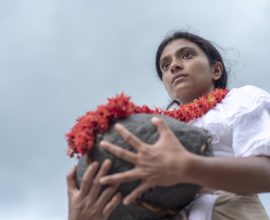
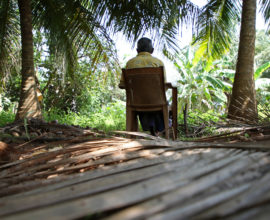
Groundviews is extremely pleased to recognise that Kannan Arunasalam has won the 2013 South Asian International Documentary Festival’s Prism Short Award for ‘Kerosene’. This short film was one of three produced by Kannan with utilising a small grant by Groundviews in 2011. First screened in Colombo and subsequently featured on the critically acclaimed Moving Images website, ‘Kerosene’ and his two other short films generated the most feedback and engagement given their unique, deeply sensitive and compelling interrogation of life in the North of Sri Lanka, post-war. You can view the full film below. Kerosene from Kannan Arunasalam on Vimeo. Go to Moving Images to see his two other films, as well as other productions on Sri Lanka. A trailer for all three productions can be viewed below. Trailer: Koothu, kerosene and paper from Kannan Arunasalam on Vimeo. Repost This Article

Continue reading »

Resource book for historians, researchers and media: A year of tweeting from Groundviews

groundviews-followers-small

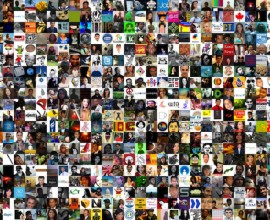
Visualisation of our Twitter followers. See larger version here. We used the web service Tweet Book to capture all our tweets over the past year in a single PDF. We’ve tweeted thousands of times over the past twelve months and have covered, The media fallout of the farcical fast of senior government Minister Wimal Weerawansa in front of the UN HQ in Colombo. Praise for our model of journalism on C-SPAN video in the US, captured from an event at the United States Institute of Peace. Key statements by world leaders like Desmond Tutu on post-war reconciliation and accountability for war crimes Bell Pottinger’s sickening relationship with the incumbent government, largely hidden from public scrutiny Key reports on Sri Lanka from, inter alia, HRW, AI, ICG and the US State Department, including responses from senior Ministers and the Foreign Ministry Foreign relations and the tussle in Sri Lanka between India and China The court proceedings on Sarath Fonseka The UNP’s perennial…

Continue reading »

Watch Moving Images at Kandy International Film Festival (KIFF)

Compelling stories in high-definition

We are very pleased to announce that films from Moving Images will be part of the first Kandy International Film Festival (KIFF). Though the official schedule is still being finalised, we have been informed by the organisers that Moving Images will be screened from 4 – 6pm on Saturday, 25th at the Kandy City Centre. A moderated discussion will follow. The selection of films will be from A Lost White Tribe: The Eurasians of Sri Lanka by Menika van der Poorten and Koothu, kerosene and paper: portraits of resilience by Kannan Arunasalam. Please join us. Ticketing information for KIFF can be accessed here. The Kandy Film Festival will be a four-day celebration of global cinema, with a special focus on Asian film and upcoming talent, in the UNESCO world heritage city of Kandy, Sri Lanka. Against a stunning background of gardens, hilltops and cultural architecture, the Festival will showcase an exciting program of films celebrating diverse techniques, styles and themes…

Continue reading »

Proud of being a ‘half-caste’: Perceptions of Eurasians in Sri Lanka

Screen shot 2011-05-03 at 1.35.10 PM

Although there were times when to be an Eurasian meant that one was generally looked down upon, considered ‘half caste’, Rosemarie is proud of her mixed heritage. At the time when she was growing up, Eurasians and Burghers saw themselves as being distinct and different from each other. Now, both communities are a rarity in Sri Lanka and frequently perceived as being outsiders, foreign. “Where are you from?” is a familiar refrain. For Rosemarie’s story and video, please click here. For Part 1 of Rosemarie’s story, click here. Produced by Menika van der Poorten for Moving Images. A trailer of A Lost White Tribe: The Eurasians of Sri Lanka can be seen below, and all the videos on the Moving Images website. Repost This Article

Continue reading »
  • 28 Apr, 2011
  • 1 Comment
  • Arts and Theatre,
    Colombo,
    Moving Images,
    Photos

A happy mix of English, Sinhala, French and Tamil: A second generation Eurasian in Sri Lanka

Screen shot 2011-04-25 at 7.49.07 AM

Rosemarie Le Mottee Joachim is second generation Eurasian. She grew up in Colombo but her roots were in the hill country. A happy mix of English, Sinhala, French and Tamil, Rosemarie tells the story of her grandparents. For Rosemarie’s story and video, please click here. Produced by Menika van der Poorten for Moving Images. A trailer of A Lost White Tribe: The Eurasians of Sri Lanka can be seen below, and all the videos on the Moving Images website. Repost This Article

Continue reading »

Kerosene: How does a taxi driver take the sick to the hospital when there’s no fuel around?

Screen shot 2011-04-19 at 3.53.25 PM

How does a taxi driver take the sick to the hospital when there’s no fuel around? How does a newspaper publish news of bombs and deaths without newsprint? And how does a community with leprosy survive despair and isolation? Koothu, kerosene and paper: portraits of resilience, expression and survival about the people of Jaffna, Sri Lanka. Watch Kerosene in full here. Shot and cut by Kannan Arunasalam. A trailer for Kannan’s stunning three short films can be seen below. Repost This Article

Continue reading »

Prawns and privations: Sugeeth’s life in Slave Island

Screen shot 2011-04-15 at 3.03.04 PM

At 27 years old, Sugeeth Kumar is part of a generation of Slave Island’s young entrepreneurs. Tiring of the long hours his previous job at Pizza Hut required, he decided that if he must work so hard, he would do it on his own time and for his own business: vending prawn vadai – a popular Tamil fried food – out of a cart at the Galle Face Green Promenade. Like many Slave Island residents, Sugeeth’s new livelihood is very much tied to his locality – his home is a few kilometers away from Galle Face Green and each afternoon, he must wheel his cart and ingredients to a rented spot, before setting up. Each vendor’s process is different. Sugeeth prefers to make his prawn vadai in advance, even frying them halfway through before coming to Galle Face. That way, when his customers flock to him hungry for hot vadai, they are not disappointed. He drops the half-fried vadai into…

Continue reading »

Koothu: Theatre and leprosy in Jaffna

Screen shot 2011-04-15 at 3.39.41 PM

How does a taxi driver take the sick to the hospital when there’s no fuel around? How does a newspaper publish news of bombs and deaths without newsprint? And how does a community with leprosy survive despair and isolation? Koothu, kerosene and paper: portraits of resilience, expression and survival about the people of Jaffna, Sri Lanka. Watch Koothu in full here. Shot and cut by Kannan Arunasalam. A trailer for Kannan’s stunning three short films can be seen below.   Repost This Article

Continue reading »

Slave Island and Us

Children - Header

By Sharni Jayawardene and Tarika Wickremeratne Going into Slave Island at first, we were told to expect animosity and suspicion. Two women venturing into the depths of the residential settlements, taking pictures and asking questions to boot – we didn’t expect to be taken to very kindly. We found ourselves a guide from the area to introduce us so that those we talked to had a reference point of trust; but a few weeks in, we realized that this wasn’t really necessary. We discovered something that we should have already known – people were generally happy just to have someone to talk to; someone to listen. We were a novelty, with our backpacks, camera and recording equipment, and while no one was too timid to come up to us and inquire what on earth we were up to, it was always with a kind of easy-going curiosity. A typical conversation-starter was “Indiyavenda?” (Are you from India?). Our explanation – that…

Continue reading »

Recycling the plastic we throw to make a living: Nazaruddin’s work in Slave Island

Screen shot 2011-04-15 at 2.41.59 PM

On a walk down one of the many byroads of Slave Island during midday, we encountered a curious sight: a fairly elderly man wearing a sarong and a dusty green cap, sitting cross-legged on the side of the road next to a gushing tap by the gutter and surrounded by a sea of plastic bottles and bottle caps. Every now and then the man would drop a short length of chain into one of the bottles, screw on the lid and shake it furiously. Once satisfied the bottle was clean on the inside, he would scrub at the outside, peeling away the old label with the aid of a soapy brush. An almost empty cup of tea perched on top of the tap collecting stray suds. The scene was so fascinating that we had to stop and ask him about his odd profession. He was too busy to talk at the time, and wouldn’t be distracted from his task, but…

Continue reading »

Paper: The incredible story of Uthayan in Jaffna

Screen shot 2011-04-15 at 3.26.48 PM

How does a taxi driver take the sick to the hospital when there’s no fuel around? How does a newspaper publish news of bombs and deaths without newsprint? And how does a community with leprosy survive despair and isolation? Koothu, kerosene and paper: portraits of resilience, expression and survival about the people of Jaffna, Sri Lanka. Watch Paper in full here. Shot and cut by Kannan Arunasalam. A trailer for Kannan’s stunning three short films can be seen below. Repost This Article

Continue reading »

Sharing a common god: The Sivasubramaniam Kovil in Slave Island

Screen shot 2011-04-15 at 2.34.28 PM

Munisekar has always been devout. From the age of nine, he began working at the Sivasubramaniam Kovil of Slave Island – the place of worship closest to where he lived with his parents. Every day after school, Munisekar would go to the Kovil to work and study there. In a few years however he stopped going to school altogether and turned to his faith full time. Now, 33 years later, he is the longest serving and most senior temple assistant at the Kovil. Over the years, Munisekar has seen the Kovil transform itself from a basic shrine when he first joined, to what it is today – an awe-inspiring place of worship, every last inch of its pyramidal exterior elaborately decorated over with numberless statues of Hindu gods. Of these, the Kovil most often attracts worshippers of the powerful deity known as Murugan or Karthikeya to Hindus and Katharagama Deviyo to Buddhists. Read more about Munisekar and see his video…

Continue reading »

The education of a Muslim girl: Snapshots of Fatheema

Screen shot 2011-04-15 at 2.26.39 PM

15-year-old Fatheema Sulaika has lofty plans for her future. Study hard, become a psychologist, do her bit for mankind and hope that her example inspires oppressed women the world over. Needless to say, encountering such vibrant ambition down one of Slave Island’s drearier streets was rather unexpected. A tall, lithe and uncommonly beautiful girl, Fatheema Sulaika – or Sulaika as her family likes to call her – was shy at first, self-consciously stifling smiles at the camera and shooting glances at the overprotective gaggle of female relatives who were always close at hand, craning over each other’s shoulders to see what it was about their young family member that we were so interested in. Read Fatheema’s story in full and watch her video here. Produced by Sharni Jayawardena and Tarika Wickremeratne, as part of Walkabout: Slave Island. Watch the trailer to this series below, and visit the Moving Images website for more stunning content on Sri Lanka. Repost This Article

Continue reading »

The ‘dobis’ in Colombo: Unseen people, used by most

Screen shot 2011-04-15 at 2.13.46 PM

In a locality where washing lines heavy with colour light up even the most mundane landscape, Navam Mawatha’s laundry seems a nucleus of sorts. Surrounded by banks and plush office spaces, the old laundry, sitting on prime real estate, remains virtually unchanged since its creation in the 1920s. It consists of two sturdy rows of stone basins for washing and a field strapped with washing lines, all surrounded by a boundary of small numbered rooms which, at that time, used to be occupied by close to 200 dobis, Sri Lanka’s own caste of washer-men. But as little as the laundry itself has changed, the environment around it and within it, has. We encountered W. Siripala – or Dharmadasa, as he preferred to be called – in one of the small rooms, as he was ironing a batch of clothes one afternoon. The apparatus he used – although shaped like the modern iron – held within it burning shells of coconut instead…

Continue reading »

Hotel Nippon: An icon of Colombo

Screen shot 2011-04-15 at 2.03.18 PM

Originally from Ragama, Chandrika Serasinghe believes it was her destiny to end up working at the Nippon Hotel – a place whose unusual façade always had a pull on her whenever she passed by it in her younger days, but that she now thinks of as her second home. The Nippon Hotel is one of Slave Island’s oldest and most well known landmarks and its salmon pink exterior has always been its signature feature. Still, with its old-fashioned salons and parlours, it has retained a kind of elegance through the years, despite its unusual colour. Today though, it is being repainted a much more conventional white – yet another reminder of Slave Island’s dynamic nature. Read her full story and watch the video here. Produced by Sharni Jayawardena and Tarika Wickremeratne, as part of Walkabout: Slave Island. Watch the trailer to this series below, and visit the Moving Images website for more stunning content on Sri Lanka. Repost This Article

Continue reading »
Page 1 of 212

About Groundviews

Located at the Centre for Policy Alternatives in Colombo, Sri Lanka, Groundviews is a citizen journalism website that uses a range of genres and media to highlight critical perspectives on governance, reconciliation, human rights, the arts and literature, democracy and other issues. The site has won two international awards, including the prestigious Manthan Award South Asia in 2009. The grand jury's evaluation of the site noted, "What no media dares to report, Groundviews publicly exposes. It's a new age media for a new Sri Lanka... Free media at it's very best!"

cezarneaga.eu