Archive for the ‘Language’

  • 26 Jun, 2011
  • 5 Comments
  • Colombo,
    Language,
    Poetry

The ‘coolest’ publisher of English books in Sri Lanka: In conversation with Sam Perera

Screen shot 2011-06-26 at 9.53.59 AM

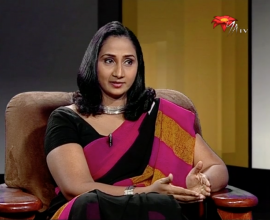
Sam Perera, along with Ameena Hussein (see interview here) began the Perera Hussein Publishing House, a niche publisher based in Sri Lanka known to publish some of the most compelling contemporary writing in English. Sam, who thinks of all things, he is a farmer at the beginning of the programme opens up the conversation with reforestation. The link to the world of publishing lies in that fact that, as a private initiative, PH Publishing House plants at least one tree per book they publish in Puttalam. Noting that PH Publishing House was established to publish stories by Sri Lankans for Sri Lankans, Sam’s rather interesting take on what he does is that the local consumer / reader doesn’t necessarily want literature, but stories that are written well – of course judged by none other than Sam himself. When pressed on what he considers good or great literature, Sam points to Randy Boyagoda’s writing, and says that even though he is…

Continue reading »
  • 26 Jun, 2011
  • 0 Comment
  • Arts and Theatre,
    Colombo,
    Language

In conversation with Neluka Silva, Professor in English, University of Colombo

Screen shot 2011-06-26 at 8.59.44 AM

Neluka Silva is the Head of the English Department and Professor in English, University of Colombo. Given the recent agitation amongst University staff and the general crisis over tertiary education, I first asked Neluka why she has taught at Colombo University for decades and what drives her to do this. Referring to an article by Prof. H.L. Senevirtane published in the Lanka Monthly Digest (June 2011) on restoring English as a language of teaching, I ask Neluka what, if any differences in pedagogy and the perception of the English language there was from the time she was an undergraduate student to what she teaches today in Colombo University. We talk about Neluka’s manuscript novel The Choices We Make which was shortlisted for the Gratiaen Prize in the late 90′s and will be published later this year under the title The Iron Fence. I ask her why she changed the titled of the book and how she went about writing it. We talk…

Continue reading »

Exclusive: Syllabi and timetables from compulsory University ‘leadership’ training course

01

Image from Virakesari Online Great controversy and concern surrounds the ‘leadership’ training programme designed by the Ministry of Defence for under graduate students, conducted in around 28 military installations around the country. As the Young Researchers Collective recently noted on Groundviews, “Although the government has stated that this will be a leadership training program rather than a military training program, it has conceded that the military will be involved in a number of aspects of the program. Students have also been informed that this training is “mandatory” for university entrance, though there now appears to be a great deal of confusion with regards to this provision as Government officials have issued a series of contradicting statements. These decisions have also been challenged by many students, rights groups, student unions, teachers’ unions and academics who have raised a number of concerns about the way in which this program has been conceived and implemented. This issue has also exacerbated a worsening crisis…

Continue reading »

When allegations become evidence

UN_panel_on_sri-lanka1

Media and advocacy groups make mistakes. It’s true. The reason for the errors can vary from simple human error, time constraints resulting in insufficient research to subtle manipulation of facts and wording to push an agenda. Once a mistake has been pointed out, most reputable organisations will publish an acknowledgement along with the correction. Less reputable organisations may ignore the error or correct the error without any acknowledgement. How organisations deal with errors are a great indicator of the quality of the publication. The United Nations Secretary-General, Ban Ki-moon, appointed an advisory panel to report on the final stages of Sri Lanka’s separatist war. The Darusman report was published in April and human rights advocacy groups, including Amnesty International, International Crisis Group and Human Rights Watch, initiated a controversial media campaign accusing Sri Lanka of war crimes. The most glaring error propagated by this media campaign is the assertion that there was “credible evidence” of crimes. There was not. The…

Continue reading »

Going beyond mainstream media: The best Twitter feeds on and from Sri Lanka

Screen shot 2011-05-25 at 9.51.35 AM

Just over a year ago, in April 2010, Groundviews launched two curated Twitter lists on Sri Lanka to help those in and outside the country access news, information and critical conversations that went far beyond mainstream media’s economic and partisan shackles. One list featured some of the most compelling bloggers in Sri Lanka. The other, a list of news sources and Twitter accounts of journalists. Because they are oriented towards an international audience, the lists largely capture content published in English, though feeds like @vikalpavoices publish mostly in Sinhala. Coupled with our own feed, the two lists are comprehensive and by the very nature of the medium, constantly updated windows into issues, processes and events mainstream media could not, or would not cover. And even when they did, the Twitter updates on these feeds added new perspectives and often, information vital to understand context. On occasion, they have also served to hold mainstream media – both domestic and international –…

Continue reading »

A-Z of Sri Lankan English: K is for kadé

I normally try to stay on the right side of the descriptive-prescriptive divide, but today I’ve got my prescriptive hat on. I deplore the habit of some writers, editors and publishers of employing French and German accents when rendering Sinhala and Tamil words in English. You might read about more important issues on Groundviews today, but this is my personal bugbear. The most common example is kadé with an acute accent, like café – cute, because a kade is sort of like a café I suppose, apart from the croissants and cappuccino. But unfortunately the é vowel in French is a different sound from the e in kade, so it doesn’t help. Why not just spell it kade? I have come across the acute accent being appropriated with the same function in words such as amudé, andé, dané, kondé, kalé, pin katé, haminé, hiramané, karadaré, and even twice in éllé… Ané deviyané! The late Nihal de Silva used the German…

Continue reading »

Refuge for Colonel Gadaffi in Island Paradise?

gaddafi2

16 April 2011, Colombo, Sri Lanka: Sri Lanka has in its history occasionally served as a refuge for persecuted personalities but it may have its most controversial refugee yet. Colonel Muammar Muhammad al-Gaddafi has reportedly secured an understanding with the Government to Sri Lanka to secure refuge in the country in the eventuality that he has to flee his native Libya. Sources from within the government confirmed that the offer was made to the Colonel in a telephone call recently following a number of losses by forces loyal to Colonel Gadaffi. Our source clearly stated that the Sri Lankan Government stands firmly with the Government of Colonel Gadaffi and condemns the international intervention of the West, and will ensure its support to ensuring the stability of the Libyan Government. The offer of a refuge has only been offered as a “mark of friendship” between the two leaders confirmed the government source. President Mahinda Rajapakse and Colonel Gadaffi are known to have a…

Continue reading »

A Home for Books

BOOKS

Original photo courtesy Tarika Wickremeratne For as long as I can remember we have had books in the house. To my child’s eye it seemed that every room was spilling over with books. Books in bedrooms, living room, dining room, kitchen and even bathroom. Most of the books belonged to my father – his study held his law books and his other books were distributed among the other rooms – Dictionaries (the love of his life), classics, spirituality, fiction, art etc. They were housed in various book cupboards, either inherited from his parents or bought from various furniture auctions held on Saturdays and that were common enough during the 60s and 70s. Most of them were of the art deco style, glass fronted wooden cupboards with an abstract wooden design against the glass, others were plain and serviceable. If the book cupboards had keys they were never locked. We were never told which books we could or couldn’t read and…

Continue reading »

New Festival to Promote Unity in Sri Lanka

Screen shot 2011-03-16 at 3.14.17 PM

16 March 2011, Colombo, Sri Lanka: A press conference was held in Colombo earlier today to launch the latest fixture on Sri Lanka’s ever busier festival calendar. Organisers of The Boycott Festival issued a brief statement and then invited the press to enjoy the refreshments in the ballroom. The Boycott Festival will take place over five days, beginning today and ending after a lunch banquet on Sunday. A full list of objections may be obtained by emailing endorsement@boycott.com. In their statement the festival organisers said they were angry and upset with what has taken place and continues to take place in our country. They admitted that worn down by the last six – and also the last thirty – years, they could no longer muster enthusiasm for anything and would really prefer not to. They were tired, they said, and couldn’t face the journey to the festival site. They would not be attending. Director Karthika Peiris said ‘As ever, we…

Continue reading »

A-Z of Sri Lankan English: J is for jobless

In the UK and the US, being jobless is simply another word for being unemployed, not having a job – especially in newspaper headlines. Here in Sri Lanka it has an additional meaning, especially in colloquial contexts, where it can also refer to being free, idle, having nothing to do, and by extension being a waster, a loafer, a useless person. Shyam Selvadurai uses the word in this sense in Funny Boy: “that servant boy was a real jobless character.” (page 134) Shehani Gomes turns it into a term of abuse in Learning to Fly: “I wouldn’t know you jobless freak!” (page 101). Elsewhere she describes an imaginary courtroom, “the few benches at the back full of unknown jobless gossips.” (page 122) Vihanga Perera takes characteristic liberties with the word in Stable Horses, talking about forwarded emails “from the joblesser quarter of acquaintances”. (page 87) The word loafer is also used rather differently in Sri Lankan English. It refers to…

Continue reading »

SIRIMAVO: A REVIEW

Sirimavo

Sirimavo: Honouring the world’s first woman Prime Minister, edited by Tissa Jayatilaka, is the commemorative volume published by the Bandaranaike Museum Committee to mark fifty years since Mrs. Sirimavo Ratwatte Dias Bandaranaike’s first accession to power on 21st July 1960. If her place in the history books as the world’s first woman to lead a democratic government was an instance, in tragic circumstances, of greatness being thrust upon her, the essays and speeches in this volume attempt to show how she achieved greatness in her own right as the leader of a Third World democracy and international stateswoman. The substance of the essays and speeches certainly makes Sirimavo a desirable addition to any library shelf devoted to Sri Lankan politics and political history, but its stylish design and presentation makes it equally suitable for the coffee table. This is a book to which no disservice is done on being judged by its cover, and in this respect, the dust jacket…

Continue reading »

Long Form journalism: An invitation to contribute

As many regular readers and commentators on this site know, in January Groundviews launched the Long Reads section. The print media industry in Sri Lanka, for economic and political reasons, does not afford a space for compelling essays on society, politics, the arts, culture, religiosity, literature and other topics. Long Reads on Groundviews aims to provide a platform for serious, vibrant essayists to publish their writing. Interestingly, long form journalism is going through something of a revival online. The Atavist, a new application for the iPhone / iPad is free to download, but users have to buy essays that are specifically geared for the devices, incorporating not just text, but audio, photography and video as well. Long Reads, a tremendously interesting website that curates essays from many sources on the web, including mainstream print media in the West, serves as the inspiration for GV’s Long Reads section. Then there’s the recently announced Readability, offering a way to both support essayists…

Continue reading »

GLF: A space for activists?

A playground for Colombo’s “artsy fartsy?” A personal initiative by G. Dobbs (Founder) to increase the per capita income of G. Dobbs? A promotional tactic to draw tourists to our fair land? An ideal getaway for the middle and upper classes to catch up with old friends and make merry? A platform for cultural and literary exchange and constructive discussion/debate? An ideal forum for writers and participants to engage and learn from one another? The Galle Literary Festival (GLF) is probably a combination of all this put together. I’m no ‘party pooper,’  and that’s all well and good. But, is it permissible to claim that the festival provides “relatively ‘safe’ spaces for literary and political exploration and debate” and is a forum at which the “real situation of the country” can be brought to light? http://groundviews.org/2011/01/24/writing-against-the-rsfjds-appeal-to-boycott-the-galle-literary-festival/ I find this particular claim to be quite difficult to digest. Firstly, because it has been stated by a well -respected human rights activist…

Continue reading »

On Relative Rights

A short fall in human rights suggests a failure in the harvest, perhaps a missing plank in the slide, and some will go flying, others hungry, while you add ridiculous to describe the call for a boycott of your literary party by so-called rights activists, which I presume to mean men and women who agitate on behalf of humans; their call certainly draws unwanted attention to murder of journalists so let me propose that we make fun of it by such ridiculous excesses as burning an effigy of a doll named censorship without addressing the argument of the boycott which did not say don’t go, just be aware of where you speak in deed. Repost This Article

Continue reading »

Shyam Selvadurai: Literature, identity, politics and the Galle Literary Festival

Screen shot 2011-01-17 at 8.12.15 AM

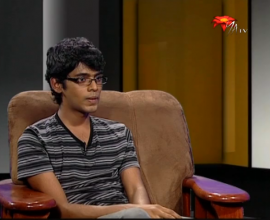
Shyam Selvadurai was born in 1965. His book Funny Boy introduced gay fiction to mainstream English literature in Sri Lanka, and indeed as Shyam notes, in South Asia. Born to a Sinhalese mother and Tamil father, Shyam was 19 when he left Sri Lanka in 1983 for Canada. Funny Boy was as much about class and ethnicity as sexual identities, and though Shyam has repeatedly noted that it was not autobiographical, the fiction is set against a violent Sri Lanka. Shyam is presently the curator of the Galle Literary Festival. In an essay (Coming Out) penned for Time in 2003, Shyam brought out the vexed relationship he has with Sri Lanka. On the one hand is the love for the country, “…live and let live generosity and good humour that I love most about Sri Lanka” and on the other, the unsettling nature of it “in this country that I still considered my home, I could never be at home.” Yet…

Continue reading »
Page 4 of 6« First...23456

About Groundviews

Located at the Centre for Policy Alternatives in Colombo, Sri Lanka, Groundviews is a citizen journalism website that uses a range of genres and media to highlight critical perspectives on governance, reconciliation, human rights, the arts and literature, democracy and other issues. The site has won two international awards, including the prestigious Manthan Award South Asia in 2009. The grand jury's evaluation of the site noted, "What no media dares to report, Groundviews publicly exposes. It's a new age media for a new Sri Lanka... Free media at it's very best!"

cezarneaga.eu