Archive for the ‘Language’

Niromi 2009 versus Niromi Tigress 2011

9781742694146c_9781742694146

Niromi de Soyza’s so-called autobiography, Tamil Tigress, has received extensive coverage in Australia and has traversed the world now because of critical reviews by several personnel and devoted defence from others. It has been described as “part memoir, part compelling reportage, part mea culpa” by Nikki Barrowclough in the Sydney Morning Herald’s weekend magazine.[i] Gordon Weiss, the moral crusader, proclaimed it to be “incredibly moving” and considers it “a story of redemption” (as quoted by Nikki Barrowclough). This may well be one of the motifs that Robert Perinpanayagam, a perceptive commentator, sees as the potential crux of the book in his unelaborated blog comments. Without denying that dimension of the book if one stretches a point and treats it as a “faction,” that is, a “fictional narrative based on real events,” rather than a historical account, its self-presentation as a memoir[ii] and “true story” renders Tamil Tigress liable at the same time to the charge of deception (a combination stressed…

Continue reading »

The singer might change but the song remains the same: A critical look at Roberts and Sarvananthan ‘outing’ Niromi de Soyza

9781742694146c_9781742694146

“….. Everybody believed them to be solid and inanimate – to be true facts. No one yet understood that life would become an uncomfortable, endless walk down a sea shore laid thick with facts of all sizes and shapes. Boulders, pebbles, shards, perfect ovals. No one had begun to imagine that these facts were without any order, opposed or natural – that facts were as meaningful as raw vocabulary without grammar or sentences. A man could pick up any fact he wished and fling it into the sea and make it skip. A practical talented arm could make it skip three, perhaps four times while a lesser limb might make a single plunk with the same concrete proof of some truth or other. Another man might build these facts into some sort of fortress on the shore. John Ralston Saul[1] Facts do not at all speak for themselves, but require a socially acceptable narrative to absorb, sustain and circulate them….

Continue reading »

A-Z of Sri Lankan English: N is for na tree and nil manel

nil manel

The national tree and the national flower were both in the news this year. In August the uprooting of the Indian willows lining Independence Avenue to be replaced by indigenous na trees as part of Colombo’s beautification programme provoked angry reactions, as reported on Groundviews here. The na tree (English name: ironwood; botanical name: mesua ferrea) is the national tree of Sri Lanka. It is a tall tree known for its pink (young) leaves and fragrant white flowers, and for its hard wood and medicinal properties. It is arguable that in the long term the indigenous na trees will be more attractive (and more appropriate) than the Indian willows, but the “wanton destruction” undertaken by the Army without any prior notice or apparent consultation, together with the nationalist symbolism of the move, was provocative and heavy-handed. There is a magnificent mature na tree in the corner of the British Council garden. The tree was recently under threat from planned redevelopment…

Continue reading »

Reply to the Rebuttal of my article by the SJC87 Initiative

9781742694146c_9781742694146

I welcome the statement by the SJC87 Initiative rebutting my aspersions about this charity. The primary focus of my research note was the contents and the publicity material of the book by Niromi de Soyza (nom de guerre). The SJC87 Initiative came into scrutiny because of the claim by the author of the Tamil Tigress that this is a charity of her “alma mater”. I stand by my claim and some of the attendees at the literary festival where Niromi made that statement are willing to testify to the truthfulness of my claim. Therefore, if SJC87 Initiative has been brought into disrepute by my writing, then it is solely due to the blatant lie of Niromi de Soyza. The fact that Niromi de Soyza has not personally disputed what I have written about the claim by her in Melbourne itself is sufficient proof of the truthfulness of my writing. Besides, the rebuttal by SJC87 Initiative has not cleared my suspicions…

Continue reading »

Separating Fact from Fantasy on the ‘Research Note’ by ‘the Principal Researcher’ Mr. Muttukrishna Sarvananthan

Screen Shot 2011-11-29 at 12.25.37 AM

Editors note: Also read Reply to the Rebuttal of my article by the SJC87 Initiative by Muttukrishna Sarvananthan. ### A Response by the SJC87 Working committee to Mr. M. Sarvananthan’s ‘research note,’ titled Outing a Counterfeit Guerrilla: A tale of lies by Tamil Tigress by Niromi de Soyza published on Groundviews (19 Nov, 2011) and Sunday Leader (20 Nov 2011). Mr. Sarvananthan’s so called ‘research note’ has seriously undermined the reputation of the SJC87 initiative and its ability to function as a non-political, non-profit charity organization purely involved in humanitarian efforts. His baseless accusations have compelled us to bring to the attention of your readers and the public the facts about the SJC87 initiative and defend the name and work of our organization against this defamation. History of the SJC87 Scholarship Initiative In the early 1990s several like minded old boys of Jaffna St. John’s College class of 1987 (SJC87) who were scattered across the world came together to form the SJC87…

Continue reading »

Rebellion, Repression and the Struggle for Justice in Sri Lanka: The Lionel Bopage story

Book Cover 500-700 - 0.7

This is a book that documents the life story of Lionel Bopage, who was one of the highest ranking leaders of the Janatha Vimukthi Peramuna (JVP- the Peoples’ Liberation Front) and a major figure in the JVP led youth insurrection of 1971 in Sri Lanka, drawing on a series of personal interviews with him. After migrating to Australia two decades ago, he has remained active not only in Sri Lanka related political activities but in the broader Australian political movements for social justice. The book tracks Lionel’s personal and political evolution over the subsequent four decades, placed in the wider socio-political context of this tumultuous period in Sri Lanka. In many ways this is a deeply personal and richly detailed memoir, as Lionel looks back over the years and attempts to analyse how and why the party to which he committed himself, and under whose banner thousands of heroic youth fought and died, ended up in as the ardent supporter…

Continue reading »

Outing a Counterfeit Guerrilla: A tale of lies by Tamil Tigress Niromi de Soyza

9781742694146c_9781742694146

The objective of this research note is not only to uncover the truth or otherwise of the “memoir” by Niromi de Soyza (nom de guerre) titled Tamil Tigress: My story as a child soldier in Sri Lanka’s bloody civil war, but to go beyond and investigate the purpose/s of publication of her “personal story” and reason/s for hiding her real name and identity. This research note is based on the reading of the book under scrutiny in its entirety, promotional blurbs and reviews of the book by journalists in Australia, critical reviews of the book by two persons of Sri Lankan origin living in Australia, listening to the author of Tamil Tigress at a literary festival, and discussions with few people among the Tamil diaspora in Melbourne and Sydney. In addition, I sought an interview with Niromi de Soyza, in order to afford her an opportunity to respond to my doubts, which she tried to postpone for two months (but…

Continue reading »

A-Z of Sri Lankan English: M is for monitor lizard

Water_Monitor

Sunimal Fernando, speaking from the audience at my presentation on Sri Lankan English at the recent conference on Language and Social Cohesion (Colombo, 17-19 October), confirmed my own conclusion, that while the “English as a Life Skill” programme continues, Sri Lankan English has been quietly dropped from the agenda. This may be welcome news to those who feel Sri Lankan English has no relevance to English language teaching in Sri Lanka, but I argued in my presentation that without a recognised “standard Sri Lankan English” as a model, there is a danger that “English our way” will mean abandoning standards altogether, which is exactly what the critics feared in the first place. One of the reasons why Sri Lankan English became sidelined (and this was also confirmed by Sunimal Fernando) was resistance from academics and ELT professionals in Jaffna, who felt that it was a Colombo-centric concept which did not take adequate account of the way English is used by…

Continue reading »

Reflections on Issues of Language in Sri Lanka: Power, Exclusion and Inclusion

jaffna

Photo credit Dinuka Liyanawatte / Reuters, from Time magazine. Keynote address delivered on 17th October 2011 at ‘Language and Social Cohesion: 9th International Language and Development Conference, Colombo co-organized by the Ministry of National Languages and Social Integration, Ministry  of Education, GIZ, AusAID and British Council. ### Approach Language is never a simple issue of communication; in contemporary social and political practice everywhere, language goes much beyond its basic utilitarian purposes. In this sense, Sri Lanka is no exception. By now, Sri Lanka has ended an immensely destructive military conflict that had much to do with a crisis of identity linked as much to language as to ethnicity and contested notions of binary-nationalisms and competitive interpretations of history. In this context, this is a crucial time to seriously consider the politico-developmental position of language in imagining the future of the country. Today, I will briefly focus on the historical development of the politics of language in Sri Lanka and explore…

Continue reading »

A-Z of Sri Lankan English: L is for link language

A-Z-Sri-Lankan-English

The A-Z of Sri Lankan English is back after a break. These short pieces focus on different aspects of the way English is used in Sri Lanka. Collectively they provide a cross-section of the type of features that comprise Sri Lankan English, and demonstrate its unique identity as a distinct variety of English. The whole A-Z can be found here; and more on Sri Lankan English can be found here. ### When my daughter was studying at “a leading girls’ school in Colombo”, she had a subject called “Link”. She used to talk about “Link homework” and “the Link exam”, rarely referring to the subject by its other name – Tamil. “Link” had become shorthand for the slot in the timetable where Sinhala-medium girls study Tamil, and Tamil-medium girls study Sinhala. It seems odd to refer to Tamil as a “link language”. The reason for learning Tamil is to communicate with Tamil speakers, not as a “link” to anyone else….

Continue reading »

Cheran

Ceasefire_agreement_and_Role_of_International_Community_in_Sri_Lanka_Ethnic_Conflict_Interview_

He is writing history, where he lives, when he travels, to Denmark, Singapore, Tamil Nadu, Toronto. Edward Said wrote about Palestinians, Rudramoorthy Cheran, Tamils. News that my friend has suffered a mild heart attack does not surprise me. His muscle has been strained for more than thirty years. From the Saturday Review where he reported the first days of rebellion in Jaffna to more recent sociological study and dramatic writing, the man, as scientist and poet, has let emotions hang on strings strummed to a tabla’s beat. Wordsmiths for Tamilians are as good as our instruments and words are always enhanced by music. I recall when we met in 1987 at the International Centre for Ethnic Studies on Kynsey Terrace in Colombo, where I moved as a kid when the house was home and not yet a center dedicated to resolving differences, the wounds of the1983 “Riots” were still very fresh, and enthusiasm for resolution of long-standing grievances strong, and…

Continue reading »

Forbidden Fruits: Niromi de Soyza’s “Tamil Tigress”, Noumi Kouri and Helen Demidenko?

9781742694146c_9781742694146

The literary world is now poised on the brink wondering if the Tamil Tigress (Allen & Unwin, 2011) is going to join Forbidden Love (Random House, 2003) and The Hand that signed the Paper (Allen and Unwin, 2000) in the house of literary infamy. Has the Tamil lady who uses the nom de plume Niromi de Soyza[i] woven an autobiographical tale of lies that match those coined by Norma Toliopoulos and Helen Darville who wrote their memoirs as Norma Kouri and Helen Demidenko? When Kouri’s book was challenged by the Jordanian National Commission for Women on the ground that it contained 70 exaggerations and errors, Random House Australia indicated that “they were satisfied with the veracity of the story, [though] names and places had been changed to protect the identities of those involved.”[ii] Their defense did not hold up for long as Malcolm Knox spearheaded the media questioning in Australia. Random House pulled the book from the shelf [iii] –…

Continue reading »

The Role of Writers and Artists during Turbulent Political Times

Muruga Poopathy

I was requested to speak about the important role writers and artists play in the struggle against oppression and in the protection of democratic and human rights of the oppressed. We all know that writers and artists hold strong views on political matters, though they may not be vocal at times. Some of them are fighters. They are not afraid to make choices and decisions if they are popular or not. In Sri Lanka, some have had to sacrifice their lives and some had to go into exile, because of their dedication to certain causes, with which we may or may not agree. We had lived long enough to have experienced periods of the total abuse of democracy. In these periods we have witnessed writers, artists and intellectuals who try to push the envelope and make the world a better place. They are usually branded as troublemakers. Let us consider a recent example in the post-apartheid South Africa. Lebogang Mashile,…

Continue reading »

In conversation with Capt. Elmo Jayawardena

Screen Shot 2011-07-29 at 3.22.48 PM

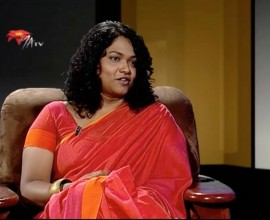
Capt. Elmo Jayawardena took to the skies when Sri Lanka’s commercial aviation was, to coin a phrase, just taking off. He is today known for his writing published in mainstream media, often anchored to his work with Candle Aid Lanka. Elmo went through an impoverished childhood, and his success today as a philanthropist was achieved through singular dedication and hard work. We talk about his first job, how he got into the airline industry and the hardships he had to endure when growing up. Remarkably, Elmo is also an award winning writer. His book Sam’s Story won the Graetian Prize in 2001 and is one of the successful books Vijitha Yapa has ever published. We talk at length about the characters and leitmotifs in Sam’s Story, and what compelled Elmo to write it. Candle Aid’s work is clearly Elmo’s chief interest in Sri Lanka, and we talk about what made him begin, its nature and what he expects is the…

Continue reading »
  • 26 Jun, 2011
  • 5 Comments
  • Colombo,
    Language,
    Poetry

The ‘coolest’ publisher of English books in Sri Lanka: In conversation with Sam Perera

Screen shot 2011-06-26 at 9.53.59 AM

Sam Perera, along with Ameena Hussein (see interview here) began the Perera Hussein Publishing House, a niche publisher based in Sri Lanka known to publish some of the most compelling contemporary writing in English. Sam, who thinks of all things, he is a farmer at the beginning of the programme opens up the conversation with reforestation. The link to the world of publishing lies in that fact that, as a private initiative, PH Publishing House plants at least one tree per book they publish in Puttalam. Noting that PH Publishing House was established to publish stories by Sri Lankans for Sri Lankans, Sam’s rather interesting take on what he does is that the local consumer / reader doesn’t necessarily want literature, but stories that are written well – of course judged by none other than Sam himself. When pressed on what he considers good or great literature, Sam points to Randy Boyagoda’s writing, and says that even though he is…

Continue reading »
Page 3 of 612345...Last »

About Groundviews

Located at the Centre for Policy Alternatives in Colombo, Sri Lanka, Groundviews is a citizen journalism website that uses a range of genres and media to highlight critical perspectives on governance, reconciliation, human rights, the arts and literature, democracy and other issues. The site has won two international awards, including the prestigious Manthan Award South Asia in 2009. The grand jury's evaluation of the site noted, "What no media dares to report, Groundviews publicly exposes. It's a new age media for a new Sri Lanka... Free media at it's very best!"

cezarneaga.eu