Archive for the ‘Education’

Dr. Cyril Ponnamperuma (1923-1994): A Passionate Champion of Public Science

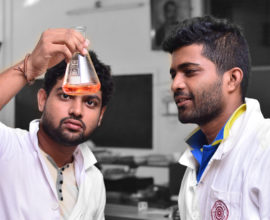
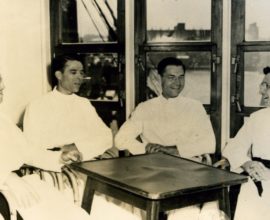
Cyril_Ponnamperuma analyzing a moon sample at NASA

On 20 December 2009, we mark the 15th death anniversary of Professor Cyril Ponnamperuma, one of the best known scientists produced by Sri Lanka during the Twentieth Century. He was both an internationally recognised researcher on the origins of life on Earth, and an early promoter of science and technology for development. His interests and involvements transcended his own discipline and homeland. He worked closely with the Pakistani Nobel laureate Dr Abdus Salam to promote science and infrastructural facilities in developing countries. Dr Rajendra K Pachauri, director of The Energy and Resources Institute (TERI) in India (and now chair of the UN climate panel, IPCC), said upon Ponnamperuma death: “I don’t know of another single Third World scientist who has done so much for developing science and technology capacity in developing countries.” Born in Galle, Sri Lanka, in 1923, Cyril Andrew Ponnamperuma had his early education in Sri Lanka and India, and switched the chemistry after a first degree in philosophy. He…

Continue reading »

Ragging in our universities: A symptom or a disease?

Sri Lanka is one of the few countries that provides students the opportunity of a free secondary education. More than 200,000 students sit for the GCE Advanced Level examinations in Sri Lanka every year, of which only around 20,000 are selected to the fourteen universities across the country. It is possible to conclude then that this 10% who make it, are among the brightest and best brains in the country, who deserve every bit of the chance they get to ensure a better life for themselves. Surprisingly then, barely one year into their University careers, a few of these same students get angrily referred to in the media and among the public as being “mentally unstable” and even “psychotic”. The reason? Ragging. Ragging is thought to have begun in educational institutions in the 18th Century and was very much in vogue in European countries. The concept was then adopted in the US in a milder form known as ‘hazing’, and spread…

Continue reading »

Lessons in Leadership

[Authors note: Edited text of a speech at the Jaffna Hindu College Old Boys Association (UK) Social Event: Kalaiarasi (31 October 2009)] Thank you very much for inviting me as Chief Guest. This is a new experience. Nobody has invited me to such a wonderful event before. There are four reasons why I have chosen to speak in English today. First, I have never spoken in Tamil from a stage. When you don’t have that experience, it can be very dangerous to try. I recall the story of Badiuddin Mohammed, the Minister for Education in Sirimavo’s government. He came to Jaffna University to open some building. The hosts had said “Speak in English Sir, everybody will understand.”  “No,” he said, “Naan Thamizhan, Thamizhile pEsa vENdum”: “naangaL ellaarum, engaLidam uLLa vErupaadukalai maranthu, Singalam, Thamil, Muslim enru illaamal, oru thaai makkaLaaha onrukku iruppOm”. “onraaha iruppOm” translates to “lets be united” while “onrukku iruppOm” means “lets urinate”! The linguistic difference is small but…

Continue reading »
  • 16 Oct, 2009
  • 13 Comments
  • Colombo,
    Education

The SLAS entrance exam: an age-limit of near madness

This note concerns the government gazette notification (available at http://www.dailynews.lk/2001/pix/GazetteS09-10-16.pdf) on the open competitive exam for recruitment to Grade III of the Sri Lanka Administrative Service (SLAS). The SLAS is unarguably the most crucial of services that falls under the competency of the Ministry of Public Administration. The gazette notification stipulates that the applicants need to be graduates of universities recognized by the University Grants Commission of Sri Lanka. All the entry requirements mentioned in the gazette appear to commendably set, except one, which I see as extremely unjust for a large number of fully qualified candidates: the age limit of prospective candidates. The gazette notification states that prospective applicants should be aged below 28 by 16 November 2009. For anyone acquainted with Sri Lanka’s system of higher education, it may not be difficult to understand that this age limit (for a major competitive exam of this nature) is thoroughly unjust, and simply unacceptable. The majority of Sri Lankan youth…

Continue reading »

Does cricket have a citizenship?

My family like many Sri Lankan families is cricket mad. I am the exception. When Sri Lanka played Pakistan a few days ago, my family lived and breathed cricket and it seemed like the end of the world when Sri Lanka lost. Imagine my surprise when I read the editorial of a daily newspaper that revealed that most Muslims of Sri Lanka celebrated the Pakistani win! But then again was I that surprised? We, Muslims look like any other Sri Lankans. We speak one of the two national languages and often both. Perhaps our feast day food is different, but no different than lumprai or yellow rice. On ordinary days we eat rice and curry like anybody else. For many years we dressed the same as other Sri Lankans but now I admit that many Muslim women wear the hijab. Other than that, no-one can say who is Muslim, Buddhist, Hindu or Christian. So how are we different? How are…

Continue reading »

English language is the need of the hour

At a recent discussion on; “Free schooling in Sri Lanka- A successful model then but a myth now?”, the subject of English language education in Sri Lanka came up for discussion once again. Most, if not all, of the participants and panelists agreed that there is a pressing need for English language standards to improve especially in the state schools and a lack of quality English language teachers was the main reason for the poor standard of English in the country at present. People are well aware that English language education started to decline in this country with the introduction of the “Sinhala only” bill in 1956. So for the past 53 years English has not been an official language of this country. However, it was made a “link language” under the 13th amendment to the constitution in 1987; 31 long years after the “Sinhala only” bill. The 13th amendment to the Constitution came about as a result of the…

Continue reading »

Interview with Prof. Tissa Vitharana on the 13th Amendment, Constitutional Reform, IT and English language

I began my conversation with Prof. Tissa Vitharana, Minister of Science and Technology and Chair of the All Party Representative Committee (APRC) by asking him about the state of play in Information and Communications Technology (ICT) in Sri Lanka, and what exactly the declaration of 2009 as the Year of IT and English meant. We talked about work force development, business service outsourcing, the sustainability of nenasala’s (cybercafes) established by ICTA and efforts by his Ministry to promote IT across the island. Over half of the programme was devoted to Sri Lanka’s constitutional dynamics, and in particular, options for constitutional reform that included the full enactment of the 13th Amendment. I asked Prof. Vitharana what he felt about the success of the APRC process as it was nearing its end, and also talked in depth about the constitutional architecture the APRC would propose (referred to as 13th Amendment plus). For the Minister’s answer as to whether he had lost most…

Continue reading »

Interview with Kumaravadivel Guruparan, a Sri Lankan Youth Activist

Interview with K. Guruparan, a well known Sri Lankan Youth Activist. Guru is a student at the Faculty of Law University of Colombo and the Founder of the Sri Lankan Youth Parliament based at the Bandaranaike Centre for International Studies. He is also associated with Beyond Borders and was an Action Partner for the Oxfam International Youth Parliament, having attended the second sitting of the Parliament in Sydney, July 2004.

Continue reading »
  • 24 Sep, 2008
  • 5 Comments
  • Colombo,
    Education

Corruption in the Education sector

People don’t realize that there is as much corruption in the private education sector as in the public sector for the corrupt counter party that offers the bribe or corrupt payment is in the private sector. There is corruption in all its forms- favoritism, nepotism, bribery and influence peddling in the education sector, which is now taking first place in the Corruption Ranking. Corruption occurs among many groups of actors from policy makers at the government level to providers of education at the school level, such as teachers and principals. Corrupt practices in the educational sphere can include bribes, illegal fees for admissions and examinations, examination frauds, preferential promotions and placements for teachers and charging students for ‘tutoring services’ to cover the curriculum needed to pass mandatory examinations and that should have been taught in the classroom. Illegal practices in textbook procurement, meal provision, and infrastructure contracting and so on are other malpractices. Educationists point out those students who are…

Continue reading »
Page 3 of 3123

About Groundviews

Located at the Centre for Policy Alternatives in Colombo, Sri Lanka, Groundviews is a citizen journalism website that uses a range of genres and media to highlight critical perspectives on governance, reconciliation, human rights, the arts and literature, democracy and other issues. The site has won two international awards, including the prestigious Manthan Award South Asia in 2009. The grand jury's evaluation of the site noted, "What no media dares to report, Groundviews publicly exposes. It's a new age media for a new Sri Lanka... Free media at it's very best!"

cezarneaga.eu
canakkale canakkale canakkale balik tutma search canakkale vergi mevzuati bagimsiz denetim vergi mevzuati ozurlu engelliler