Archive for the ‘Identity’

Celebrating WOMEN: Women’s Photography Exhibition 2011

"It's an excellent effort which encourages women to carry camera, and click. More women are encouraged through this exhibition to experiment their hidden talent" says Deminithurage Amarabandu

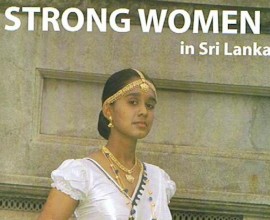
“Men ~ their rights, and nothing more; WOMEN~ their rights, and nothing less.” ~ Susan Brownell Anthony (15th February 1820 ~ 13th March  1906, American Women’s Rights Activist, Civil Rights leader and suffragist) Journalism is still a heavily male dominated field in Sri Lanka. Women are slowly but steadily getting into the field of journalism. On the other hand, we are mostly assigned to cover “soft” issues such as to handle the women’s page of a newspaper or cover culture or sub edit stories. We are hardly and rarely assigned to cover conflict or sports, because male journalists and editors think that these are “hard” issues women are unable to cover. Women are equally dedicated, determined, educated, focused and of course talented. We have proven our talents over the years, while standing side by side and shoulder to shoulder on the field with men to cover from disaster to design. 34 women photographers participated in the Women’s Photography Exhibition 2011….

Continue reading »
  • 4 Apr, 2011
  • 9 Comments
  • Colombo,
    Features,
    Identity,
    Sport

The victory that never came: Photos from Colombo during Cricket World Cup Final

DSC08825

This was a big match. Akin to a curfew, Colombo’s streets were deserted on Saturday afternoon, but Galle Face was not. Over 7,000 people had congregated there to watch the cricket world cup final between Sri Lanka and India on a big screen erected on the grounds. Nearly all the electronics showrooms with TV’s on display had tuned in to the cricket as well, resulting in small crowds who had settled in front to watch the match sometimes with deck chairs and stools. Traffic was chaotic in the morning in Colombo and its suburbs, with people thronging to stores to buy both genuine and imitations of Sri Lankan cricket sporting garb and other memorabilia. As we noted on Twitter, “Never seen so many Sri Lankan flags on vehicles after the end of war.” Nationalism and over the top displays of patriotism were on a crescendo, leading up to and on Saturday. There was Sarath Fonseka who said that a victory…

Continue reading »

In conversation with Dr. Paikiasothy Saravanamuttu

Screen shot 2011-03-21 at 1.33.45 PM

Almost one year ago, Groundviews first featured an interview with Dr. Paikiasothy Saravanamuttu. At the time, just after the parliamentary elections leading from the decisive presidential election, the government was riding a wave of popular support. In the year that passed, from the reprehensible 18th Amendment and grotesque examples of the government’s wastefulness, democratic governance that instead of improvement and progress, shows decline and decrepitude. The recipient of the first Citizens Peace Award, Dr. Saravanamuttu (Sara), the Executive Director of the Centre for Policy Alternatives (the institutional base of this site), in this interview speaks about the enduring challenges facing democracy and human rights in Sri Lanka, nearly two years after the end of war. The conversation begins with an excerpt from Sara’s acceptance speech at the Citizens Peace Award, and a question as to why so very few listen to him in Sri Lanka today, and worse, care to know about that which he flags. Going beyond a simplistic championing of…

Continue reading »

Violence Against Women and Girls in Sri Lanka: No April Fools joke

Screen shot 2011-03-19 at 12.17.57 PM

Interviews published on this site with Kumudini Samuel, founder of Women and Media Collective and with Sunila Abeysekara, a leading human rights activist, addressed the prevalence of Gender Based Violence both during war and in post-war Sri Lanka, particularly in the North and East. Addressing the same vexed issue is a production slated for 1st April titled V Day – A Memory, a Monologue, a Rant and a Prayer: Writings to End Violence Against Women and Girls. Supported by the Forum Against Gender Based Violence in Sri Lanka, Groundviews caught up briefly with the director of this production, Hans Billimoria, to ask him why he chose this theme, what V-Day would be about, and why it was important to flag this issue in Sri Lanka. Listen to the podcast (~15 mins): here For a related contribution by Hans to , click on These Sri Lankan whores! Serve them right! Repost This Article

Continue reading »

Caste in Sri Lanka and India

jaffna_high_caste_tamil_women

There was an interesting work shop on ‘Conceptualizing Caste in Sri Lanka’ at the ICES on Tuesday 15th March 2011. It was noted that caste is a tabooed and under-researched subject in Sri Lanka, unlike in India, Nepal and elsewhere in South Asia. We tend to dismiss caste as insignificant and irrelevant, except perhaps in remote rural areas. In consequence, caste related problems are evaded and not addressed. It was noted by Prof. Tudor Silva that the British brought sanitary labourers from South India into selected Urban centres, and these then constituted the underclass of those towns, doubly despised on account of ethnicity and caste. Prof. Ranweera Banda, based on his research in Panama in Ampara district, found that the people of that locality were of mixed Sinhalese –Tamil origin at all social and caste levels. However, the social and caste elite opted to identify with the Sinhalese upper castes, embracing the appropriate cultural practices needed for such identification. This…

Continue reading »

Jaffna: Moments of Nostalgia

"Let's unite to celebrate Sri Lanka Cricket" reads the hoarding in Tamil

“I worked hard for that FIRST KISS And a heart don’t forget something like that Like an old photograph Time can make a feeling fade But the memory of a FIRST KISS Never fades away!” ~ Samuel Timothy McGraw ~ American Country Musician and Actor I always feel enchanted, whenever I travel to Jaffna by bullock cart, bicycle, car, foot, helicopter, jeep, motorbike, plane, ship, train or even through Kilali lagoon during difficult times. Journey to Jaffna ~ may it be before the war, during the war or after the war, I always cherish the memories of Jaffna which is closer to my heart. Jaffna which is beautifully called “Yaazhpaanam” in Tamil. It is famous for its unique architecture, tradition, cuisine, rituals and festivals. According to 2007 statistics, Jaffna district’s population was 650,720 (1,85,405 families). Jaffna district is geographically divided into Valikaamam, Vadamaraatchchi, Thenmaraatchchi and Jaffna Islands. It has an area of 1,025 square kilometres (approximately 395.8 square miles). Jaffna…

Continue reading »

Jaffna and the Vanni today: The reality beneath the rhetoric

4671791672_d87e631ed7_b

Photo credit: Indi Samarajiva, 2010 The drive along the A9 from Vavuniya to Killinochchi is brought to a temporary halt at the ‘exit-entry point’ at what used to be the forward defence line at Omanthai. On the side of the dusty dirt road, in a series of sheds, military personnel are stationed with the sole purpose of ensuring that both locals and international staff members of non-governmental and international non-governmental organisations and even UN agencies, possess the required clearances issued by the Ministry of Defence (MOD) to cross into the North. All foreigners, that is those holding non-Sri Lankan passports, even tourists, have to obtain a MOD clearance to pass through Omanthai. One could be excused for thinking this was 2002, when entering the Vanni was much like entering a foreign territory. Yet it is 2011, more than a year and a half since the end of the war between the government and the LTTE. In 2011, more so than…

Continue reading »

Around the World in 32 Years: A Mini-Memoir

Long-Reads-Small

[Editors note: Emil van der Poorten is a regular columnist in the Sri Lanka media. His short article in the Edmonton Journal (Violence still plagues my Sri Lankan homeland) prompted an invitation to contribute a more fuller account of his life to Groundviews. Emil's story and his many adventures with politics recounted here with an acerbic wit offer unique insights into political figures and events that have shaped our lives.] Looking through the scraps of memorabilia from the time prior to my departure to Canada and then through my Canadian clippings to those accumulated in Sri Lanka since my return was a fascinating and nostalgic experience that I would not have indulged in without the stimulus of having to write this piece for “Long Reads” in Groundviews. The exercise was not unlike browsing through old diaries, except the material in those scrapbooks was more akin to snapshots from a lifetime spent in significantly different circumstances in two very different parts…

Continue reading »
  • 11 Mar, 2011
  • 40 Comments
  • Colombo,
    Gender,
    Identity

Women on Top: Sexuality and rights in Sri Lanka

Print

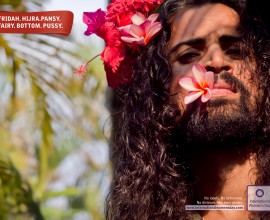
Poster from Equal Ground The author delivered the speech below at the annual International Women’s Day celebration event organised by Equal Ground – WOMEN ON TOP. This event also marked the launch of the 2011 campaign: A woman loving another woman is also a woman. Respect her rights. The idea behind the commemoration of International Women’s Day 2011 by Equal Ground was to provide lesbian, bisexual and transgender women of Sri Lanka a space to voice their concerns and share their experiences. At the event, Ms. Sumika Perera spoke on the role of the women’s movement in Sri Lanka and its responsibility to the Lesbian, Bisexual and Transgender women of this country who are still marginalised and shunned by society. In addition, Bhoomi shared her experience as a trans-woman in Sri Lanka. The audience comprised of women diplomats, activists, academics and businesswomen. I was asked to speak about what it is like for me as a straight woman to be…

Continue reading »

Sri Lankan cricket and social work: Interview with Kushil Gunasekera

Screen shot 2011-02-22 at 2.24.13 PM

Kushil Gunasekera is Muttiah Muralitharan’s manager for over 10 years. Though this came up in the discussion along with Sri Lanka’s prospects at the Cricket World Cup this year, the chief focus of discussion was based on Kushil’s other life as the founder of the Foundation of Goodness and his social work in Seenigama. Kushil is a successful businessman, and before that a first class cricketer, who eventually gave up his business to become a full time social entrepreneur and help the village of his birth and childhood. The Foundation’s website and his answers constantly refer to good, and doing good. I asked Kushil what for him was goodness. The Foundation’s scope of work in so incredibly broad, as is evident from their website, I asked Kushil whether he had taken on the role that is traditionally associated with government service delivery. I asked him about how he deals with the culture of dependency, and that for the best of…

Continue reading »

Follies and Fantasies in the Sri Lankan Conflict

In an often quoted line Marx remarked, “history repeats itself first as tragedy, second as farce” and years later, Henry Ford, not known exactly either for his scholarship or his political wisdom, nevertheless said wisely “we want to live in the present and the only history that is worth a tinker’s damn is the history that we make to-day.” In considering these two views about history and applying them to events in Sri Lanka, it is clear that we must amend Marx to “history is being written in Sri Lanka by fools and fanatics and is leading to immense tragedy.”  And in Sri Lanka to-day, we must take Ford’s dictum seriously: the only worthwhile history is the history we make today. The conflict in Sri Lanka between the Sinhalese people and the Tamil people, it is claimed, began soon after the country gained its independence from Britain in 1948.  In 1956, the conflict accelerated with the election of a Sinhala…

Continue reading »

Queen of Murasumottai celebrates her centenary birthday

DSCF5265

“May you live to be 100 and may the last voice you hear be mine” ~ Frank Sinatra (1915 ~ 1998), (American Author and Singer) Louisa Arulamma Thambyrajah celebrates her centenary birthday today ~ 6th of February 2011. She was born on 6th of February 1911 in her ancestral home in Chaavakachcheri in Jaffna Peninsula, North of Sri Lanka.It is a great miracle that she survived the brutal war. Her life, experience and challenges are unbelievable, but they are true. She is a daughter of a priest. She had her education at Uduvil Girls College ~one of the famous Girl’s schools in Jaffna peninsula. After completing her studies, she went back to her home town Chaavakachcheri to serve the community in the Church and teach at Sunday school. “I enjoyed cooking and serving food for all. I love to take care of others. I like all food. I led a healthy and wealthy life in my village ~ Murasumottai” says…

Continue reading »

Imaging the aftermath

DSCF4914

“Absence of war does not mean peace. Meaningful peace can only be achieved by accepting separate identities and by trying to understand and accept the differences and uniqueness of cultural diversity. Peace cannot be achieved by blurring the uniqueness and denying separate identities. Peace cannot be achieved by suppression or by force; peace has to emerge from mutual understanding and respect” says Godwin Constantine. ### Godwin Constantine’s work takes us to a space engulfed with acute political and social implications that are connected with ethnic conflict and the resultant war that was fought for over 30 years in the land of his youth, Jaffna. Born to a middle class family in Kandy, doing his early schooling at St. Anthony’s College and Trinity College (Kandy) and now a leading cardiologist, one would wonder why Constantine’s work does not really sync with the usual art aspirations or aesthetics of the comfortable upwardly mobile middle class. In actuality, his work constitutes uncomfortable reminders…

Continue reading »

Shyam Selvadurai: Literature, identity, politics and the Galle Literary Festival

Screen shot 2011-01-17 at 8.12.15 AM

Shyam Selvadurai was born in 1965. His book Funny Boy introduced gay fiction to mainstream English literature in Sri Lanka, and indeed as Shyam notes, in South Asia. Born to a Sinhalese mother and Tamil father, Shyam was 19 when he left Sri Lanka in 1983 for Canada. Funny Boy was as much about class and ethnicity as sexual identities, and though Shyam has repeatedly noted that it was not autobiographical, the fiction is set against a violent Sri Lanka. Shyam is presently the curator of the Galle Literary Festival. In an essay (Coming Out) penned for Time in 2003, Shyam brought out the vexed relationship he has with Sri Lanka. On the one hand is the love for the country, “…live and let live generosity and good humour that I love most about Sri Lanka” and on the other, the unsettling nature of it “in this country that I still considered my home, I could never be at home.” Yet…

Continue reading »

Re-mediating Sri Lanka: Cyberspace, Groundviews and Political Engagement

The thoughts below are taken from a longer article published as ‘Sri Lanka inside/out: cyberspace and the mediated geographies of political engagement’, in Contemporary South Asia (2010) 18 (4), pps.443-449. 1. Readers of Groundviews will know well that delineations of who gets to speak, how and which critical voices are allowed or not to intervene in political debate, and the effective bite of civil society organizations have long been tightly controlled in Sri Lanka. Such acts of intellectual and representational enclosure are, I want to suggest, key to the perpetuation of an island imagination characterized by the insularity and exceptionalism with which Sri Lanka is so associated by the international community. In other words, state regulation and censorship of key media outlets has played a large role in determining the common sense meanings of phrases as innocent as ‘in Sri Lanka’. For it is in this context that such an innocuous turn of phrase comes to imply not just a…

Continue reading »
Page 10 of 17« First...89101112...Last »

About Groundviews

Located at the Centre for Policy Alternatives in Colombo, Sri Lanka, Groundviews is a citizen journalism website that uses a range of genres and media to highlight critical perspectives on governance, reconciliation, human rights, the arts and literature, democracy and other issues. The site has won two international awards, including the prestigious Manthan Award South Asia in 2009. The grand jury's evaluation of the site noted, "What no media dares to report, Groundviews publicly exposes. It's a new age media for a new Sri Lanka... Free media at it's very best!"

cezarneaga.eu