Archive for February, 2012

Youth unemployment in Sri Lanka: The foundations of violence?

Screen Shot 2012-02-29 at 8.26.12 PM

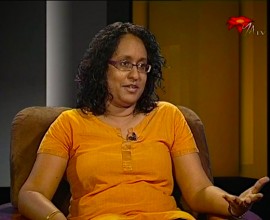
In an interview broadcast on public TV recently, Dr. Harini Amarasuriya, Senior Lecturer, Department of Social Studies at the Open University of Sri Lanka and co-author of Rethinking the nexus between youth, unemployment and conflict – Perspectives from Sri Lanka looks into what is a real and growing problem in Sri Lanka – youth unemployment. As the report by International Alert notes, Likewise, youth unemployment cannot be looked at as an isolated problem: Its roots lie deep in social, cultural, economic and political structures and dynamics, as illustrated by some of the issues emerging from the district-level research. Enhancing young people’s skills, while necessary in countries where educational curricula and job market requirements do not match, will not be sufficient to overcome these barriers. In the interview. Dr. Amarasuriya speaks of a National Action Plan for Youth Employment, an initiative from a few years ago under the present government that no one now seems to recall, leave aside implement the…

Continue reading »

The Loss of Identity: Development and Agriculture

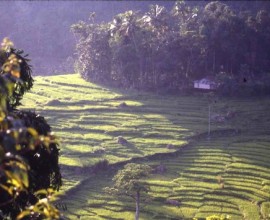
Terrace rice, SL

The ecological impact of increasing energy input into a system has been well documented.  In any ecosystem an increase in the flow of energy tends to organize and simplify that ecosystem, with the destruction of many homeostatic mechanisms of the original system.  The loss of the traditional, rice production systems and its simplification, being an example.  Further, diversity is now being realized as being important to sustainability.  In agriculture, studies of insect communities have shown that pest outbreaks are characteristic of systems with lowered species diversity. An increase in the input of energy to an ecosystem often provides a useful measure by which ecosystem modification can be addressed.  Thus in a heavily energy dependent agricultural system, the natural or biological system has been dispensed with and an artificial environment has been created to allow high levels of production.  While it can be argued that such a system of production is sustainable as long as the inputs are provided, it raises…

Continue reading »

A Search for Identity: Tomorrow’s Sri Lankan!

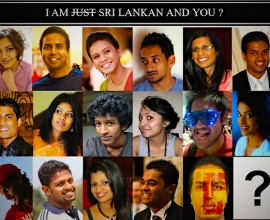
A Search for Identity, Tomorrow's Sri Lankan_Kamaya Jayatissa

Few are those who believe in the existence of what I would like to call a post-war Sri Lankan identity. Indeed, most of us will identify themselves according to their ethnicity, some according to their religion, beliefs and aspirations and some according to their country of birth. Yet, the fact is that we do not belong to just one category or another. We are different from each other and at the same time we carry diversity within ourselves. Each of us is a unique combination of various identifications that are not equally significant to us. So how does one define the schizophrenic notion of identity? In a sociological sense, one could say that identity defines who we are and who we want to be. It also defines where we come from and where we go to. Yet, identity is not necessarily something we inherit or something inherent to us. It does not axiomatically combine shared values, beliefs or concerns. To…

Continue reading »
  • 27 Feb, 2012
  • 2 Comments
  • Colombo,
    Jaffna,
    Politics and Governance,
    Post-War

Doing the wrong thing for the right reasons: Plagiarism and the fate of LTTE surrendees

LTTEc.jpg.crop_display

Photo courtesy Deccan Chronicle When I first read Shamila’s piece posted on 24 February (Female ex-combatants of LTTE in post-war Sri Lanka), I had the strange feeling that I had read it before as it seemed very familiar. A moment later I realized that not only had I read it, I had actually written much of it. Shamila has both paraphrased, and quoted verbatim, a section of my piece titled Jaffna and the Vanni today: The reality beneath the rhetoric, posted on 17 March 2011, without giving due acknowledgement. Although Groundviews is a citizen journalism website, and not an academic journal, all those who contribute are expected to abide by accepted rules relating to due acknowledgment of sources and refrain from engaging in plagiarism. For ease of reference, I shall list below the striking similarities between the two pieces. It is the first section of Shamila’s piece that has been ‘borrowed’ from my article while it appears the second half…

Continue reading »

When a Prophet Speaks: Stephane Hessel on Sri Lanka

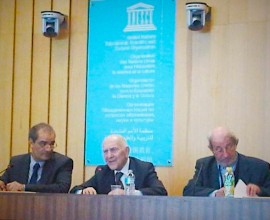
Stephane Hessel 2

A prophet spoke at the UNESCO in Paris this week, though he joked that having lived for 90 years, he had written thirty pages and found he had been turned into ‘a rock star’. Stephane Hessel, born in Germany in the year of the Russian revolution, is 95 years old. Anti-Nazi Resistance fighter, concentration camp survivor, diplomat and writer, he was 93 when he wrote a political essay of 13 pages, which grew into a booklet of only thirty pages, called Indignez–vous! In English this means ‘Be Indignant’ while the English language translation has been published under the title ‘Time for Outrage’. Between October and December 2010 it sold more than 600,000 copies. It has since sold a million copies in France alone and has been translated into 30 languages, selling 3.5 million copies worldwide. The left leaning newspaper Liberation, founded by Jean-Paul Sartre, says the booklet “crystallizes the spirit of the time”. The conservative National Post of Canada says…

Continue reading »

In Memory of Marie Colvin

Marie_Colvin_AP120222011872_620x350

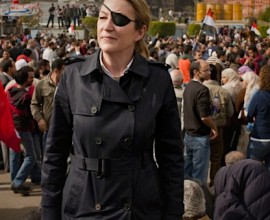
Photo via CBS News and courtesy AP Photo/Ivor Prickett Sunday Times “Journalists covering combat shoulder great responsibilities and face difficult choices. Sometimes they pay the ultimate price.” – Marie Colvin A few days ago, I was in a conversation with a fellow journalist and a human rights activist with regard to establishing an initiative in response to the unfolding developments in Sri Lanka. We discussed which journalists, experts and academics we could call to help us in our struggle. A name that immediately came up was Marie Colvin. While taking a reflective walk after the discussion, I decided to contact Marie Colvin through another foreign journalist, and I even decided to speed up my postponed trip to the UK. I went online in the morning to book the ticket, but just before I booked the ticket, I checked the news and I could not believe what I was reading - Marie Colvin had been killed in Syria, along with French photographer Remi…

Continue reading »

New wave of abductions and dead bodies in Sri Lanka

WV21812

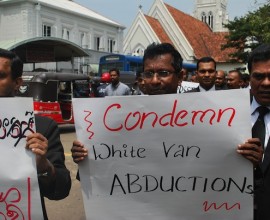
Image from Transcurrents In the past 5 months – October 2011 to February 2012 – there has been a disturbing rise in the number of abductions, especially in and around the capital, Colombo. Out of 29 abductions and 3 missing persons reported in media, most have not returned to their homes and families, rendering them ‘disappeared’ persons. The manner of these abductions has sent alarm bells ringing within the Sri Lankan human rights community, recalling the twin phenomena of the ‘white van’ and the unidentified gunman’ which plagued the country in the period from 1987/1989, and which prompted two visits to the island by the UN Working Group on Enforced and Involuntary Disappearances in 1991 and 1992. The discovery of a charred body of a man on a small street in Narahenpita, Colombo 5, on the morning of February 13 has served to heighten these concerns. There have been 10 bodies discovered in February in addition to the 7 abductions…

Continue reading »

History after the War: Challenges for Post War Reconciliation

Picture

[Editors note: Also listen to podcast by author here.] The end of the war is certainly not the end of the conflict that led to the military confrontation between the military forces of Sri Lanka state and the Liberation Tigers of Tamil Eelam (LTTE). This conflict surfaces in different guises, the military episode being only one. It is well-known that conflicting interpretations of the past of the island by conflicting parties is a major factor in the conflict.[1] When the military confrontation was the dominant form of the conflict, the importance of other forms were less evident. With the military episode completely over, non military aspects of the conflict are again coming to the fore. It is in this context that the renewed role of “history” in the Sri Lanka ethnic conflict has to be discussed. In the collective imagination of the ‘Sinhala-Buddhist South’, the ‘Tamil North’ occupies a very special place. In short, it is a place to be conquered and…

Continue reading »

History after the War: Challenges for Post War Reconciliation (Podcast)

Picture

This podcast is based on History after the War: Challenges for Post War Reconciliation penned by the author. As noted in the article, From the point of view of a post-war reconciliation that should accommodate the legitimate demands of Tamils in the North and East, the renewed importance of ‘history’ in shaping the post-war dynamics of the ethno-political conflict will certainly pose a major challenge to those who wish to overcome the horizons of nationalist imaginations in a new post-war rethinking of politics. In a context where extreme Sinhala-Buddhist nationalism is unprecedentedly strong and ideologically aggressive, providing the ideological support for the political system that excludes Tamils, the need to build an alternative discourse of history becomes more than a naïve academic pursuit. It is a profound political and ideological task that has to be given a high priority. Nirmal Ranjith 2012 Feb 21(1) Repost This Article

Continue reading »

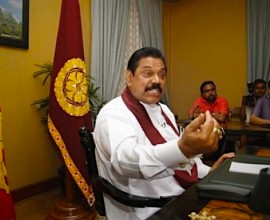
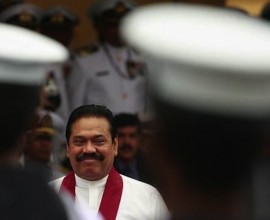
How bad is the crisis for Mahinda Rajapaksa?

mahinda-angry2-e1329484673797

Photo courtesy Lanka Standard “Although certain foreign powers have attempted to conspire against and oust me from the presidency, I will not leave this position before completing my duties” – President Mahinda Rajapaksa (Ada Derana Online / February 19, 2012 01:27 am) That perhaps is the easiest of the answers possible for any Head of State under pressure from his own people who voted him to power and from the international community, to explain his own dilemma. The Resolution proposed to the UN Human Rights Council’s19 Session will pressure the Rajapaksa regime to honour it’s own Commission’s Recommendations, while Chilaw now, after Katunayake FTZ workers’ agitations on May 24 and 30 last year, followed by local vendors and rural farmer protests against plastic container rule, turns a wholly new militant page on protests against this Rajapaksa regime, albeit glib talk about foreign conspiracies. Anthony Fernando from “Wella” fishing village, a protester in Chilaw died of police shooting on Tuesday while three…

Continue reading »
  • 24 Feb, 2012
  • 3 Comments
  • Colombo,
    Jaffna,
    Peace and Conflict

Female ex-combatants of LTTE in post-war Sri Lanka

Screen Shot 2012-02-23 at 10.19.56 PM

[Editors note, 27th February 2012: It was brought to our attention by Valkyrie, a contributor to this site, that significant portions of this article have been plagiarised. A detailed account of this can be read at Doing the wrong thing for the right reasons: Plagiarism and the fate of LTTE surrendees. The issues noted in the video, and in general about the fate of women and former LTTE combatants, remain valid.] With the defeat of the LTTE, many female combatants and women who – willingly or unwillingly – worked with the LTTE surrendered to the Sri Lankan military. Initially, it was extremely difficult to get their details. However, in the last few months, the Government has released many “ex-combatants” after “rehabilitation.” Their reintegration back into the community has become a critical concern for women’s groups in the north. Many ‘surrendees’, as they are called, were not combatants but those who worked within the LTTE’s administration, while others were forcibly recruited even…

Continue reading »

A Road to Reconciliation in Sri Lanka: Will We Take It?

photowide

Photo courtesy REUTERS/Dinuka Liyanawatte Despite the many limitations and criticisms levied at the final report of the LLRC, it must be recognized that in the presentation, the report reached a level of professionalism, objectivity and breadth in scope, within the relatively short period of time mandated to the Commission. The much talked about Truth and Reconciliation Commission of South Africa was not without its critiques. Many felt that the TRC was “weighted in favour of the perpetrators of abuse.” The ‘highest – profile of these objections’ was filed by the family of prominent anti – apartheid activist Steve Biko who was killed by the secret police and whose story was featured in the  film ‘Cry Freedom.’ The family felt the TRC “was a vehicle for political expediency” which denied them their ‘right to justice’.  Opposing amnesty for his killers, they brought legal action against TRC as unconstitutional.  There will be no report that will be free of criticism or be able…

Continue reading »

In Search of Something More than the 13th Amendment

image2png.php

Photo courtesy First Post During his recent visit to Sri Lanka, India’s External Affairs Minister, Mr. SM Krishna reminded that President Mahinda Rajapaksa was committed to a ‘13th Amendment Plus approach.’ This has been an old promise of the Government, one which was so prominently made in 2008-2009 as well. The timing of this promise seems perfect; the next session of the UNHRC in Geneva is around the corner. 13A: debate The debate concerning the 13th Amendment to the Constitution of Sri Lanka has now been revived. A useful contribution made in recent times which contains important suggestions regarding the full implementation of the 13th Amendment is that of a principled advocate of federalism, Asanga Welikala (Groundviews, 12 Feb. 2012). Dr. Dayan Jayatilleka argues that the current deadlock can be broken by setting up an interim administration in the North (Transcurrents, 13 Feb. 2012). We remember the numerous contributions made in the past too. One particularly striking and lucid contribution…

Continue reading »
  • 19 Feb, 2012
  • 3 Comments
  • Colombo,
    Environment

Vihara Maha Devi: Where have all the trees gone?

02

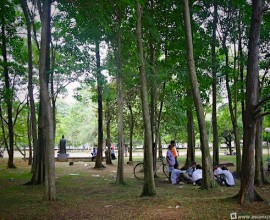
Photo courtesy Asia Explorers Over the course of roughly a year Vihara Maha Devi has been through some significant changes and they are still on-going. Seemingly, this is related to the transfer of authority as the navy took over the administration of the park in May 2011. At the outset it needs to be stated that the Park would not make it into a list of ‘top twenty (or fifty) public parks in the world to visit before you die!’ or ‘top ten sites in Colombo’. It would also be difficult to claim Vihara Maha Devi as a high point of Sri Lankan garden aesthetic, unlike say the colonial-era Peradeniya Botanical Gardens or post-independence treasure of Brief. Nonetheless, it has its own charms, the least not being it is the only green oasis in the heart of Colombo (I am not counting Galle Face Brown). For a fairly green city, it is strange that there are no other public parks…

Continue reading »

The 97% and the 3% in Sri Lanka

Skid steer loaders donated by China are pictured in Colombo

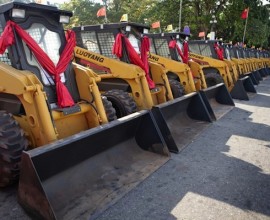
Photo courtesy Daylife/Reuters We all know about the 99% and the 1% and most of us know where we are or which we sympathise with. I’m with the 99%. But what about the 97% and the 3%? How many of us know about the 97% anyway? I didn’t until a few days ago, so I wouldn’t blame anyone, but those of you who read this article will know all about it when you’ve finished and you can figure out which side you’re on. I’m with the 97%. As you read on, it will be tempting to caricature the point and reduce the 97% to a partisan stance, which it is not. To spin it as such would be the most gigantic undeserved compliment one could pay an administration or a political bloc. The 97% is about a perspective on an important theme or cluster of concerns (‘national-popular’ in Gramscian terms) of the enormous majority of the country’s citizenry, which translates…

Continue reading »
Page 1 of 3123

About Groundviews

Located at the Centre for Policy Alternatives in Colombo, Sri Lanka, Groundviews is a citizen journalism website that uses a range of genres and media to highlight critical perspectives on governance, reconciliation, human rights, the arts and literature, democracy and other issues. The site has won two international awards, including the prestigious Manthan Award South Asia in 2009. The grand jury's evaluation of the site noted, "What no media dares to report, Groundviews publicly exposes. It's a new age media for a new Sri Lanka... Free media at it's very best!"

cezarneaga.eu