Archive for December, 2011

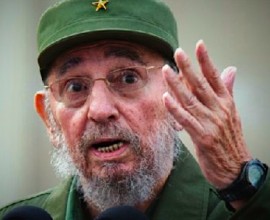
VIOLENCE AND ITS MORAL DILEMMAS: FIDEL ACCORDING TO DAYAN JAYATILLEKA

cubas-fidel-castro-hails-egyptian-revolution_2011_588247-1

Dr. Dayan Jayatilleka’s book, Fidel’s Ethics of Violence: The Moral Dimension of the Political Thought of Fidel Castro, is a significant contribution towards understanding one of the enduring intellectual dilemmas in the theory and practice of politics: the ethics of the use of violence. Dayan’s ambitious project in this book is to offer a comprehensively worked out theory for the ethical use of violence, for both revolutionaries and states, based on the political thought of Fidel Castro. The theory that is advanced is presented as one that is modern, universal, based on reason, and one that is opposed to both ‘unipolar hegemony’ as well as culturally relativist and parochial forms of resistance and rebellion. The book, which straddles several intra-disciplinary boundaries as between political theory, philosophy and rhetoric, exemplifies the authorial hallmarks one usually associates with Dayan: originality, lucidity and cogency, but also polemical partisanship. Its unremitting partiality in the admiration of Castro and the Cuban Revolution, however, does nothing…

Continue reading »

The Story of Learning Lessons by Counting Costs

TwoSocialNetworks

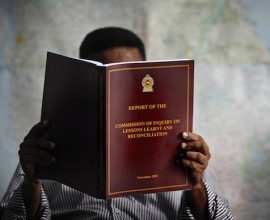
One morning last week, as I sat in my armchair reading the report of the Lessons Learnt and Reconciliations Commission (LLRC), I saw a man dressed only in a sarong running along the road just outside my house. You might think there is nothing unusual about a man in a sarong running – perhaps he is running to catch a bus or is being chased by a dog. That might be so, if I saw this running man in Sri Lanka. But no, this is one freezing winter morning in BridgeTown, UK, where the probability of a seeing a man running in his sarong is infinitesimally small. Remember the story about someone famous jumping out of the bath-tub and running naked on the road shouting “Eureka”? My story today is something in the same spirit. The man I saw is a friend. His name is Accuratus Numeratus, with origins in Jaffna, Sri Lanka. He earns a living by extracting useful…

Continue reading »

Clouds of Deception: Jeyaraj anoints and cloaks Niromi Tigress

9781742694146c_9781742694146

Writing from a Tamil nationalist position which occasionally earned the LTTE monster’s ire, David Jeyaraj has provided the world with invaluable service over the years. He had considerable information on both the Tiger operations and behind the scene events in the Tamil north. I have utilized his articles on numerous occasions.[i] However,  in jumping to the defence of a family friend who has presented a “true story” of her engagement in the Tamil liberation struggle, Jeyaraj has recently provided one with a meandering exercise in obfuscation and deception: see his  “From Shenuka to Niromi: True Tale of a Tamil Tigress.” Jeyaraj dazzles his readership by revealing that he knows her real identity in the course of presenting Tamil Tigress as a tale of Niromi-Shenuka’s disillusionment with the LTTE and her recovery of everyday life till she crafted her book as a “story of redemption” and a “classic immigrant success story.”[ii] He then challenges those who have read the book as…

Continue reading »

A Petition to President Barack Obama

SF

Photograph: Lakruwan Wanniarachchi/AFP/Getty Images from Guardian The breaking news that JR Jayawardana had won the 1977 general election by a 5/6 majority is one of my vivid childhood memories. Perhaps, the fact that my father was an ardent supporter of the United National Party led by Junius Richard Jayawardana, commonly known as JR, compounded the significance of that memory. JR Jayawardana asked for a mandate to build a just society (“Dharmishta Samajaya” in Sinhalese) and an open economy. There was no TV at that time, but his Green posters on lamp-posts, buses, and walls highlighted this attractive slogan. He passed the 1978 constitution that gave sweeping powers to the executive president to build the so called just society. That included powers to over-rule a decision of the Supreme Court. Then he locked the constitution by changing the electoral system from a winner take all system to a representative system that made it extremely hard to win a 2/3 majority to…

Continue reading »

Niromi 2009 versus Niromi Tigress 2011

9781742694146c_9781742694146

Niromi de Soyza’s so-called autobiography, Tamil Tigress, has received extensive coverage in Australia and has traversed the world now because of critical reviews by several personnel and devoted defence from others. It has been described as “part memoir, part compelling reportage, part mea culpa” by Nikki Barrowclough in the Sydney Morning Herald’s weekend magazine.[i] Gordon Weiss, the moral crusader, proclaimed it to be “incredibly moving” and considers it “a story of redemption” (as quoted by Nikki Barrowclough). This may well be one of the motifs that Robert Perinpanayagam, a perceptive commentator, sees as the potential crux of the book in his unelaborated blog comments. Without denying that dimension of the book if one stretches a point and treats it as a “faction,” that is, a “fictional narrative based on real events,” rather than a historical account, its self-presentation as a memoir[ii] and “true story” renders Tamil Tigress liable at the same time to the charge of deception (a combination stressed…

Continue reading »

LLRC REPORT: REASON, REFORM, ROADMAP

rajapaksa_llrc report

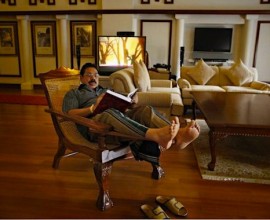
Photo, courtesy JDS, is of Sri Lanka’s President reading the LLRC report on a ‘haansi putuwa‘ at his official residence. Though not without flaws and lacuna, the long awaited LLRC report does not disappoint, and reaches high standards, ranking with the best reports emanating over the decades from official and semi-official/autonomous Sri Lankan commissions, reviews and probes. It is a serious, thoughtful, carefully written and constructed text, striking in its fair-mindedness and balance. It deserves constructive engagement with, by all concerned Sri Lankan citizens and those in the world community who are concerned about and with Sri Lanka. Let us first dispense with the flaws and gaps, of which there are chiefly two. Firstly, the Report echoes the conventional wisdom, as does the Norwegian (NORAD) post-mortem, that the CFA was the result and in the context of the military weakness of the Sri Lankan state. This is factually incorrect since it ignores the chronology of events, in which the deadly LRP missions…

Continue reading »

The LLRC report and ‘accountability’ in Sri Lanka

Sri Lanka Civil War

Readers will find no big surprises after reading the final report of Sri Lanka’s Lessons Learnt and Reconciliation Commission (LLRC). It is very much what most people were expecting. A document that looks to the future, exonerates the military, does not touch on the question of accountability and includes some touchy-feely language about the country’s need to move forward, celebrate its diversity and be grateful for the defeat of terrorism. Essentially, all civilian casualties were the result of people caught in the crossfire or were the LTTE’s fault. “The protection of the civilian population was given the highest priority” by the Sri Lankan armed forces, the Commission has determined. The report also claims that military operations moved at a “deliberately slow” pace because Sri Lanka’s military personnel were so careful and cognizant of the dangers to civilian life during the final phases of the conflict. While the LTTE deliberately targeted civilians, it appears that Sri Lanka’s military did not, according to the LLRC…

Continue reading »

DISAPPEARANCE OF HUMAN RIGHTS DEFENDERS & POLITICAL ACTIVISTS LALITH KUMAR WEERARAJ AND KUGAN MURUGAN ON 9TH DECEMBER 2011

Two Sri Lankan human rights defenders and political activists disappeared in Jaffna in the North of Sri Lank on 9th December 2011. There is still no credible news of their whereabouts and human rights groups have voiced serious concerns about their safety. Mr. Lalith Kumar Weeraraj and Mr. Kugan Muruganandan were last seen by relatives, leaving Mr. Muruganandan’s house at Avarangal Jaffna, at 5 pm on 9th December. They have not been seen since. Shortly before their disappearance Mr. Weeraraj and Mr. Muruganandan had been organizing a press conference to be held in Jaffna on 10th December, international human rights day.  On 10th December, a group of HRDs from the South who were travelling to Jaffna to attend a peaceful protest to mark human rights day were stopped for several hours by the police and prevented from attending the protest. (Detailed report available at http://groundviews.org/2011/12/14/42-political-activists-and-hrds-detained-and-prevented-from-participating-in-peaceful-protest-in-jaffna-town-on-human-rights-day/) Background of the Two HRDs Mr. Lalith Kumar Weeraraj is a political activist and human…

Continue reading »
  • 19 Dec, 2011
  • 2 Comments
  • Colombo,
    Development,
    Post-War,
    Youth

Colombo night races: Racy development in post-war Sri Lanka

Screen Shot 2011-12-19 at 11.04.17 AM

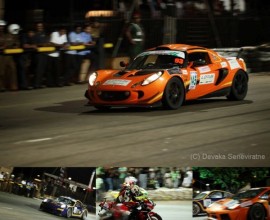
Sri Lankan photographer Devaka Seneviratne has some of the best photos on the web on the recently concluded night races held in Colombo for the first time. While Facades of Development: Of Commonwealth Games and Drag Racing at Green Path by Darini Rajasingham Senanayake is a critical take on events like this, it appears that going by the numbers present and the media coverage of it, this was a rather popular and well-attended event. As one blogger recently put it “Both events [referring to the Electric Peacock Festival] are young people getting permits and stuff through the President’s sons, which is actually fine by me”. Such a wonderful, uncritical and simple model for post-war Sri Lanka’s democratic governance and equitable development. While we think this can and must be contested, the photos of the night races by Devaka give a sense of what to expect on the streets of Sri Lanka’s capital city in the years to come, and indeed, the…

Continue reading »

The LLRC Report: A Critical Reading

DelegationtLLRC_002

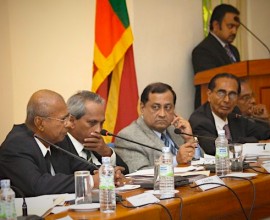
Photo credit Ada Derana For quite sometime, ever since the establishment of the Lessons Learnt and Reconciliation Commission (LLRC), the Government of Sri Lanka has been asking its critics not to pre-judge the work of the LLRC and to await, patiently, the finalization and publication of the Report. The Report has now been published. What do we have here? Is it one that establishes beyond doubt that the Government’s version of the war, or the human rights situation in the country, is correct? If not, where has it gone wrong? The Report, as any other document, can be read in different ways with different lenses. It attempts to bring together numerous perspectives on issues ranging from the most banal topic – the CFA – to the more critical and controversial issues, such as the conduct of hostilities during the final stages of the war, the Channel 4 video, human rights, and devolution (which will be the issues briefly highlighted here). Conduct…

Continue reading »

LLRC Recommendations: Can the Rajapaksa Regime Digest?

LLRC_C.R.De_Silva

Photo credit Ada Derana Finally, the full report of the long awaited Lessons Learnt and Reconciliation Commission (LLRC) is in public domain, after it was presented in parliament on Friday (16 December, 2011) by the Leader of the House, Minister Nimal Siripala de Silva. He in fact sounded very certain the recommendations would be carried out to the letter. The report and its recommendations would not satisfy the Tamil Diaspora. There is no mention of war crimes, crimes against humanity and there is no mention of a need to investigate such crimes. The Sinhala Diaspora and the Sinhala racists here would not want  it either, for the report and its recommendations accept Tamil grievances and seeks political answers for them. For the moderates, though the Rajapaksa regime dropped their claim for “zero civilian casualties” and later accepted their could be “rogue” elements and a few who could not bear the pressures of the war, who committed excesses, the report and…

Continue reading »

Climate Change

sri-lanka

Image from Climate Change Adaptation Sri Lanka While awaiting to hear of the brilliant contributions that Sri Lanka has made to the just concluded United Nations Framework Convention on Climate Change (UNFCCC), conference in Durban, the view from Durban is somewhat clouded.  The global polluters are demonstrating extreme disdain of accepting any responsibility they have to the rest of humanity who share a common atmosphere with them.  The unilateral move by Canada in withdrawing from the Kyoto Protocol, a move endorsed by the fossil energy industry, demonstrates how much public interest has been eroded from political enclaves. The UNFCC itself is a lame duck, it is still unable to recognize or identify the difference in value of carbon originating from biotic sources and fossil sources. This fact is commonsense; that while a diamond, petroleum, a lump of coal, piece of wood or piece of fruit is comprised of carbon, they are not the same, and they have different values.  So in…

Continue reading »

The official report of the LLRC

llrc_colombo

The official report of the Lessons Learnt and Reconciliation Commission was tabled in Parliament today. The official government site the report is available at is, at the time of writing, charitably put, doing very badly with the local and international demand for and interest in the report. We managed to get a PDF of the report and mirror it online. Read it full screen here. Download a copy of the PDF here. Repost This Article

Continue reading »

A Public Memo to Members of Parliament representing the Tamil National Alliance from the Tamil Civil Society

Sampanthan, leader of the political proxy of the Tamil Tigers, the Tamil National Alliance, addresses reporters during a media conference  in Colombo

Translation of original in Tamil and released on behalf of the signatories. Read in full screen here. A Public Memo to Members of Parliament representing the Tamil National Alliance from the Tamil Civil Society Download the open letter as a PDF here. Repost This Article

Continue reading »

What Killed The Consensual Agreements In The Past? How Not To Kill Our Political Dialogues?

IMG_8214-610x417

The end of war did not envelope the country in peace nor is it practical to expect this to happen so soon after the termination of hostilities.  Yet the expectation that the termination of hostilities will bring about energized and speedy attempts to bring about conditions that spell normalcy for the people.  To make it operative political processes that restore civilian administration has to be revived, new or old institutions have to be set up to help people to rebuild their lives. Focus has to be placed on urgent psychological  needs of a disoriented society of dismembered families, on children whose life experience have been only war, youth intoxicated with ethnic based hate and violence, women who have suffered on any basis of reckoning, be it loss of a husband, of children, of security of person as a woman, or just the simple factor of the inability to provide a home to one’s family and more importantly the general fear…

Continue reading »
Page 1 of 212

About Groundviews

Located at the Centre for Policy Alternatives in Colombo, Sri Lanka, Groundviews is a citizen journalism website that uses a range of genres and media to highlight critical perspectives on governance, reconciliation, human rights, the arts and literature, democracy and other issues. The site has won two international awards, including the prestigious Manthan Award South Asia in 2009. The grand jury's evaluation of the site noted, "What no media dares to report, Groundviews publicly exposes. It's a new age media for a new Sri Lanka... Free media at it's very best!"

cezarneaga.eu