

Image courtesy LLRC
Another session of the UN Human Rights Council (UNHRC) in Geneva has come to an end. Sri Lanka has emerged unscathed, even though considerable pressure is being exerted on the Sri Lankan Government, from different actors in different quarters of the world: one, regarding a political solution to the conflict; two, regarding the issue of accountability (investigations).
Decisions before the UNHRC-session
To recap briefly, some interesting decisions were taken by the Government just before the UNHRC-session started. One was the decision to ‘repeal’ the Emergency Regulations (ER). The manner, as well as the context, in which the Government ‘repealed’ the ER clearly suggested why it was done the way it was done.
The other was the decision taken by the Cabinet to approve the national Human Rights Action Plan. Initially, this came as a surprise, since not much was known about the document or about whether it was being studied by the Cabinet. Yet, the decision to approve the Action Plan, which coincided with the start of the UNHRC-session, was not surprising. Also, given the hurried and haphazard manner in which the 18th Amendment was introduced, one would need to be naïve to expect a Government to present the Action Plan for greater scrutiny and discussion by the people before the same is approved and endorsed by their elected-representatives.
Generally, it is the custom, now that the UNHRC-session has ended, to go into a deep slumber and wake up, startled, just a few weeks before the next session begins in Geneva (reportedly, in March 2012).
LLRC-Report
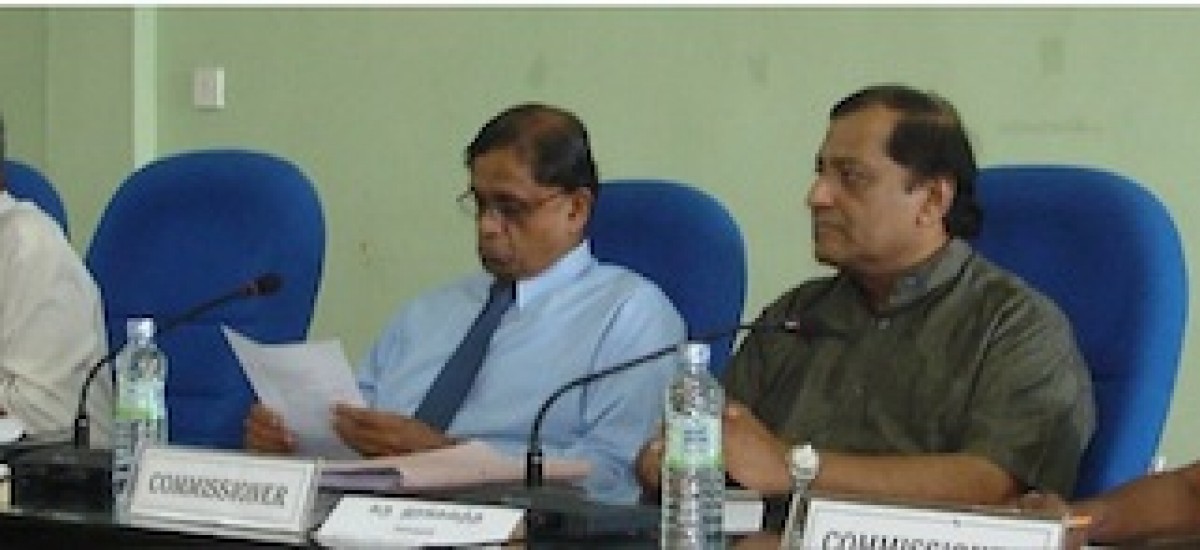
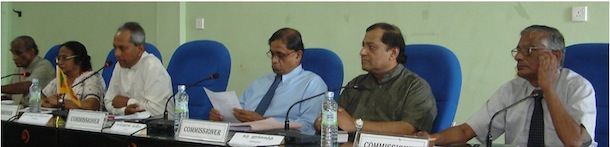
Not anymore, given the much anticipated release of the Final Report of the Lessons Learnt and Reconciliation Commission (LLRC). Perhaps, never before has there been such anticipation, especially internationally, of a release of a report prepared by a local commission in Sri Lanka. There are great expectations. Some are waiting, as they say, with bated breath.
Now, it is not the intention here to engage in a critique of the LLRC. That, today, is a stale exercise; an exercise which was initially undertaken not only by this writer, but also by important and influential critics and organizations, domestic as well as international. While the problems pertaining to the composition and mandate of the LLRC which the Government should have considered before establishing the LLRC have been pointed out, a more balanced critique today would need to make reference to some of the positives as well: one being the little space that was provided for aggrieved citizens who were directly affected by the armed conflict to raise their grievances before the LLRC; the other being the creation of a repository of reports or submissions made by individuals and representatives of institutions, which point out what, in general terms, needs to be done to achieve greater peace and reconciliation in Sri Lanka.
However, we return to the two issues stated above: ‘political solution’ and ‘accountability’. It is not what the LLRC says about the Ceasefire Agreement that is of importance (after all, what happened to the Ceasefire Agreement and the reasons are well known now). Rather, the main focus, at the end of the day, will be on what the LLRC does or does not say about the two issues mentioned above.
But, it is precisely here that the LLRC runs into a serious problem, given a number of practical and political limitations. What are some of these limitations?
Political Solution
Take the first issue: political solution.
It is practically impossible to expect the LLRC to make a detailed, definitive and specific recommendation as to what the political solution should be because: one, the mandate of the LLRC does not explicitly state that the LLRC’s principal focus ought to be this issue; two, in practical terms, the matter will be ultimately decided not by members of a commission but rather the people of a country and its elected representatives. Therefore, whatever the LLRC decides to state or recommend, the matter rests firmly with the Government and other political parties at the end of the day.
If so, members of the LLRC need only to come up with a broad recommendation in the form of, perhaps, general guidelines as to what needs to be done in terms of political negotiations or discussions, etc. But even then, what has happened today? The Government has, rather ironically, made any such recommendation virtually redundant for all practical purposes, because it has already taken a decision to establish a Parliamentary Select Committee (PSC) to look into the matter. In one corner, we have the LLRC which is perhaps doing its best to put together a credible and serious report. But in the other corner, there is a Government which doesn’t seem to care what the LLRC would or would not say about the issue.
So the question is: what on earth can the LLRC recommend? Also, what really is the point of making recommendations concerning a political solution when the Government has already decided to address the issue via a PSC? What one hopes the LLRC would say is that such an exercise, without a serious time-limit, would be a futile one given the very important work that has already been done by many other PSCs, APC/APRCs and Committees of Experts (one which included a respected member of the LLRC).
The Government asks critics not to pre-judge or rush to conclusions even before the LLRC has issued its report. But given the way the Government has acted, it is perhaps the LLRC that would need to point out that its task, as regards recommending anything about a political solution, has been made redundant even before it issued the report.
Accountability
Take the second issue: accountability (investigations).
The LLRC-process does not amount to an ‘investigation’. The mandate is extremely vague on this matter, contrary to what the Government states. Given what the LLRC is doing does not amount to an investigation, States and institutions are only expecting to read what the LLRC might have to say about the issue of investigations.
Now, any observer would understand that there are, perhaps, three broad ways in which the LLRC could tackle this issue (three possible scenarios).
First scenario: the LLRC could recommend that there needs to be a full and proper internal investigation regarding what happened during the last stages of the war, given the nature of the allegations leveled.
But this places the Government in a precarious, suicidal, position because there would, in such a case, be added pressure to hold an investigation; even Sri Lanka’s staunch defenders (China, Russia, etc.) would be taken by surprise. If such a recommendation is made, the Government might even decide not to release the report. This would not be surprising, given the Wikileaks revelation of a US diplomatic cable (dated 30 January, 2007, titled SRI LANKA: HUMAN RIGHTS MINISTER VOWS NOT TO TAKE PART IN “WHITE WASH”) concerning the views expressed by Minister Mahinda Samarasinghe. In that, Minister Samarasinghe seems to have very accurately and eloquently identified a major problem (absence of political will) confronting Sri Lanka.
Second scenario: the LLRC could recommend that there is a need to investigate some of the more serious allegations (certain selected cases), and in this regard, the LLRC could well recommend that a Commission (like the ‘Udalagama Commission of Inquiry’) needs to be appointed.
This, again, would amount to a recommendation which would make the Government extremely uneasy because here again the ‘international community’ would take immediate note of it and press for an investigation. Given that there has been a blanket denial of the need for any sort of investigation (made by very prominent individuals within the regime), the chances are that such a recommendation would be easily ignored.
But, lets consider the above two scenarios from a different perspective as well. Let’s imagine that one of the above recommendations is made. And let’s imagine that the Government does indeed hold some form of investigation. If then, what a waste of time and resources would that have amounted to? What a farce, what a fuss, would the Government have made for over two years? What a shirking of its responsibility for over two years? As even some of the most vocal supporters of the military defeat of the LTTE (as Mr. Gomin Dayasri, for example) have stated, much of the pressure could have been easily averted had there been a domestic investigation the moment serious allegations were leveled.
Third scenario: the LLRC can recommend that there is no need to hold any form of investigation (for a variety of reasons, which need not be mentioned here).
But then the question is: would this be enough to suggest that the accountability issue has been adequately addressed and that the international pressure would now subside? Not at all. Why? Very simply because critics have already denounced the LLRC; ‘pre-emptive strikes’ have been made (not only by groups such as the Amnesty International, but also by the UNSG-Panel).
Also, the recent statement of the UNSG Ban Ki-moon perhaps says all that needs to be said about the issue. The UNSG has demanded that there should be a ‘credible national accountability process.’ In other words, what is implicit here is that the LLRC is not considered to be such a process and what is actually expected, after the release of the LLRC-report, is the establishment of a domestic investigative process.
It is quite clear by now that nothing less than scenarios one and two would be appreciated. None would be willing to accept scenario three, given also the time that has already passed since the LLRC was established and the criticisms made over that period. In short, the LLRC’s predicament is a sorry one. Very simply put: Damned if you do, damned if you don’t’. On the one hand, scenarios one and two would place the Government in further trouble (and certain segments of the Sinhala-nationalist group would very well accuse the LLRC of being anti-Sri Lankan); on the other hand, scenario three doesn’t help the Government come out of the trouble it is already in. The problems will persist, the rot will continue.
CONCLUSION
The LLRC cannot be expected to resolve two of the critical problems or challenges confronting Sri Lanka.
To be fair, the source of the problem here is not the LLRC (After all, individual members are helpless, not only due to the mandate of the LLRC, but also due to the nature of the prevailing political culture; arrogant, dogged). Rather, it is the approach of the Government which is the source of the problem. In other words, it is the absence of political will to address the above two issues in any serious manner that has led to the problems in the first place; the absence of which will have very serious consequences.
As mentioned before, one of the positive outcomes of the LLRC is that it has resulted in generating a significant body of literature (in the form of submissions) about the political conflict in Sri Lanka, about its causes, about how it should be resolved, etc. Perhaps the best the members of the LLRC can do is to make this entire exercise more useful by releasing a report which, given all the limitations pointed out above, is still bold and forthright in its recommendations. This would ideally need to be one which does not fall into that trap of engaging in yet another pointless verbal battle with those who have accused the LLRC. Importantly, it would need to be one which, in the least, aims to show the importance of ‘accountability’, and the need to take serious note of the repercussions of not resolving its domestic problems (both of a political and legal nature) in a principled and timely manner.
When a Government is generally in a state of denial (‘devolution? what for?’; ‘investigations? what for?‘), no ‘LLRC’ can come to its rescue. That, we all know; that, the LLRC would know; that, the Government should know. What then should the Government do? One can only repeat what Minister Mahinda Samarasinghe seems to have stated somewhere in 2006/2007: ‘stop the rhetoric and start delivering’. Is there even half-a-chance of this happening?