Archive for October, 2011

A Prima Facie Critique of The New Bill to Vest in the State Under performing Enterprises and Under Utilized Assets

image_01_b

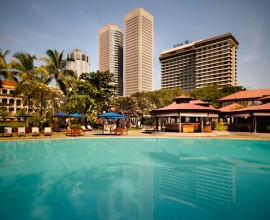
Editors note: Hotel Developers (Lanka) Plc, a CSE listed company that owns the Colombo Hilton hotel was named in a controversial new bill, rushed through Parliament in secret, not unlike the outrageous 18th Amendment. The Bill appears to have been certified by the Cabinet on the 20th October 2011 as an Urgent Bill and was presented to and reviewed by the Supreme Court during the last week. The Bill has reached the Media and Citizens only towards the end of last week ie. after the review by the Supreme Court and possibly after its verdict had reached the Speaker of Parliament The need for this bill to be deemed an Urgent Bill needs to be properly justified by the Executive and unless so justified it appears to be so classified with mala fidei interests to by pass democratic good governance expectations of society The secrecy surrounding the bill and its reported compilation outside the purview of the usual drafting sources…

Continue reading »

Sri Lanka and the death of Muammar Gaddafi

ani_53788_978

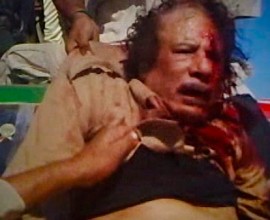
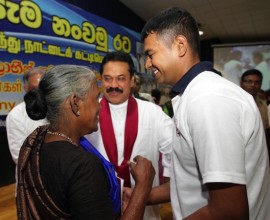
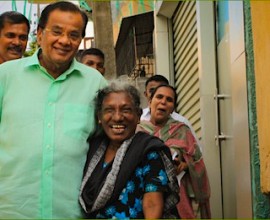
Muammar Gaddafi was captured alive and killed thereafter. This is a fact that no one contests today. Even the killer himself accepted the responsibility in front of a mobile camera.  Once any individual is captured, in spite of the crimes allegedly committed by the person, whether victim or perpetrator,  due process and the rule of law has to be followed.  That is what makes us civilised people.  An open and transparent inquiry and judicial process based on natural justice is needed in order to establish the crimes committed by the individual, and it is only then that any punishment can be carried out. None of these procedures were followed in the case of former Libyan leader Gaddafi. Gaddafi was a close friend of the government of Sri Lanka and of President Rajapaksha. One of the last politicians to have a photo opportunity with Colonel Gaddafi was President Rajapaksha’s heir apparent, his son and M.P. Namal Rajapaksha.   Only a few…

Continue reading »

Turning Former LTTE Personnel into Sri Lankan Citizens?

79a08b2cdf80fb8476da75dab4c3880c

Editors note: Also read a response to this article by Valkryie, titled Response to Michael Roberts’ ‘Turning Former LTTE Personnel into Sri Lankan Citizens?’] Whatever the death toll during the last stages of Eelam War IV in 2009 the official government data in that year acknowledged that 11,696 (9078 male and 2024 female)[i] of those who survived had identified themselves or been identified as members of the LTTE — whether combatants or active functionaries. There were others who had been arrested elsewhere in the island (that is beyond the battlefields), often on flimsy evidence, in the years 2006-09. Muralidhar Reddy stresses that “once bracketed in the category of a combatant, irrespective of the degree of their involvement in the war, there was no mechanism for those detained to prove their innocence.”[ii] In parenthesis let me add that grapevine information from Tamil sources indicate that in April-May 2009 quite a few Tigers seem to have successfully merged themselves with the population that was…

Continue reading »

Reflections on Issues of Language in Sri Lanka: Power, Exclusion and Inclusion

jaffna

Photo credit Dinuka Liyanawatte / Reuters, from Time magazine. Keynote address delivered on 17th October 2011 at ‘Language and Social Cohesion: 9th International Language and Development Conference, Colombo co-organized by the Ministry of National Languages and Social Integration, Ministry  of Education, GIZ, AusAID and British Council. ### Approach Language is never a simple issue of communication; in contemporary social and political practice everywhere, language goes much beyond its basic utilitarian purposes. In this sense, Sri Lanka is no exception. By now, Sri Lanka has ended an immensely destructive military conflict that had much to do with a crisis of identity linked as much to language as to ethnicity and contested notions of binary-nationalisms and competitive interpretations of history. In this context, this is a crucial time to seriously consider the politico-developmental position of language in imagining the future of the country. Today, I will briefly focus on the historical development of the politics of language in Sri Lanka and explore…

Continue reading »

Bully Boys and Bully Girls

duminda_silva

A few evenings ago, parents were invited to our son’s school which goes up to Grade 8 for a presentation on Bullying.  Dr. Tina Daniel, Asst Professor of Psychology at Carleton University engaged in researching children’s relationships, violence and bullying facilitated the session.   She and her research colleagues had already spent the day in school first making a presentation at the assembly, then a workshop with teachers and classroom sessions with children themselves. In her presentation she showed footage of an actual playground incident where a girl aged 12 was being bullied by another bunch of girls.  As she deconstructed the scene, there was a child seated on the ground and about five girls hovering around her and it appeared innocent enough, but a closer look revealed her being taunted and teased, as she had her head down crying.   It appeared that this pack of girls had a leader who was directing all this. Dr. Daniel stated that bullying does…

Continue reading »

Prescient

When Lasantha wrote the editorial that predicted his imminent assassination he suggested the civil war would turn steadily uglier, then move inwards, as a lizard searching for its tail, insidious in the way each institution begins to lose its independence, the machinery of the ruling family greasing every Tom, Dick and Banda—forgive my allusion to white rulers of a more genteel if not innocent nursery school— this forsaken Ceylonese child has turned monstrous now in the eyes of Whitehall and Ottawa’s Parliament Hill, betters going wild about pressures in Canberra to present a bold brief on behalf of human rights and investigation of war crimes as Commonwealth heads prepare to meet, while on the island rival thugs, from within the all-powerful ruling group, battle over drug routes and a parliamentary seat. Repost This Article

Continue reading »

Progressive Politics & The Right Kind Of Left

bharathalakshman_1

Bharatha Premachandra’s wife and daughter Bharatha Lakshman Premachandra’s grieving daughter (and possible political successor) was probably not even born when several of us in the SLMP’s leading ranks rapidly disembarked at his house in Kolonnawa, an hour after he had survived the assassination attempt by the JVP. His aged father, a trade-unionist of the Old Left, had surprised the hit-man by pinioning him, giving Lakshman the chance to grab his weapon and shoot. That evening or the next day, Bharatha Lakshman, clad in shorts, rolled into a conclave of the Sri Lanka Mahajana Party founded by Vijaya Kumaratunga (himself killed by the JVP). His act was a model of resistance to Pol Potist ‘Red fascism’. At the time we were both members of the Political Bureau of the SLMP (I was elected an Asst Secretary of the party). That the brash young man who had survived a JVP assassin was slain decades later by bullets fired by those on his…

Continue reading »

National Reconciliation, Transitional Justice, Rights and Accountability in Sri Lanka

2011815143557728734_8

Image credit Steve Chao, via Al Jazeera Good Afternoon; Esteemed and Distinguished Guests, Ladies and Gentlemen; Dear friends Thank you for inviting me to share with you my thoughts on reconciliation. I will not devote much time here, to describe the history of the conflict or the background situation in Sri Lanka. The physical and emotional pain that has been handed down through generations in Sri Lanka during the last five decades has mainly been the inevitable outcomes of past policies followed by the successive governments, based on discrimination and social exclusion. The players, particularly parties to the conflict, have continued their unceasing confrontational politics. The current landscape in Sri Lanka and within the diaspora bears testimony to this situation. On-going effects of dispossession, destruction, dispersal and subjugation mean that the affected people have become the most disadvantaged in society. Indications are that the gap between the affluent and the poor continues to widen. The island’s leadership seems neither committed…

Continue reading »

Titus Thotawatte: The Final Cut

Titus Thotawatte, 1929 - 2011

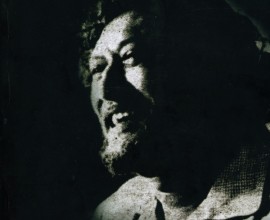
Titus Thotawatte, 1929 – 2011 Emmanuel Titus de Silva, better known as Titus Thotawatte, was the finest editor in the six decades long history of the Lankan cinema. He was also a great assimilator and remixer – a veritable ‘builder of bridges’ across cultures, media genres and generations. Titus straddled the distinctive spheres of cinema and television with a technical dexterity and creativity rarely seen in either one. Both spheres involve playing with sound and pictures, but at different levels of scale, texture and ambition. Having excelled in the craft of making movies in the 1960s and 1970s, Titus successfully switched to television in the 1980s and 1990s. There, he again blazed his own trail in Sri Lanka’s nascent television industry. As a result, my generation remembers him for his television legacy whereas my patents’ generation recall more of his cinematic accomplishments. Titus left an indelible mark in the history of moving images. The unifying thread that continued from 16mm…

Continue reading »

Bigots on a Righteous Mission

IMG_6264

Photo by Natale Dankotuwage The end; is there an end in sight? The Sri Lankan Conflict has penetrated into my life-time like an unwelcomed genetic trait. I didn’t ask to be born into a community, with a history of conflict. Yet, it is inseparable from an identity I am still trying to grasp. I am a child of the war generation. It is all I have ever known and, probably, all I will ever know. Yet, I hope to live to see a change; a fresh new way to understand my being, so deeply entwined with the Sri Lankan ethno-national conundrum. As the rest, who feign any interest in the Conflict of an Island of our forefathers, I ponder the plausible solutions. The answer seems so simple:  I suggest, re-Imagine Sri Lanka beyond the ethno-national confine. We do not need a land for Tamil Eelam or to build several Buddhist statues amongst non-believers. We do not need to colonize “Sinhala…

Continue reading »

Development or maldevelopment?

image015ds

Image from Wikipedia In the current hype on ‘Development’ have any of us questioned its intent?  Does it just mean ‘progress’ in the manner referred to by Anada Coomaraswamy when he published the comment that  “we who call art significant not knowing of what, are also proud to progress, not knowing wither” ?  Wandering aimlessly, with success measured only by an increase in industry and consumerism. The current vision of development certainly could not refer to cultural or philosophical development.  So exactly what type of development are we referring to in Sri Lanka when we have various public figures exhorting us towards ‘development’? It would seem bizarre indeed if it transpired that we have been developing for the past 40 odd years manly in a western consumerist perspective.  One of the standard answers to the question of what is development? is that it means economic growth. On this point Prof. Dudley Seers notes, “in fact, it looks as if economic…

Continue reading »

UNP victory in Colombo Municipal Council: A Political Economy of the Numerics

slide12

In capitalist modernity ‘elections’ are a means by which disparate social interests are brought together and ruling class hegemony is maintained. “Their politics consist of activity completely defined by the framework of bourgeois society…the actual training of the masses to become imbued with the inviolability of the bourgeois state” (Trotsky, The Lessons of October, 1924). UNP’s victory is elusive and unimpressive.   We are left with several interesting questions: why did UPFA lose despite its claim that Colombo is on the fast track to becoming a cleaner, greener, secure, investor-friendly, tourist-friendly and sustainable city?  Is the UNP victory in Colombo indicative of an emerging movement towards substantive democracy (freedom with equality and justice, social and environmental) in Sri Lanka? Is this going to be the end or a new beginning of the UNP? It would be simple to explain it away like this: Humans, as ‘moral beings’, value freedom and decent standards of living: humans have the capacity to transform the…

Continue reading »

We the Sinhalese

ceylon-superb-sinhalese-women-skeen-1880

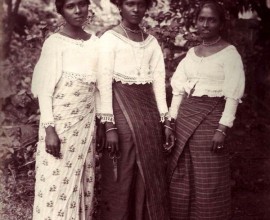
Image courtesy Lankapura An oyster sucks in particles from its environment and creates a pearl. If instead, it filters out every particle, it is destined to be a lesser being. In untold generations, the Sinhalese people were fashioned from extraditions, waves of invasions, conquered kingdoms and stranded travelers to this fecund island. They are the children of exiles, conquerors and refugees, some noble and often not…. They are begotten of peoples who have absorbed and yielded, been besieged and withstood and been enriched, pearl-like. In time the Sinhalese defined themselves as a race and a culture that can be distinguished from the cultures of India. This is laudable in the face of that overshadowing mass.  We have swum through multi-colored waters and still stand as a discernible ethnicity…but are we quite as boldly discernible and as splendidly isolated as we believe? Our outline has to have merged and blended with the communities we have mingled with; the aboriginal, australo-negroid Veddha,…

Continue reading »

The ghosts that continue to haunt us

2MRO_H

“Democratic government is strengthened, not weakened, when it faces a vigorous civil society.” Tocqueville The local government elections have been fought and won by the UPFA in 21 out of 23 Local Government bodies, an impressive result for an incumbent government in place since 2005.  Contrary to normal response the incumbency factor worked for the government and not against it.  One of the reasons given for the victory is the security factor – people’s abiding gratitude to a government that has given security by bringing to a close the thirty year war and successfully ending terrorism and their terror tactics under which all members of the Lankan polity were enslaved; no more deaths for young men and women soldiers; no more suicide bombers and ‘parcels’ exploding taking many lives and maiming many more. These have been high lighted before but each time people vote for the government it is clear that they recall them all and their vote becomes an…

Continue reading »

Militarisation of Sri Lanka and its infiltration into Higher Education

220898-protests-1312070814-209-640x480

Evidence of militarisation is everywhere – most recently in the sphere of higher education.  The armed forces are involved with development projects, in welfare, and in farming. They are even involved in city beautification, the maintenance of playgroups and shops, of course Sports, and now higher education.  Their increased presence is evident in subtle changes in our daily lives.  The large number of ‘yu ha’ vehicles dropping and picking up school-going children is one that confronts me each school day. Militarisation is, however, not just confined to their conspicuous presence in public spaces but extends to public acceptance and reinforcement of an attitude that glorifies the forces which in turn enables the process of militarization. The military does not operate through a process of consensus building and does not, in general, function according to democratic principles. While those at the lower rungs of the military hierarchy bear the brunt of this oppressive system, civil society is not immune. Last week,…

Continue reading »
Page 1 of 212

About Groundviews

Located at the Centre for Policy Alternatives in Colombo, Sri Lanka, Groundviews is a citizen journalism website that uses a range of genres and media to highlight critical perspectives on governance, reconciliation, human rights, the arts and literature, democracy and other issues. The site has won two international awards, including the prestigious Manthan Award South Asia in 2009. The grand jury's evaluation of the site noted, "What no media dares to report, Groundviews publicly exposes. It's a new age media for a new Sri Lanka... Free media at it's very best!"

cezarneaga.eu