Archive for April, 2011

Educating the Soul, the Spirit and then the Mind

Edu

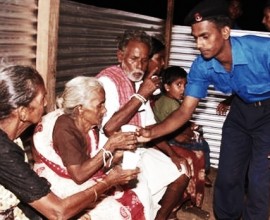
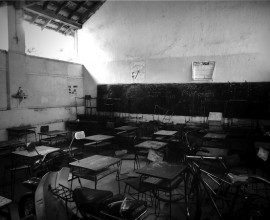
Photo courtesy The Schools Project Background Over the years, I have spent much time with children and teachers in schools running leadership programs not only in Sri Lanka, but also in Canada, the Indian subcontinent and in Africa where I do a  simple exercise on their Hopes & Fears, and I am always moved by, especially the fears children have for their future.   They realize that they are coming out into an angry, uncertain world in social and environmental turmoil.   Of course they have hope, yet many feel insecure and ill equipped to meet these challenges. This is not surprising as globally, we are yet teaching children as if the world out there is impersonal and separate from them.   There is not much in it to increase self-awareness, mindfulness, self-reflection, emotional intelligence and social skills.  It is yet about knowledge and scientific discovery, even then the system has not yet figured out how to teach them, for instance, the uncertainty…

Continue reading »

Violence and accountability

amnesty 1

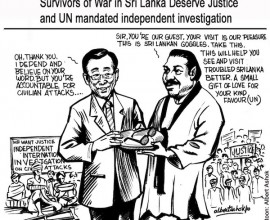
Cartoon by Albert Ashok As conflict raged, the United Nations Commissioner for Human Rights had stern words for those on both sides. “All violations of international humanitarian law and human rights law must be investigated and those responsible for breaches – including deliberate targeting of civilians, indiscriminate and disproportionate attacks, the killing of injured persons and the use of human shields – must be brought to justice,” her spokesman told reporters. The year was 2004, and fighting in Fallujah in Iraq was taking an ongoing toll on ordinary people. The UN Commission on Human Rights special rapporteur on the right to health had earlier listed “extremely serious allegations” against the US-led coalition that had taken control of Iraq and called for an independent inquiry. UN investigators continued to keep a close watch on Iraq. Just last year, special rapporteur on torture Manfred Nowak – who in 2006 had condemned the US detention centre in Guantanamo Bay as a “torture camp”…

Continue reading »

War Crimes Accountability In Sri Lanka: Is There A Liberal Democratic Alternative To International Action?

90393-lanka

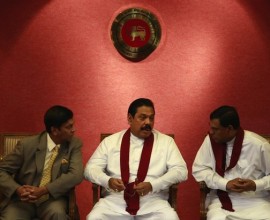
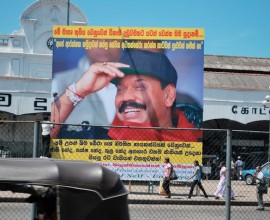
Sri Lanka’s President pictured here with the Governor of the Central Bank Ajith Nivard Cabraal (L) and his brother Basil Rajapaksa, the Economic Development Minister (R) has repeatedly called the war a “humanitarian rescue operation with a zero civilian casualty policy”. Photo credit: REUTERS/Dinuka Liyanawatte The report of the three-member panel of independent experts, appointed by the UN Secretary General to advise him on the issues of legal accountability arising out of the brutal final stages of Sri Lanka’s war, has finally been published. The panel has found ‘credible’ a large number of allegations of violations of international humanitarian and human rights law committed by the military protagonists in the conflict, the Sri Lankan security forces and the Liberation Tigers of Tamil Eelam (LTTE), some of which could amount to war crimes and crimes against humanity. It has also concluded that a political and legal environment conducive to the transparent investigation and prosecution of these violations does not exist in…

Continue reading »
  • 28 Apr, 2011
  • 1 Comment
  • Arts and Theatre,
    Colombo,
    Moving Images,
    Photos

A happy mix of English, Sinhala, French and Tamil: A second generation Eurasian in Sri Lanka

Screen shot 2011-04-25 at 7.49.07 AM

Rosemarie Le Mottee Joachim is second generation Eurasian. She grew up in Colombo but her roots were in the hill country. A happy mix of English, Sinhala, French and Tamil, Rosemarie tells the story of her grandparents. For Rosemarie’s story and video, please click here. Produced by Menika van der Poorten for Moving Images. A trailer of A Lost White Tribe: The Eurasians of Sri Lanka can be seen below, and all the videos on the Moving Images website. Repost This Article

Continue reading »

Much ado about nothing: Is Sri Lanka in danger of being held accountable by the International Criminal Court?

sri-lanka_375004a

Image from Joe Klamar/AFP/GETTY Early last year I set about examining, as a recent graduate, the feasibility of any citizen of Sri Lanka being tried in the International Criminal Court (ICC) over the alleged war crimes and crimes against humanity that were committed in the last phases of the war between the government of Sri Lanka and the LTTE. I concluded that there is no real danger of any case being brought against the members of Sri Lankan Military or the current administration. Such fears are simply unfounded. I wish to revisit the question of if in fact any citizen in Sri Lanka can be held accountable under the ICC within the current context. There has been much discussion about the issue of war crimes in Sri Lanka in the past week.  The current government and all major political parties have recently commented at many capacities on United Nations panel investigations and its leaked report. Since many commentators have written, and…

Continue reading »

Reconciliation and accountability after the UN Panel’s report: Challenges and opportunities for Sri Lanka and the UN system

2009-06-02-RRR1

Image courtesy Huffington Post Asia Pacific Forum is a pan-Asian radio show broadcast every Monday night from 9-10pm on WBAI 99.5 FM in New York City and live on the web. WBAI is part of the Pacifica Foundation, a national radio network founded in 1946 with additional affiliates in Houston, Los Angeles, Berkeley, and Washington, D.C. Pacifica is a non-commercial, listener-sponsored network founded on a strong community role in each individual station. On the day the report of the UN Secretary General’s Panel of Experts on Accountability in Sri Lanka was released, the founding Editor of Groundviews Sanjana Hattotuwa joined Matthew Russell Lee, the NY Bureau Chief of Inner City Press covering the United Nations for a 20 minute segment of the Asia Pacific Forum looking at the challenge of meaningfully addressing war crimes, accountability and reconciliation issues in Sri Lanka, for the State as well as the UN system. Broadcast on Monday 25th April, 2011, the full programme segment…

Continue reading »

An elephantine gestation: UN Panel’s report on accountability in Sri Lanka released

UN_panel_on_sri-lanka11-11111

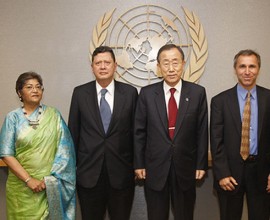
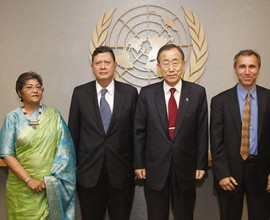
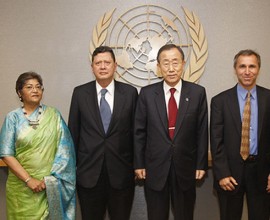
Leaked versions of the UN Panel’s report found their way into The Island newspaper, where over the past week, Groundviews has contextualised the content that was published in print. Today, the Hindustan Times published an article based on the full version of the report, based on a leaked version of the full report the paper had acquired. Interestingly, the unimaginable horror highlighted in the HT’s report (body parts of babies on tree tops after shelling by the Army) is not content that was published in The Island. The UN had earlier expressed its deep regret over the leak to mainstream print media in Sri Lanka. Accusations between Palitha Kohona, Sri Lanka’s envoy to the UN in New York and UN deputy spokesperson Farhan Haq over who is responsible for the leak have been traded. The constitution of the Secretary General’s panel and its mandate was announced in June 2010. As noted on the UN website, “The Secretary-General has appointed a Panel of…

Continue reading »

The cynical manipulation of international law: Murdering civilians in No Fire Zones and other war crimes allegations

UN_panel_on_sri-lanka11-1111

The Island newspaper continues to publish leaks from the report produced by the Panel appointed by the UN Secretary General to look into post-war accountability in Sri Lanka. Groundviews has contextualised in detail the Executive Summary and Parts 1, 2, 3, 4, 5 and 6 of the leaks. The Island published today Part 7 which deals with credible allegations of war crimes by the Sri Lankan Government and its armed forces that include the deliberate targeting of civilians in the so-called No Fire Zones (NFZs) and wholly inadequate measures to protect civilians from shelling. As the Panel succinctly notes, “… the Government’s instructions for civilians to move into the NFZs, only to be subsequently shelled by the SLA, disregarded this rule and in fact amounted to a cynical manipulation of it.” As before, we provide context and background information to frame these highlights. Much of the context in this story is actually part of that which was given in previous stories covering other aspects of the leaked UN report….

Continue reading »

‘National security’ in post-war Sri Lanka: Women’s (In) security in the North

JalajakumariSelvarasa

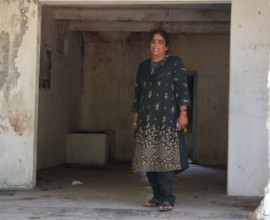
Photo from Hear My VOICE: Jalajakumari Selvarasa ~ “I could often feel the nostalgia” Resurrecting the ‘undead Tiger’[1] to secure the citizen: How the situation of women belie the dominant security narrative ‘The world should appreciate our successful anti-terrorist effort. But today we are being hounded by those who turned a blind eye to LTTE atrocities over the years, particularly its widespread use of child combatants in war against the security forces. Children are no longer at the risk of being abducted on their way to school or back. Girls are no longer forced to wear suicide jackets and throw themselves at military and civilian targets.’- President Mahinda Rajapakse in an interview to The Island, 18 April 2011. ‘We should not have to feel afraid. We should have the freedom to travel freely without fear.’-woman from Vadamaraatchi in Northern Sri Lanka The state of emergency remains in place nearly two years after the end of the war. It is renewed every…

Continue reading »

The Darusman Report: Reflections on the real challenges ahead for Sri Lanka

r-SRI-LANKA-WAR-CRIMES-large570

In less than two weeks since the Darusman Report (hereinafter referred to as the Report) was handed over to the United Nations Secretary General (hereinafter referred to as UNSG), a large number of articles have been written about the report, its motivations and on its impact on Sri Lanka. Except in several exceptions, the majority of these renderings seem to have lost the plot, in their failure to provide adequate attention to several key issues surrounding the report, or the ‘leaked’ version of it published in the Sri Lankan newspaper The Island. Public reactions to the leaked sections of the Report are best glimpsed from Groundviews, where comments made by readers include rather heated debates on issues such as the number of Eelam War IV casualties raised in the Report. One such key factor is that the Report is critical of both adversaries of Eelam War IV, the Government of Sri Lanka (GoSL) and the Liberation Tigers of Tamil Eelam…

Continue reading »

UNSG Panel Report on Sri Lanka: Revisiting ‘Accountability’

Displaced Tamil civilians watch

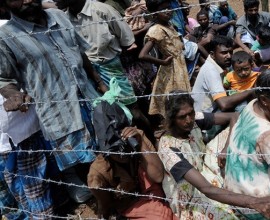
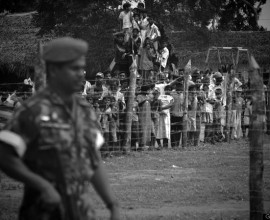
Original photo from JDS Ensuring ‘accountability’ is important, but doing so is a complex task. Who is to ensure accountability, when, where, how? – are questions which have always aroused serious debate, and will do, in the future. While there may be no ‘independent/internal’ investigations, one need not be starry-eyed about ‘independent/international’ investigations. For example, ‘Nuremburg’ was an important start, but was never a suitable model. What, for instance, is ‘international’ and who decides the form and nature of this mechanism? Can we go with Chinese/Russian investigators, and if so, would they be independent? Can we go with US/UK investigators, and would they be independent? Also, can we simply investigate the ‘last stages’ of the armed conflict? What about India’s role in the conflict, and are we to forget the manner in which India nurtured armed groups hostile to Sri Lanka? Are we to investigate only the leaders (of the present regime) who defeated the LTTE, but not those of…

Continue reading »

Ayelasah

190510_756371435141_172000575_43191100_1029468_n

It was early April and I stood at the back of a busy venue huddling my camera near my heart. I was the photographer for the night and every person that walked in, and took their seat, would be my muse. The numbers amazed me. There were over a hundred people for such a humble, and grass-root based, artistic fundraising event in Toronto. It was planned by a group of Sri Lankan youth with the hope of reaching out to support the flood relief effort in Batticaloa, which displaced hundreds of thousands of people. The event was creatively titled Ayelasah, after a rhythmic element in the rowing chants of South Asian fishing peoples, which sets the pace for work whose communal nature necessitates cooperation and harmony of movement. As everyone took their seats, and the event began, art, music, and spoken word consumed the venue. Stories of growing up in Batticaloa were shared by the elders. The young sang of…

Continue reading »
  • 23 Apr, 2011
  • 22 Comments
  • Peace and Conflict,
    UN Panel Report,
    Vavuniya,
    War Crimes

Cluster munitions, inhumane IDP camp conditions and the White Flag incident: More disturbing leaks from UN report

UN_panel_on_sri-lanka11-111

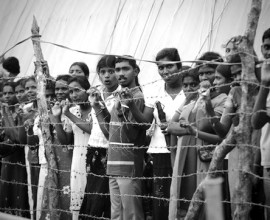
The Island newspaper continues to publish leaks from the report produced by the Panel appointed by the UN Secretary General to look into post-war accountability in Sri Lanka. Groundviews has contextualised in detail the Executive Summary and Parts 1, 2, 3, 4 and 5 of the leaks. The Island published today Part 6, which focusses on, inter alia, the conditions faced by IDPs interned in camps after the end of war, allegations of the use of cluster munitions or white phosphorus and torture in detention of suspected LTTE cadre. As before, we provide context and background information to frame these highlights. “Civilians emerging from the conflicts zone were initially housed in a network of 21 IDP sites spread across Jaffna, Mannar, Trincomalee and Vavuniya districts. Most were eventually sent to Menik Farm near Vavuniya, which at its peak, housed around 250,000 IDPs, making it one of the largest IDP sites in the world and one of the largest population centres in Sri Lanka.” “Menik Farm and…

Continue reading »

Petition against UN Panel’s report on accountability: Opposing what exactly?

5639796351_db258cf43a_b

The report on accountability produced by the panel appointed by the UN Secretary General hasn’t yet officially released it to the public domain. What little is known of its contents comes from leaks published in the mainstream media. Sinhala mainstream media have not translated and published in full the leaked version of the executive summary. Commentary in the mainstream media, including in the newspaper the leaks are published in, is vituperatively dismissive. Even senior members of government haven’t been shared copies of the report. Scanned copies of what appears to be the original executive summary have started to appear online on individual blogs. The UN Country office says it has not seen a copy of the report. Mainstream media reportage has focussed on vehement government denials. In sum, there is little or no information on the UN Panel’s report and its official contents with a lot of spin and misinformation. This however didn’t stop Private Transport Minister C.B. Ratnayake launching a…

Continue reading »

No respite even after war: The rape, execution, torture and disappearances of IDPs in Sri Lanka

UN_panel_on_sri-lanka11-11

The Island newspaper continues to publish leaks from the report produced by the Panel appointed by the UN Secretary General to look into post-war accountability in Sri Lanka. Groundviews has covered in detail the Executive Summary and Parts 1, 2, 3 and 4 of the leaks. The Island published today Part 5, which focusses on the conditions faced by IDPs in the aftermath of the violent denouement of the war in the Vanni. As before, we provide context and background information to frame these highlights. Much of the context also comes from dozens of articles published from May 2009 onwards on Groundviews, including many eye witness accounts and detailed reports on ground conditions in the IDP camps. The issues and concerns flagged in these articles, photos and audio recordings in fact pre-figure and underscore those featured in the leaked UN Panel’s report. The category ‘Vavuniya‘ has over 100 articles and reports worth revisiting for the content and the vibrant debate they inspired on this site….

Continue reading »
Page 1 of 41234

About Groundviews

Located at the Centre for Policy Alternatives in Colombo, Sri Lanka, Groundviews is a citizen journalism website that uses a range of genres and media to highlight critical perspectives on governance, reconciliation, human rights, the arts and literature, democracy and other issues. The site has won two international awards, including the prestigious Manthan Award South Asia in 2009. The grand jury's evaluation of the site noted, "What no media dares to report, Groundviews publicly exposes. It's a new age media for a new Sri Lanka... Free media at it's very best!"

cezarneaga.eu