Archive for January, 2011

GLF: A space for activists?

A playground for Colombo’s “artsy fartsy?” A personal initiative by G. Dobbs (Founder) to increase the per capita income of G. Dobbs? A promotional tactic to draw tourists to our fair land? An ideal getaway for the middle and upper classes to catch up with old friends and make merry? A platform for cultural and literary exchange and constructive discussion/debate? An ideal forum for writers and participants to engage and learn from one another? The Galle Literary Festival (GLF) is probably a combination of all this put together. I’m no ‘party pooper,’  and that’s all well and good. But, is it permissible to claim that the festival provides “relatively ‘safe’ spaces for literary and political exploration and debate” and is a forum at which the “real situation of the country” can be brought to light? http://groundviews.org/2011/01/24/writing-against-the-rsfjds-appeal-to-boycott-the-galle-literary-festival/ I find this particular claim to be quite difficult to digest. Firstly, because it has been stated by a well -respected human rights activist…

Continue reading »

On Relative Rights

A short fall in human rights suggests a failure in the harvest, perhaps a missing plank in the slide, and some will go flying, others hungry, while you add ridiculous to describe the call for a boycott of your literary party by so-called rights activists, which I presume to mean men and women who agitate on behalf of humans; their call certainly draws unwanted attention to murder of journalists so let me propose that we make fun of it by such ridiculous excesses as burning an effigy of a doll named censorship without addressing the argument of the boycott which did not say don’t go, just be aware of where you speak in deed. Repost This Article

Continue reading »
  • 26 Jan, 2011
  • 4 Comments
  • Arts and Theatre,
    Colombo

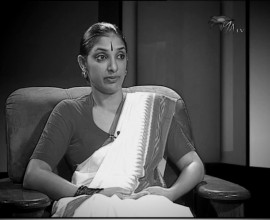
Heshma Wignaraja: Thoughts on dance and choreography

Screen shot 2011-01-26 at 12.16.01 PM

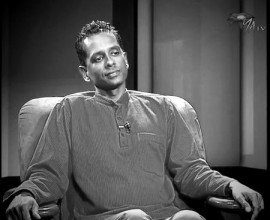
Heshma Wignaraja is the Artistic Director of the Chitrasena Dance Company. Just recently, Groundviews featured an interview with her grand-mother Vajira, rightly often referred to as Sri Lanka’s Prima Ballerina. In the interview, Heshma addresses a question as to how difficult it is to carry on the rich dance traditions of her parents and grandparents in particular, and whether this tradition actually thwarts the evolution of dance. Heshma the choreographer is better known to contemporary audiences than Heshma the dancer, a point in fact I pose to her at the end of the interview. This interview goes into how Heshma began dance and how from years in the US, after the passing of Chitrasena her grandfather, she came back to Sri Lanka to immerse herself in the Chitrasena Dance Company’s productions. Heshma, in an interview done in 2006, was doubtful whether she and the dance productions did justice to Chitrasena legacy. In 2011, after several critically acclaimed productions to her…

Continue reading »

Writing against the RSF/JDS appeal to boycott the Galle Literary Festival

[Editors note: We were sent this personal letter from Sunila Abeysekara addressed to a leading signatory of the RSF/JDS appeal to boycott the Galle Literary Festival. She kindly agreed to publish it on Groundviews for a wider appreciation. As noted in our response to the RSF/JDS appeal, Sunila is an outspoken and award winning human rights activist. Amongst a number of other awards recognising her work, former UN Secretary General Kofi Annan presented Sunila with a UN Human Rights Award in 1999. See a video interview with Sunila conducted by Groundviews for Human Rights Day in 2009 here.] Dear Cheran, I am writing to you after seeing your signature on the petition circulated by the JDS (Journalists for Democracy in Sri Lanka) and RSF (Reporters without Borders) calling for a boycott of the Galle Literary Festival. I was really sorry to see your signature there. As you know I have dedicated the past thirty years of my life to defend…

Continue reading »

Party

To spoil a party, call the police to enforce noise laws or prohibitions against drinking by minors, we can understand as a necessary if unpleasant right of a neighbor who cannot sleep or is bothered by willful disregard for children. But to say, do not come to literary feasting at Galle because journalists are killed, or kidnapped, or forced to go abroad to save their lives, this I read is an attack on the country, which allows murder, rape and kidnapping to bypass judicial review, and will not accept responsibility for those who drive around without license plates on its roads, or unfortunate trapping of human beings on a killing spit of land between lagoon and sea, which allows a minister to chain a constituent to a tree, denies visas to left and sundry, detaining a pesky lawyer from Tamil Nadu at a checkpoint near former Tiger dominions, meanwhile English elite, including me on one occasion, have enjoyed, and will,…

Continue reading »

Rebirth

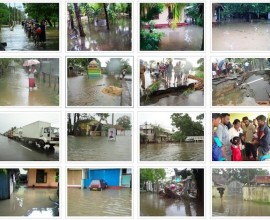
Screen shot 2011-01-21 at 7.18.52 AM

Photos courtesy Batticaloa Facebook Page I haven’t been reading the news much lately. I heard about the floods in the East and North Central Province and thought abstractly to myself, ‘how awful’. I watched the downpour in Colombo itself and complained about the shivering cold of that one day during which temperatures fell to 18 degrees – the lowest in over 60 years. I never really fathomed the extent of the destruction until I happened across a 3-line post on a blog, linking to some footage by the airforce of the flooding in Batticaloa. I didn’t pay much attention to the article on the airforce site, but those pictures stunned me. Water up to treetops. Acre upon acre of paddy land totally destroyed. All I could think was, ‘haven’t they been through enough?’ War. Tsunami. Floods. Would it ever stop? Would they ever have the luxury of having normal lives again? Would there ever come a time when they would…

Continue reading »

Video: Parliamentary debate on deterioration of human security in the North of Sri Lanka

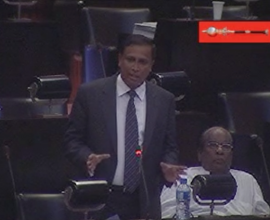
Screen shot 2011-01-21 at 3.43.25 PM

A parliamentary debate on deterioration of human security in the Jaffna Peninsula, North of Sri Lanka, was held on 20 January. Early media coverage of the debate suggested the government was playing down concerns over the deterioration of human security, and heated exchanges between government and opposition MPs. The number of reports on murders and abductions in the Northern Province just over the past month suggest a disturbing breakdown in the rule of law. Networking for Rights (NfR) in a statement expressed “serious concern” about the deterioration of the law and order. “The series of killings that have taken place during the last few weeks in the Jaffna Peninsula raises the question whether death squads have been reactivated in the Jaffna Peninsula.” Groundviews received the video of the parliamentary debate today. The debate is oftentimes interrupted by the characteristic shouting and inflammatory remarks across benches. This video captures the submissions by the TNA and UNP, plus responses by Government and…

Continue reading »

Brief Notes on Mental Health & Psychosocial Support after 2011 Batticaloa Floods

Dr. T. Gadambanathan & Ananda Galappatti The following is a brief response to queries we have received about what considerations should be made during the recovery phase of the flood disaster with regards the possible mental health and psychosocial impacts on affected people.  As individuals and families return to their communities and homes from temporary camps, the relief effort is due to transition towards meeting the needs of restoring shelters, resuscitating livelihoods and repairing infrastructure.  In terms of Mental Health and Psychosocial Support (MHPSS) needs, we note the important differences between the recent flood disaster and either the 2004 Tsunami or prolonged armed conflict in Sri Lanka.  The experience of the recent floods has not produced the same severity nor complexity of impacts on either psychological (ie. primary trauma) or social dimensions of the affected people’s lives.  Therefore, we suggest an approach to assisting recovery that is primarily built on a) integration MHPSS considerations into mainstream relief and recovery programmes,…

Continue reading »

The Tamil Man’s Genes

My Tamil DNA, inherited from generations before, and the genes lined up along it, have now been analyzed: 99.99 percent the same as a Sinhala fellow’s 99.90 percent the same as a South Indian Tamil’s, 99.00 percent the same as that of a chimp. To the chimp, I give bananas, From the Southie I learn to make Dosas, With the Sinhala chap, I have picked a fight! How strange! I say, It cannot then be, the genes of my Tamil DNA. Modern Biology readily explains, function not just in them genes it claims, but from the way of their control: Turned ON and OFF when, why and where in space and for how long. Not the genetics of what came from past, but the epi-genetics of regulation, the Here and Now of their manipulation. Oh, Historian! Do come to my rescue. Why hast thou not seen an epi- too? Repost This Article

Continue reading »

Responding to a facile appeal: Galle Literary Festival and the freedom of expression

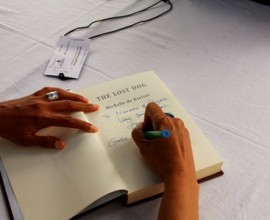
4811070237_c60a45138d

Michelle de Kretser signing. Photo by Sharni Jayawardena, courtesy Galle Literary Festival The Editors of Groundviews received via email this morning intimation of an international appeal made by Reporters Without Borders and Journalists for Democracy in Sri Lanka (JDS), a network of exiled Sri Lankan journalists. The Galle literary festival appeal notes inter alia, “We believe this is not the right time for prominent international writers like you to give legitimacy to the Sri Lankan government’s suppression of free speech by attending a conference that does not in any way push for greater freedom of expression inside that country.” Now in its fifth consecutive year, the Galle Literary Festival has been called many things, but a ‘conference’ it has not. Things go inexorably downhill from here. This ill-advised appeal reminds us of the equally ill-conceived Amnesty International human rights campaign during the last cricket world cup in 2007. At the time, even well-known human rights defenders in Sri Lanka wrote…

Continue reading »

Hear My VOICE: Bonsika Vadivel Vasanthan ~ “Please bring my father back to me”

Bonsika Vadivel Vasanthan struggles to come to terms

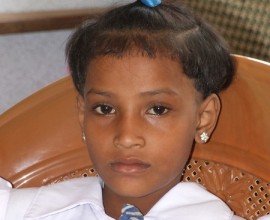
Bonsika Vadivel Vasanthan (7) always stays alone and confines to a brown plastic chair with flower work. The chair is bigger than she. She wears a pristine white pleated frock, which is the school uniform with light Blue and white stripe tie. A light blue silk ribbon holds her straight hair into a ponytail, and she wears a pair of artificial white stone ear studs. She does not mingle with anybody. She seldom talks or plays. She stays quiet. “My father used to tell me a lot of nice bed time stories, before I go to sleep everyday. We used to sing a lot of beautiful songs together in Tamil. Now, nobody either tells me any story or sings with me. I feel very lonely as my father is not with me” laments Bonsika Vadivel Vasanthan while tears fill her both eyes. Her father got injured during the last phase of the war in Vanni, North of Sri Lanka in…

Continue reading »

WikiLeaks, Swiss Banks and Alien invasions

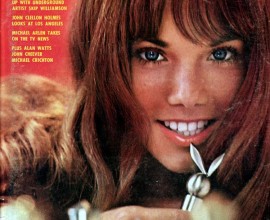
Playboy May 1972 cover

A month ago, I wrote an open letter to the late Sir Arthur C Clarke, titled ‘Living in the Global Glass House’. It was inspired by the WikiLeaks cablegate controversy, which heralded a new level of transparency in international relations triggered by a disruptive technology – something Sir Arthur had predicted decades ago. I researched the essay over a few days in early December 2010. While following the unfolding cablegate saga with much interest, I looked up and re-read many published articles and speeches of Sir Arthur related to the social and political impacts of new communications technologies. I was already familiar with his thinking on the subject, but was still amazed to discover the extent of his prescience. And dismayed by how little his timeless advice was being followed. My essay was first published on 19 December 2010 by Groundviews.org; it has since been reproduced widely, and my own compact versions have appeared in a number of print media…

Continue reading »

Sri Lanka and war crimes investigations: Nothing to Lose, but a World to Win

To rephrase the words of Marx and Engels: a spectre is haunting Sri Lanka – the spectre of an international investigation. More specifically, a demand has been made by the West, and will be made in the future too: a demand for an international investigation. The response to such a demand, without any doubt, should be: NO. Such a response should not be based purely on the issue of ‘sovereignty’ alone; i.e. that an international investigation violates Sri Lanka’s sovereignty and territorial integrity. Furthermore, this response should not be (and should not have been) the fast-unto-death kind. But there are other reasons. One reason is the fact that the demand is made by Western/European States which do not practice what they preach (for instance, when US Ambassador Patricia Butenis stated in her cable of 15 Jan 2010 that “There are no examples we know of a regime undertaking wholesale investigations of its own troops or senior officials for war crimes…

Continue reading »

Archive of Lessons Learnt and Reconciliation Commission (LLRC) submissions and media reports

Image courtesy Lessons Learnt and Reconciliation Commission (LLRC) Groundviews is pleased to announce the launch of two archives covering media reports on and submissions to the Lessons Learnt and Reconciliation Commission (LLRC). The archives are now live here. At the time of the launch, there are over 220 media reports and over 100 English submissions to the LLRC featured on the site. The archives respond to a numerous requests we got for a single-window access to this content. The content included in the archives are generated by a trusted source outside the country by going through information on the web, including the LLRC’s official website. New submissions and media reports, once sent to Groundviews, are uploaded to the archive and curated by us. Hosting this content on Google Docs makes it a cinch for readers to search for and access the submissions and reports online, print them, download them as PDFs or subscribe to updates via RSS feeds. Repost This…

Continue reading »

Shyam Selvadurai: Literature, identity, politics and the Galle Literary Festival

Screen shot 2011-01-17 at 8.12.15 AM

Shyam Selvadurai was born in 1965. His book Funny Boy introduced gay fiction to mainstream English literature in Sri Lanka, and indeed as Shyam notes, in South Asia. Born to a Sinhalese mother and Tamil father, Shyam was 19 when he left Sri Lanka in 1983 for Canada. Funny Boy was as much about class and ethnicity as sexual identities, and though Shyam has repeatedly noted that it was not autobiographical, the fiction is set against a violent Sri Lanka. Shyam is presently the curator of the Galle Literary Festival. In an essay (Coming Out) penned for Time in 2003, Shyam brought out the vexed relationship he has with Sri Lanka. On the one hand is the love for the country, “…live and let live generosity and good humour that I love most about Sri Lanka” and on the other, the unsettling nature of it “in this country that I still considered my home, I could never be at home.” Yet…

Continue reading »
Page 1 of 3123

About Groundviews

Located at the Centre for Policy Alternatives in Colombo, Sri Lanka, Groundviews is a citizen journalism website that uses a range of genres and media to highlight critical perspectives on governance, reconciliation, human rights, the arts and literature, democracy and other issues. The site has won two international awards, including the prestigious Manthan Award South Asia in 2009. The grand jury's evaluation of the site noted, "What no media dares to report, Groundviews publicly exposes. It's a new age media for a new Sri Lanka... Free media at it's very best!"

cezarneaga.eu