
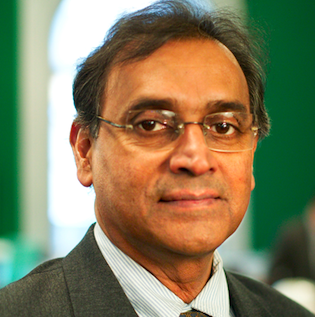
Internal Armed Conflicts, Humanitarian Laws and the Curious Transformation of Dr. Jayantha Dhanapala
Photo courtesy Global Zero
Numerous reports suggest that Dr. Jayantha Dhanapala had some interesting things to say when he appeared before the Lessons Learned and Reconciliation Commission (LLRC) recently; about aspects relating to the interference of certain States in the internal affairs of other States; about the R2P concept; about the Sri Lankan Armed Forces carrying out a daunting humanitarian operation, saving 300,000 innocent civilians kept as a human shield by the LTTE and thereby preventing a certain ‘holocaust’ (The Daily News, 26 August 2010; The Ministry of Defence (defence.lk), 25 August 2010).
Thereafter, he had said the following too: that there was a need for an international protocol to deal with Armed Forces engaged in fighting terrorism with non-State actors and that ‘many of the Rules of War and International Humanitarian Laws were based on the assumption that the warring parties were conventional armies of states but in Sri Lanka’s case the LTTE had totally disregarded those laws and principles.’
Finally, he seems to have said something that even President Mahinda Rajapaksa or Defence Secretary Gotabaya Rajapaksa would have been reluctant to claim so openly: that International Humanitarian Laws (IHL) should not apply to Sri Lanka’s war against the LTTE and that a conventional army cannot be bound by international laws in fighting a terrorist organization (The Island, 26 August 2010).
The initial questions that arise here are these: where was Dr. Dhanapala all this time? Is this the same Dr. Dhanapala who, talking about the CFA some years ago, saw light at the end of the tunnel? Is he the one who was accused of trying to appease the LTTE through the P-TOMS? Why did Dr. Dhanapala decide to remain somewhat silent during the last stages of the war? Was there any reason to wait until the war was over for him to argue that IHL did not apply to the conflict in Sri Lanka? Is he coming out so boldly against the LTTE because the LTTE was defeated and destroyed in May 2009? What then of ‘integrity’ of these learned and respected gentlemen who say (or do not say) one thing during times of war, and a completely different thing after the war?
More importantly, what happened to Dr. Dhanapala who delivered the keynote address at a seminar organized by the ICES and the UNDP in November 2007, titled “Sri Lanka as a Member of the UN”? That was a very interesting and informative speech, in which Dr. Dhanapala seemed to have reminded the audience of Article 2(7) of the UN Charter and then stated that “we must also recognize that we have willingly conceded sovereignty by joining several treaties and in these treaties we have got certain obligations that we fulfill.” And then, Dr. Dhanapala said something else too. He said that: “The fact that there is a conflict requires us to maintain the Geneva Conventions and the ICRC is there to help us.”
If so, would Dr. Dhanapala tell us why we were required to maintain the Geneva Conventions in 2007, and why he is arguing now (in 2010, one year after the war) that IHL should not have been applicable?
IHL and the deprived soldier: reforming existing laws
Firstly, the Conventions and Protocols which form the general body of IHL are old. The basic documents, in this regard, are the four 1949 Geneva Conventions (the Geneva Conventions that Dr. Dhanapala referred to in his 2007 keynote address) and the two 1977 Additional Protocols. The nature of armed conflict, especially internal armed conflict, has changed over the years. The conventional soldier is today facing unconventional and sophisticated non-state actors and very dangerous terrorist groups.
It can also be seen that some of the provisions contained in the above mentioned Conventions and Protocols do not adequately cover problems that the conventional soldier might face today. Due to the arduous task that the soldier is faced with, he might even consider these conventions to be of little meaning.
Take Common Article 3 (i.e. common to all of the Geneva Conventions), which states that persons taking no active part in hostilities shall be treated humanely. But practically, the conventional soldier faces a problem here because he cannot easily distinguish between a person who takes part in hostilities and one who does not, if, for example, the person concerned is a potential suicide bomber dressed up as a civilian. Consider for instance the video footage of a female suicide bomber blowing herself up inside Minister Douglas Devananda’s office. Certainly, until the blast took place, no one was able to identify clearly that that woman was there on a suicide mission. Consider then the enormous difficulty that the soldier or policeman would face, especially in conflict areas. Article 3 informs the soldier that if a person is not taking part in hostilities he/she should be treated humanely; but then, how do you know that the man or woman or child approaching him is not a person taking part in hostilities, in the first place?
Take the issue of indiscriminate attacks for instance (‘indiscriminate’ is defined in Article 51(4) of Additional Protocol I concerning protection of victims of international armed conflict). The soldier has to ensure that he does not resort to indiscriminate attacks, and he always needs to distinguish between military and non-military objectives. But practically, if the soldier is facing a group such as the LTTE, there are enormous difficulties here since terrorist groups use homes, hospitals and schools to train terrorists and perpetrate further acts of terrorism. Consider the difficulty that the soldier who has firm intelligence reports to conclude that that home or hospital or school under scrutiny is a military target and one which is used by terrorists.
These examples would suggest that States need to think seriously of reforming certain laws, in a way current difficulties faced by the soldier are taken into account. Importantly, States should also be mindful of the importance of concluding a comprehensive legal framework which covers all aspects of counter-terrorism, especially in an era as this when States face many problems due to terrorism. And in this regard, one part of the argument raised by Dr. Dhanapala contains much truth.
Internal armed conflicts and the application of IHL
However, whatever these problems may be, there should not be any doubt concerning the application of IHL, the Geneva Conventions in particular, in internal armed conflict situations. As the Appeals Chamber of the ICTY held in the Tadic case (1995), IHL should apply to all conflicts, international and internal; some important reasons for such an application being the cruel and protracted nature of such conflicts, the frequency of such conflicts and the importance of human rights protection during conflict situations.
To argue, like Dr. Dhanapala has argued, that the current body of international laws should not apply just because it is inadequate to cover present realities of armed conflict is a very dangerous argument; an argument that no democratic state could ever make. As Antonio Cassese once pointed out, certain rules of conduct of hostilities in international armed conflict have been extended, on a gradual basis, to internal conflicts as well. It is necessary to understand the logic behind this extension; as the ICTY in the Tadic (Interlocutory Appeal) stated, “What is inhumane, and consequently proscribed, in international wars, cannot but be inhumane and inadmissible in civil strife.” It follows then that the humanitarian laws that would be applicable in international armed conflicts should also apply in cases of internal armed conflicts.
It is here that one should also understand that while the present body of IHL has its weaknesses, it still plays a most important humanitarian purpose. The Geneva Conventions, in this regard, play a vital role in ensuring that there is at least some minimum protection of civilians who are trapped in conflict situations. Article 3 (quoted above) of the Geneva Conventions, it has been noted, constitute the ‘minimum yardstick’ applicable to armed conflicts of any nature; as was held by the ICJ (Nicaragua (merits), 1986).
And in this regard, it is vitally important that one approaches this issue not only from the perspective of the soldier, but also from the perspective of the innocent civilian. How preposterous would it be if a State is to argue that such international humanitarian norms do not apply in internal conflicts? What minimum relief would the innocent civilians have? Would the civilian see any difference between the terrorists who deny their basic freedoms and the State which argues that even that ‘minimum yardstick’ is not applicable? This is one of the fundamental reasons why Dr. Dhanapala’s argument is extremely dangerous. It is an argument that is made in order to evade responsibility for the mistakes that soldiers could make. This is also an argument which can be made to perpetrate indiscriminate killings; a course of action that terror groups resort to, not armed forces of a democratic state. This is also the kind of argument that the disgruntled and obnoxious officials of the US State Department can and do make, and certainly not one a distinguished former diplomat of Sri Lanka and the UN could ever make, in all seriousness.
‘Sri Lanka as a Member of the UN’
Ironically, one needs to revisit the title of the 2007 keynote address of Dr. Dhanapala and consider what Sri Lanka’s role as a Member of the UN would be if Sri Lanka is to make the argument that IHL did not apply to the conflict that concluded in May 2009 and that its armed forces were not bound by any international laws; the argument that Dr. Dhanapala has made recently.
President Rajapaksa, it should not be forgotten, has held a different view on this matter, for he has stated in his speeches that the task of his brave soldiers was difficult because they were carrying the gun as well as the Declaration of Human Rights when going into the battlefield. While this may be political rhetoric, undoubtedly, one needs to appreciate the deeper message here; i.e. that the soldiers were mindful of the international norms and standards that had to be followed, of the importance of treating civilians humanely, of the importance of protecting human rights, of the importance of all the international humanitarian obligations that soldiers of a State had to fulfill. That is the correct approach; and to retract now and argue that IHL did not apply to the Sri Lankan conflict would be a disgrace to a country and the brave armed forces which defeated the LTTE.
Sri Lanka, as a Member of the UN, should always maintain that all important moral high ground, however difficult that task would be. Sri Lanka, as a Member of the UN, should still be mindful of former UNSG Kofi Annan’s Report ‘Uniting Against Terrorism’ (A/60/825) in which it is stated that in the fight against terrorism we “must never sacrifice our values and lower our standards to those of the terrorists. International cooperation to fight terrorism must be conducted in full conformity with international law, including the Charter of the United Nations and relevant international conventions and protocols. It is an obligation of States to ensure that any measures taken to combat terrorism comply with their obligations under international law, in particular human rights law, refugee law and international humanitarian law.” (para 112, emphasis added). States Members of the UN resolved to recognize the importance of this message when the General Assembly adopted a resolution titled ‘The UN Global Counter-Terrorism Strategy’ (A/Res/60/288), on 20 September 2006.
It should also be remembered that even the numerous conventions on the suppression of terrorist acts highlight the importance of the rights, obligations and responsibilities of States and individuals under international law, in particular international humanitarian law (for example, Article 19(1) of the 1997 International Convention for the Suppression of Terrorist Bombings).
One only hopes that the press has misquoted Dr. Dhanapala, and misquoted badly. If not, it is rather alarming to note how Dr. Dhanapala, a former Under-Secretary General of the UN, seems to have forgotten the importance of IHL, and argues that a state should not be bound by international laws when fighting a terrorist organization.
(Kalana Senaratne, LL.B, LL.M (University College London), is currently a postgraduate research student at the Faculty of Law, University of Hong Kong)
Editors note, 30 August 2010: Jayantha Dhanapala’s response to the media reportage of his submissions was exclusively published on Groundviews here.
Repost This Article


1. Dahanapala thought of contesting the post of UNSG? Even those who think the present UNSG should be somewhere else, may say ….
2. The author is talking of 30 years of visible violence by ”terrorists”. What about the structural violence of 62+ years going on 63?
There is no international law to protect minority groups from oppressive majority groups. That means there is no protection against state terrorism(=structural violence). There is no punishment even at the UN for 62+ years of oppression wreaked on minority groups in Sri Lanka – the oppressed have no representation on international bodies. and the oppressors have been doing expert damage control.
3.With the tsunami of economic downturn, there is no future for the oppressed.
4. We are arguing about the rights of the oppressor while there is no humanitarian law for the oppressed(oppressed for 6+ decades)on the other side of the fence of Omanthi:
http://transcurrents.com/tc/2010/03/no_funds_to_meet_needs_of_near.html/
No funds to meet needs of nearly 200,000 Northern IDPs due to govt refusal to endorse 2010 action plan, 13 March 2010: ”The funding crisis follows the government’s refusal to endorse the 2010 Common Humanitarian Action Plan (CHAP), authoritative sources said. …. The UN and other humanitarian agencies are running out of resources to meet the urgent needs of internally displaced persons in the North. …”
In Sri Lanka international humanitarian law has not been applicable to civilians of minority groups for 5/6 decades but there is a discussion going on whether it is applicable to (Sinhalese) soldiers. Oops, this is a Buddhist Republic.
Any discussion IHL isn’t being applied in Northeast?
In a Buddhist Republic, there is a discussion if we should apply IHL in a place from where the UN and other aid agents were ordered out by the government?
IHL not applied across the island?
1.http://www.overcomingviolence.org/index.php?id=5726
LIVING LETTERS TEAM TO SRI LANKA(AUGUST 2007) is part of the initiative, Decade Overcoming Violence(DOV), of the World Council of Churches in its report:
”Please call on the churches all over the world to pray for us, was a message the Living Letters Team heard over and over again.”
2.http://www.lawandsocietytrust.org/PDF/Mannar.pdf
Report of the Inter Religious solidarity visit to Mannar, 23rd April 2008:
”””Mannar town and all outlying areas are heavily militarized. We realized that people in Mannar, the residents as well as the displaced, live in fear and with a feeling of hopelessness. …. We visited a camp in Kalimoddai. They requested that we not carry our cameras and phones and not to take photos or video, … We heard from the people as well as the security forces in charge of the camp that the camp is snake infested. We saw a snake that was killed when we were in the camp, and were told that snakes are killed there daily. We also heard that UN agencies and NGOs provide assistance for shelter, food etc. But many complained that these were far short of what they needed.
We came to know of a pregnant women, who is expected to give birth in two weeks time form the date we visited, i.e., around 30th April. She urgently needs medical attention. She has relatives in Mannar who are ready to host and take care of her until and after delivery.”
3.http://www.groundviews.org/2009/08/12/madhu-feast-2009/
Madhu Feast 2009: Another opportunity or obstacle for peace and reconciliation?, Ruki, 12 August 2009:
”We used to live very close to the Madhu Shrine and we long to go and pray at the feat of Our Lady of Madhu as we used to. But we are prisoners in this camp(at Sirukondal), and not allowed to go out freely … … Hundreds of Tamils, including infants, pregnant mothers are being detained in this camp, some for more than a year … …”
4.http://www.groundviews.org/2009/08/01/forcible-resettlements-in-east/
Forcible resettlements in East, Ruki, 1 August 2009:
”… On 18th June 2009, the Divisional Secretary (DS) together with the Police and Military had forced around 57 families to resettle in Pullumalai area. …
At least two families who had children in school were forced inside the buses without their children….
Several of these people told me that the main reason they do not want to go back is due to fear. They had experienced and seen with their own eyes, abductions & killings in Pullumalai and nothing had been done to assure them that these things won’t happen again. I was told that about 50 persons had gone missing between Pullumalai and Karadiyanaru on the A5 road, since October 2008. Another person who went with him is still reported as missing. The body of the 3rd person who went with him was found later and in order to get the body released, the father had to sign a letter saying the person was a LTTE member. Fear was also expressed of being surrounded by Sinhalese villages and threats caused by wild elephants….
These people were told that those who do not resettle will not be provided any food rations by the Government and that no NGOs will be allowed to provide food rations. People who managed to avoid being forcible resettled and remain in Savukady confirmed that they had not received any humanitarian assistance for more than three weeks, at the time I met them. …
The only shelter materials these people had received were from the ICRC. (Since then, the government had told the ICRC the need for its services was decreasing and subsequently, the ICRC had closed its officers in the East) ….”
The only way to protect civilians from excesses during protracted periods of conflict is to allow journalists full freedom of access. The soldiers are there to execute a specific political agenda – or to put it more bluntly, to eliminate any particularly virulent opposition that may exist towards the implementation of such an agenda. In the larger picture, then, there are certain political entities, which, along with a small cliche of business interests, stand to gain much from a favorable “resolution” to the conflict, despite themselves mostly standing in the shadows. The average soldier and civilian benefits very little. So for example, an army corporal cannot expect to make millions overnight from weapons sales, such as Danuna Tillakaratne did.
So if the aforementioned “hidden entities” stand to make unlimited profits via the ‘climate of peace”, they have little interest in looking out for the interests of the civilians. Furthermore, they – the entities – are more likely to give the soldiers a free hand, if only to accelerate the pace of “resolution.” In such a context, the civilians have largely one safeguard, which are the Conventions and Protocols, mentioned in the article. Given the latter, one can see why freedom of information is critical. One needs a neutral third-party, devoid of any political or military interests, to report to the outside world, on the state of affairs, as they pertain to a given conflict. NGO’s are bound by certain contractual agreements with the host nation. Only journalists can fill this void.
What’s new?
The outcome of the LLRC is already known – that world’s greatest hostage rescue mission was carried out with zero civilian casualties and by fully respecting IHL…my mistake, IHL does not even apply to the Sri Lankan case according to Dr. Dhanapala.
Preamble of the Universal Declaration of Human Rights that says: “Whereas it is essential, if man is not to be compelled to have recourse, as a last resort, to rebellion against tyranny and oppression, that human rights should be protected by the rule of law”.
When did the ”terrorists” appear in Sri Lanka?
What happened between 1948 and the appearance of ”terrorists”?
There was a lot of terrorism in the late 40s, 50s and 60s and early 70s before the appearance of ”terrorists”.
What’s the criteria for being called a ”terrorist”?
Disenfranchising(1948/9) tens of thousands of citizens isn’t terrorism?
Watching a mob attack peaceful protesters(1956) isn’t terrorism?
Refusing to hold an inquiry into the deaths of
i.148 people in a sugarcane field(1956)
ii.9 people at a conference(1974) isn’t terrorism?
What about the crimes in 1958 alone?
Two Sinhalese men who coudn’t read Sinhala newspaper were murdered in daylighton a main road.
The list is tooooo long to be complete here.
New Zealand Supreme Court decides LTTE a political organisation – 27 August 2010
I cannot forgive LTTE for its violence but the violence of the government is only a lot, lot more.
Talking about application of IHL to what happened up to 15 months ago after much worse has been happening in the last 15 months alone?????
Stephen Hawking might have asked the mankind to leave the planet because life is going to be terrible with mounting population and pollution
, accompanying depletion of resources.
But man’s inhumanity to man is a more forceful reason a section(the oppressed) of mankind should flee this planet.
Stephen Hawking: Leave the planet or die, humans!
Tamils fleeing oppression in Sri Lanka are prevented by Sri Lanka Navy around Palk Strait, white vans between Northeast and Katunayake and vicious statements by Sri Lankan high Commissions to foreign governments to send them back to Sri Lanka:
” The appearance of neglect on the part of the Sri Lankan government arouses concern that its interest is more in putting more military bases in the North than in caring about the welfare of the people” – National Peace Council, 23 August 2010
“Talking about application of IHL to what happened up to 15 months ago after much worse has been happening in the last 15 months alone?????”
Mango, what happened in the last 15 months that was much worse than before?
Humanitarian help to the oppressed is not on the cards but many stories tell the buildings are erased to the ground:
1.
http://www.bbc.co.uk/sinhala/news/story/2010/08/100829_vanni_visit.shtml
Mannar – Tamil misery continues, 29 August 2010
”…. “Be careful and watch your mouth. The government security forces are vigilant and they do not like us talking to outsiders,” my hosts warned. ….
Civilian life is still a tragedy to many. There is nothing left on the ground for the people who return from the camps …. Many houses were razed to ground. …..
“The army and navy confiscated lands on the grounds of security”…..
The propagation of Buddhist shrines is evident throughout roads I followed to Jaffna. ….. ”
2. http://transcurrents.com/tc/2010/08/my_trip_to_jaffna_that_somewhe.html#more
My trip to Jaffna: “That somewhere life was taking root again…”, 25 August 2010:
”….I saw the foundations of houses, just the foundations, every 15- 20 feet – sure signs of a flourishing village or simple township at least. None of it remained. …”
3.
My uncle who has been going down A9 several times after the CFA was signed went down A9 in January 2010 after a few years.In Kilinochchi he found all buildings erased to the ground with rubble removed meticulously.
4.
http://www.asianews.it/news-en/Vanni,-northern-Sri-Lanka,-where-war-has-never-ended-18558.html
Vanni, northern Sri Lanka, where war has never ended, 1 June 2010:
”The area is still actually in the hands of the military, which allowed the return of the population but force them to live in absolute poverty. The military blocks any attempts to improve their lives, but does not stop abuse and violence. ..”
How many Buddha statues will bring peace to Sri Lanka?
Not certainly till UNSG candidates undertand UN principles.
Hey:
The mindset of all Sinhalese; whether a diplomat, clergy, laymen is same: They all think that Sri Lanka is a Sinhala Buddhist country and there is no place for Tamils, Christians, Muslims and so on. This is the main cause of all the problems in Sri Lanka. The only solution is to get the peoples opinion from the North & East where the Tamils, Christians live by a referrendum superised by the UN. This is the only solution to put an end the Sinhalese mindset. Two state solution is the only solution.
Killings commenced long ago even when Dhanapala contested for the post of UNSG.
http://nesohr.org/hrr/?show=all
But only now he has attained enlightement that IHL is not applicable to these situations.
It has been nearly 1 year since the end of the so called ‘Humanitarian Operation’, but very little has been done to re-settle the thousands of Tamils held in ‘Welfare Holiday Camps’, and absolutely nothing being done to devolve power and bring a permanent solution to the ethnic conflict in the country. No one in the country seems to care, and there is not a hum from the international community. If only the Tamils of Sri Lanka had been seals or better still, whales, the international community and the people of the west in particular would have come to their rescue a long time ago.
Before the breakup of Yugoslavia, the Yougoslav’s used to say, “We have 6 republics, 5 ethnic groups, 4 languages, 3 religions, 2 alphabets and 1 Tito. In Sri Lanka it’s the other way around. In Sri Lanka we have 1 country (or so they say), 2 ethnic groups, 3 languages, 4 religions and over 300 plus Rajapaksas’.
Long live the ‘Utopian Paradise of Rajapalistan!’
Right on ‘Kumaraya.’
Before the breakup of Yugoslavia, the Yougoslav’s used to say, “We have 6 republics, 5 ethnic groups, 4 languages, 3 religions, 2 alphabets and 1 Tito. In Sri Lanka it’s the other way around. In Sri Lanka we have 1 country (or so they say), 2 ethnic groups, 3 languages, 4 religions and over 300 plus Rajapaksas’.
It has been over 1 year since the end of the so called ‘Humanitarian Operation’, but very little has been done to re-settle the thousands of Tamils held in ‘Welfare Holiday Camps’, and absolutely nothing being done to devolve power and bring a permanent solution to the ethnic conflict in the country. No one in the country seems to care, and there is not a hum from the international community. If only the Tamils of Sri Lanka had been seals or better still, whales, the international community and the people of the west in particular would have come to their rescue a long time ago.
Please read Jayantha Dhanapala responds to erroneous and selective media reports of his submission to LLRC, http://www.groundviews.org/2010/08/30/jayantha-dhanapala-responds-to-erroneous-and-selective-media-reports-of-his-submission-to-llrc/
Groundviews
Dhanapala’s response shows that he is fighting with his conscience.
Kumaraya>>
hey how about Tamils, Christians, Muslims & so on living in the south? Don’t you consider to give them “mini” states from the south also??